





Project Details
- Date: September 25th, 2019
- Location: A WWTP with a daily output of 200,000 cubic meters in a city
- Main Event: The biological tank was retrofitted using the Moving Bed Biofilm Reactor (MBBR) process without shutting down the plant.
- Difficulties: The plant needed to maintain full-load operation / Limited available space / High complexity / Tight schedule (less than 50 days) / Increased load due to seasonal rainfall
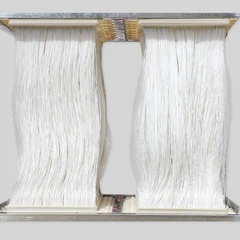
The primary process of the city's wastewater treatment plant was initially based on the Anaerobic-Anoxic-Oxic (AAO) system. The goal of this upgrade was to enhance the ability of its biological tank to remove pollutants, mainly ammonia nitrogen. After multiple analyses and comparisons by the AquaSust team, it was decided to attempt a non-stop retrofit using MBBR technology.
Under the guidance of local government agencies, the project management, engineering, and monitoring teams, as well as the MBBR supplier, worked together. By coordinating the installation techniques and the project timeline, we completed the retrofit of all (four) biological tanks in just 40 days, five days ahead of the overall schedule before the National Day holiday.
So far, the project has been operating continuously and has always met the sewage quality standards.
Some Questions You May Be Interested in:
1. What are the key advantages of using MBBR for non-Stop retrofit?
As an embedded technology, the MBBR process is well suited for the ongoing renovation of existing storage tanks in wastewater treatment plants (WWTP). It can avoid the cumbersome preliminary approval process and cope with problems such as tight construction schedules and complex construction conditions. Best of all, the plant can run continuously during the revamp period, so the operator's profits are safeguarded.
2. Will a non-stop retrofit extend the overall project timeline?
In fact, it reduces construction time. Because it requires no additional civil works or tank dewatering operations, and can retrofit multiple biotanks simultaneously. For example, in a 200,000 m3/day sewage treatment plant with four biotanks, a traditional shutdown for retrofit would take approximately 160 days. AquaSust's non-stop retrofit can be completed in just 40 days.

3. Does non-stop retrofit substantially increase retrofit costs?
Compared to a shutdown renovation, its overall cost is actually lower. Because although shutdown renovations can save the cost of some specific installation procedures, they will cause operating income loss during the shutdown period. Our non-stop renovation allows the plant to operate as usual.
4. Can non-top retrofits meet quality requirements?
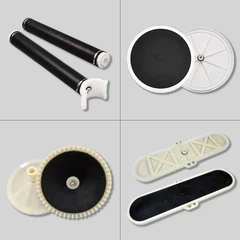
Of course, it meets the same process and quality standards as shutdown renovation. And this is achieved through a series of measures. For example, we use new interception and aeration systems and optimize the installation procedures to save time. We also use hydraulic simulation to confirm the structural strength of the device.
5. How does a non-stop retrofit ensure fluidization of suspended media?
In non-stop transformation, the design of the tank and the process implementation plan are customized according to the specified requirements of the project. Our professional project team also uses fluid dynamics simulation to install the interception aeration system to evenly fluidize the suspended medium.
6. How does a non-stop retrofit ensure project timeline?
First, we save time through innovative installation techniques. Second, we establish a strict project management system, including simulation and review of implementation steps, to conduct quality control.
7. In cases where WWTPs retrofit tanks sequentially, with other tanks handling additional flow, is this equivalent to a non-stop retrofit?
Not absolutely. Because the continuous transformation of a single tank is a traditional method, each tank requires a period of downtime while other tanks take on additional flow. Many wastewater treatment plants are now operating at full capacity and lack the flexibility of continuous transformation. Our non-stop transformation method involves underwater work, which can be constructed without reducing the plant's treatment capacity.