





Coarse Bubble Diffusers
AquaSust coarse bubble diffusers provide high-efficiency oxygenation and durable, low-maintenance performance,
helping your wastewater treatment system operate more reliably and cost-effectively.
Clog-Resistant, Suitable for Challenging Water Conditions
The coarse bubble diffuser features larger pore sizes (2.5–50 mm optional), which makes it more tolerant of suspended solids and debris in wastewater. It is less likely to be blocked by sludge, fibers, or other particles, making it especially suitable for turbid water or wastewater with high impurity content, such as industrial effluent and primary municipal wastewater treatment.
Low Aeration Resistance, Reduced Energy Consumption
Due to the larger pore size, the airflow resistance through the diffuser is relatively low. As a result, the blower and supporting equipment do not need to overcome excessive pressure. Under comparable aeration efficiency, the energy consumption can be lower than that of fine bubble diffusers, offering significant long-term operational cost savings.
Long Service Life and Easy Maintenance
Our diffusers are made with EPDM membranes combined with ABS supporting plates or 316L stainless steel housings, ensuring excellent wear and corrosion resistance. They are less prone to structural damage caused by clogging. Even in cases of partial blockage, functionality can be easily restored through backwashing or simple physical cleaning. The product lifespan ranges from 5–8 years and can even exceed 10 years in certain applications.
Wide Applicability for High-Load Treatment
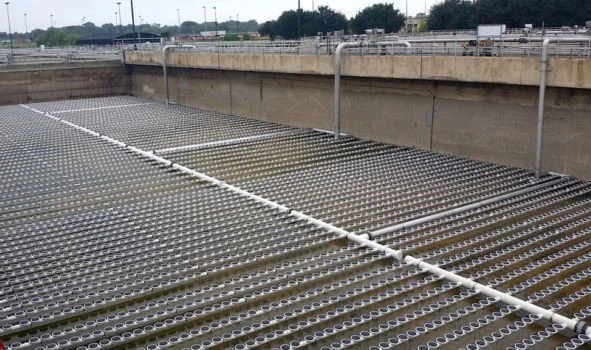
In processes requiring rapid oxygenation and strong mixing (such as aeration tanks in activated sludge systems or pretreatment in anaerobic tanks), coarse bubble diffusers generate larger bubbles that enhance water turbulence and improve oxygen transfer efficiency. They are particularly well-suited for treating wastewater with high organic and solid loads.


Coarse bubble diffusers provide larger bubbles than fine bubble diffusers and can operate at lower air pressures of 0.3-0.5 bar. We offer a wide range of coarse bubble diffuser types to meet diverse wastewater treatment needs.

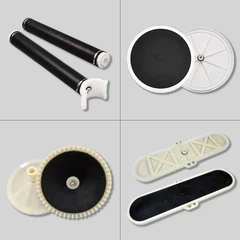
Rotary Mixer Diffuser
Rotating design- makes the bubbles evenly dispersed, which improves the utilization rate of oxygen and has the characteristics of uniform aeration and high oxygenation efficiency.

Disc Stirred Diffuser
Bevel gear structure - leads the air to flow uniformly in all directions, prevents clogging of the aeration tube bottom.
Double rubber plate device - to keep the air ducts sealed from sewage.

Vibrating Disc Aeration Diffuser
Anti-fouling device and vent design -automatically cleans the diaphragm and the sump.
Sump baffle -for more even air distribution.
Diaphragm -acts as a check valve to prevent debris and liquid from entering the piping.

Stainless Steel Coarse Bubble Diffuser
Stainless steel wide band diffusers – prevent debris and sediment from entering or backing up the diffuser.
Enhanced durability – withstands heavy loads and ensures long-lasting performance in harsh environments.
Balanced air distribution –- provides uniform aeration across all piping systems, improving treatment efficiency.

| ltem number | RMD260 | ltem number | RMD260 |
| Design air volume(m³/h) | 3 | 0xygenation capacity(kgo2/h) | 0.160-0.38 |
| Service area(m2) | 0.4-1.5 | Submerged depth(m) | 4-8 |
| 0xygen utilization rate(%) | >25 | Drag loss(pa) | < 3000 |
| Item number | DD125 | ltem number | DD125 |
| Gas Volume(m³/h) | 1-4 | Theoretical dynamic efficiency | 2.5-3.8 |
| Bubble diameter (mm) | 2.5-3.5 | Service Area | 0.2-0.5 |
| 0xygenation(kg02 /h) | 0.12-0.35 | Air resistance loss | ≤3500 |
| 0xygen utilization rate | 13.5%-17 1% | Service life | ≥5 |

| ltem number | DD150 | ltem number | DD150 |
| Chassis material | ABS | Service area(m2) | 0.5-0.8 |
| Disc material | EPDM | Applicable water depth(m) | 6 |
| Oxygen Utilization rate(%) | >30 | Resistance loss(pa) | < 3000 |
| Air flow(m³/h) | 1-2 | Oxygen transfer efficiency | 15% |

|
Diffuser Type |
Design Airflow |
Diffuser Length |
Orifice Size |
Dry Weight |
Net Operating Buoyancy |
|||||
|
scfm |
mN/H |
in |
mm |
ft2 |
m2 |
lb |
kg |
lb |
kg |
|
|
JTCBD-300(Deflector) |
0-30 |
0-47 |
12.4 |
315 |
0.840 |
0.0780 |
1.7 |
0.80 |
1.3 |
0.60 |
|
JTCBD-600(Deflector) |
0-55 |
0-87 |
24.4 |
620 |
0.840 |
0.0780 |
2.3 |
1.1 |
3.8 |
1.7 |
In addition to our premium standard wastewater products and equipment, AquaSust offers flexible OEM and ODM
partnerships tailored to your project needs. Partner with us to create solutions that perfectly fit your requirements.


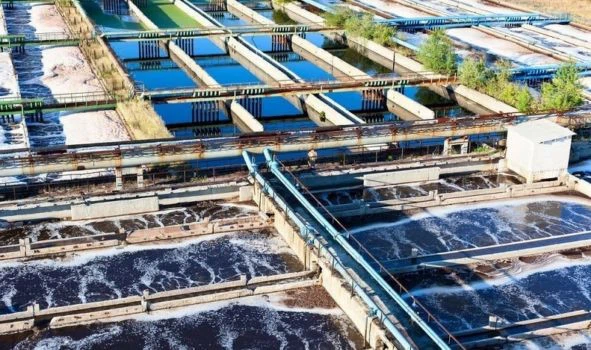


State-of-the-art Manufacturing Facilities

Strong R&D Capabilities
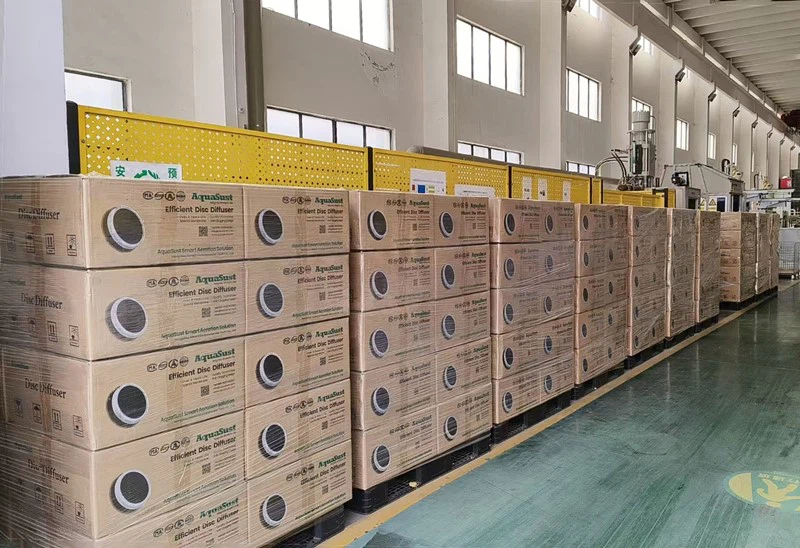
Stable Supply

Comprehensive Expert Support
Q: What Is a Coarse Bubble Diffuser?
A: A coarse bubble diffuser is an aeration device commonly used in wastewater treatment plants and industrial water systems. Instead of producing very fine bubbles, it releases larger air bubbles (typically 2–5 mm in diameter) into the liquid. These bubbles rise quickly, creating strong vertical mixing and oxygen transfer that support biological treatment processes.
Unlike fine bubble diffusers, which focus on maximizing oxygen transfer efficiency, coarse bubble diffusers are valued for their durability, anti-clogging design, and ability to handle water with high levels of grease, solids, or sludge.
Key Functions of Coarse Bubble Diffusers:
• Mixing: The larger bubbles generate turbulence, keeping solids in suspension and preventing sludge settling at the tank bottom.
• Aeration: They deliver oxygen into the wastewater, though at a lower transfer efficiency compared to fine bubble systems.
• Durability: They are resistant to fouling, clogging, and chemical attack, making them ideal for harsh operating conditions.
In short, a coarse bubble diffuser is a robust aeration tool designed for challenging wastewater environments where mixing and reliability are more critical than maximum oxygen efficiency.
Q: How Does a Disc Diffuser Work?
A: A coarse bubble diffuser introduces compressed air into wastewater through large orifices or membrane openings, producing big bubbles that rise quickly. These bubbles create strong mixing and circulation within the tank, preventing sludge settling and ensuring even oxygen distribution. While the oxygen transfer efficiency is lower than fine bubble diffusers, coarse bubble diffusers are highly durable, clog-resistant, and ideal for high-solids or pre-treatment tanks.
Q: What Materials Are Used for Coarse Bubble Diffusers Membranes?
A: The performance of a coarse bubble diffuser largely depends on the membrane material:
• EPDM membrane – cost-effective, good balance of durability and flexibility.
• PTFE membrane – excellent chemical resistance, long service life, reduced fouling.
• Silicone membrane – high elasticity, stable performance in low-temperature conditions.
AquaSust develops its own advanced membrane formulations and operates a dedicated membrane production line, ensuring consistent quality and long-term reliability.
Q: What Are Some Leading Coarse Bubble Diffuser Brands Worldwide?
A: Several reputable brands dominate the coarse bubble diffuser market globally, each offering specialized features:
• SSI Aeration (USA): Offers ReliaBall™ and AFC models with anti-clogging design, widely used in municipal and industrial wastewater systems.
• Environmental Dynamics International (EDI, USA): Known for cost-effective, durable FlexCap and CoarsAir HexAir diffusers, ideal for high-solids or greasy wastewater.
• Proco Products (USA): ProFlex 730CBD diffusers provide robust mixing and reliable aeration for challenging wastewater environments.
• Fluence (USA): Cyclone™ diffusers feature an anti-clog vortex design for easy installation and maintenance.
• SFA Enviro (France): Europelec AIRCOMB offers multi-functional membrane diffusers for varied applications.
• WTE srl – AirMax (Italy): Industrial-grade stainless steel diffusers suitable for chemical and high-load applications.
• OTT Group (Germany): AirRex® and Vibrair diffusers provide modular designs with high oxygen transfer and reliability.
• Nitesh Industries (India): High-quality EPDM and silicone membrane diffusers offering cost-effective solutions for high-solid wastewater.
Q: What is The Difference Between Coarse Bubble And Fine Bubble Diffusers?
A: Coarse bubble diffusers produce larger bubbles, offering stronger mixing and clog-resistant performance, making them ideal for high-solids or pre-treatment tanks. Fine bubble diffusers generate smaller bubbles, providing higher oxygen transfer efficiency, best suited for biological treatment and activated sludge systems.
To learn more about their pros, cons, and specific use cases, check out our detailed blog: Fine Bubble vs. Coarse Bubble Disc Diffuser: Pros, Cons, and Use Cases.
Q: How Does AquaSust Supply Aeration Diffuser?
A: As a global aeration diffuser supplier, AquaSust offers flexible business models to meet the diverse needs of engineering companies, EPC contractors, and wastewater treatment plant operators:
• Direct factory supply – ensuring competitive pricing and fast delivery.
• OEM/ODM cooperation – customized branding and product design.
• Project-based solutions – tailored support for engineering projects.
• Distributor partnerships – long-term cooperation with regional distributors.
This customer-oriented approach allows us to serve both small projects and large-scale wastewater treatment systems worldwide.



We Grow Your Business in 4 Ways
-
Wholesale at Factory Prices
Order standard products directly from our factory with flexible MOQ and reliable worldwide shipping.
-
OEM & ODM Service
Custom designs and private labeling supported. Co-develop new products with customers in our in-house R&D lab.
-
Project Solutions
We offer turnkey wastewater treatment and RAS system project solutions from design to installation support.
-
Dealer Cooperation
Join our dealer network for regional exclusivity, marketing assistance, and discounted rates.
Get in Touch with AquaSust
Leave a message for more information about our products series, and request a quote or expert advice.