






Oil Refining Wastewater Treatment

Oil refining wastewater treatment Concept
Oil refining wastewater is generated from various processes within refineries, including crude oil processing, desalting, distillation, and catalytic cracking. The wastewater contains a variety of pollutants such as hydrocarbons, suspended solids, heavy metals, sulfides, phenols, and other organic compounds, which can have significant environmental impacts if not properly treated.
The goal of oil refining wastewater treatment is to remove harmful contaminants to meet regulatory discharge limits, prevent environmental damage, and recycle water when possible. A combination of physical, chemical, and biological treatment methods is typically employed to handle the complex nature of the wastewater.
Characteristics of Oil refining wastewater treatment
1. High Organic Load: Oil refining wastewater often contains high levels of dissolved and dispersed hydrocarbons, such as benzene, toluene, and xylene, contributing to a high Chemical Oxygen Demand (COD) and Biochemical Oxygen Demand (BOD).
2. Presence of Toxic Compounds: The wastewater contains toxic organic compounds like phenols and polycyclic aromatic hydrocarbons (PAHs), as well as heavy metals (e.g., mercury, lead, and cadmium), which can harm biological treatment processes.
3. High Suspended Solids: Due to the presence of sludge, suspended solids, and emulsified oils, treatment systems need to address both the physical separation of these solids and the breakdown of dissolved pollutants.
4. Fluctuations in Composition: Wastewater characteristics can vary widely based on the refinery's operations, requiring adaptable treatment systems that can handle variations in pH, salinity, and contaminant concentrations.
5. Low Biodegradability: Many of the compounds in oil refinery wastewater are difficult to biodegrade, which makes biological treatment more challenging compared to more conventional wastewater.


Characteristics of Oil refining wastewater treatment process
1. Primary Treatment: The first step often involves physical methods like oil-water separators (e.g., API separators), dissolved air flotation (DAF), and sedimentation tanks to remove free oils, suspended solids, and some heavy metals.
2. Secondary Treatment (Biological Treatment): This is where the Moving-Bed Biofilm Reactor (MBBR) or activated sludge processes come into play. MBBR, in particular, can handle high organic loads, is resistant to toxic shocks, and requires less space than conventional systems. It uses biofilm-covered plastic media to degrade organic pollutants, converting them into carbon dioxide and water.
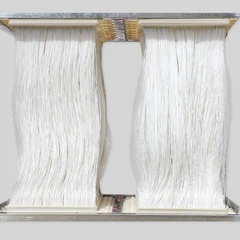
3. Tertiary Treatment: Advanced methods like membrane filtration (e.g., ultrafiltration, reverse osmosis), chemical oxidation, and activated carbon adsorption are employed to remove remaining dissolved contaminants, particularly recalcitrant organics and trace metals.
4. Sludge Handling: Refineries generate significant quantities of sludge, which must be stabilized and safely disposed of. Dewatering, thickening, and incineration are common sludge treatment methods.
Special Requirements for MBBR media When Used in Biological Aeration Tanks for Oil refining wastewater treatment
1. High Surface Area: MBBR media used in oil refining wastewater treatment must provide a large surface area for biofilm attachment to optimize microbial activity and pollutant degradation. The media should support the growth of specialized microorganisms capable of breaking down hydrocarbons and other complex organics.
2. Resistance to Fouling: Due to the high oil and suspended solid content, the media should be resistant to fouling and clogging. This ensures that the biofilm remains active and the treatment process is efficient without frequent cleaning or replacement of the media.
3. Durability in Harsh Conditions: The media must withstand variations in pH, salinity, and temperature that are typical in oil refinery wastewater. Robust, chemically stable materials like high-density polyethylene (HDPE) are commonly used.
4. Effective Aeration: The media should be compatible with the aeration system in biological tanks to ensure proper oxygen transfer, which is critical for aerobic microorganisms that break down pollutants. Media with good flow dynamics enhances oxygen distribution throughout the reactor.
5. Adaptability to Toxic Shocks: Oil refinery wastewater can occasionally contain sudden spikes of toxic compounds. The MBBR media and its associated biofilm must be resilient to these shocks, maintaining biological activity even under stress.

Conclusion
Oil refining wastewater treatment is complex, requiring a combination of physical, chemical, and biological methods to remove contaminants like hydrocarbons, heavy metals, and other toxic compounds. The use of MBBR technology in biological aeration tanks offers an effective solution for handling the organic load and variability of oil refinery wastewater. However, the success of the MBBR system depends heavily on the characteristics of the media used. MBBR media must be resistant to fouling, durable, provide a high surface area, and support efficient oxygen transfer, making it well-suited for the challenging conditions of oil refinery wastewater treatment.