





Concepts of Municipal Wastewater
Municipal wastewater, also known as urban domestic wastewater, is mainly derived from wastewater generated by residential households, commercial activities, public services, and some industrial activities. The characteristics of municipal wastewater can be summarized in the following ways:
Characteristics Of Municipal Wastewater
1. Complex composition: Municipal sewage contains organic matter (such as carbohydrates, fats, proteins, etc.), inorganic matter (such as salts, metal ions, etc.), micro-organisms (including pathogens), and potential harmful chemicals (such as heavy metals, pesticide residues, etc.).
2. Higher content of Biochemical Oxygen Demand (BOD) and Chemical Oxygen Demand (COD): These two indicators reflect the content of organic matter in sewage, is to evaluate the degree of sewage pollution and the treatment effect of an important parameter.
3. Contain nitrogen and phosphorus nutrients: Municipal sewage contains ammonia nitrogen, nitrite, nitrate and other forms of nitrogen as well as phosphate and other nutrients, which can lead to environmental problems such as water bloom when they are in excess in natural water bodies.
4. Seasonal and daily changes: Municipal wastewater output and its pollution load is seasonally and daily changing with a certain amount, which is closely related to people's habits and social activities.
5. Higher suspended solids (SS) content: Sewage contains more suspended solids, including soluble and insoluble particles, which affect water quality and need to be removed during sewage treatment.
6. May contain pathogens: Municipal wastewater may contain a variety of pathogens, such as bacteria, viruses, parasites, etc. These pathogens may pose a threat to human health and environmental safety.
7. Temperature: The temperature of the sewage will change with the season and climate changes, which will affect the activity of microorganisms in the sewage treatment process.
Characteristics Of Biochemical Tanks For Municipal Wastewater Treatment Process
The biochemical tank in municipal wastewater treatment is a key facility used in the biological treatment stage, which relies mainly on the biological metabolism of microorganisms to remove organic matter, nitrogen, phosphorus and other pollutants from wastewater. The design and operation characteristics of the biochemical tank include:
Diverse biological treatment processes: according to the different characteristics of sewage and treatment objectives, the biochemical tank can use aerobic, anaerobic or partially anaerobic biological treatment processes. Aerobic treatment is suitable for decomposition of organic matter, anaerobic treatment is commonly used for sludge digestion and treatment of certain organic pollutants, and parthenogenetic anaerobic treatment is useful under certain specific conditions.
Diversity and complexity of microorganisms: the biochemical tank contains a rich microbial community, including bacteria, protozoa, fungi and so on. These microorganisms achieve the removal of pollutants by absorbing organic matter, nitrogen, phosphorus and other nutrients from the wastewater.
Oxygen is the key factor: In aerobic biochemical tanks, oxygen is the key factor for microbial growth and organic matter degradation. Ensuring sufficient oxygen supply through aeration or mixing is an important part of biochemical treatment.
Sludge age: The design and operation of biochemical tanks need to consider the sludge age (i.e., the average residence time of microorganisms), which directly affects the structure of microbial communities and pollutant removal efficiency.
Temperature and pH control: microbial activity is greatly affected by temperature and pH. The design and operation of biochemical tanks need to ensure appropriate temperature and pH to maintain efficient biological treatment performance.
Nutrient balance: In addition to removing pollutants, it is also necessary to ensure that the the appropriate proportion of the nutrients required for microbial growth (such as carbon, nitrogen, phosphorus, etc.) to avoid a decline in biological treatment efficiency.
Separation of sewage and sludge: the sludge produced by the biochemical treatment process needs to be separated from the treated water by sedimentation or other methods to ensure the quality of the effluent.
The design and operation strategy of the biochemical tank need to be flexibly adjusted according to the specific characteristics of the sewage, treatment objectives and environmental conditions, in order to achieve efficient and economical sewage treatment results

When The Aerobic Tank Of Municipal Wastewater Biochemical Tank Is Treated With MBBR, The Special Requirements For MBBR.
Special requirements for MBBR
Requirements For Filler In Aerobic Tanks Of Municipal Wastewater Treatment Biochemical Tank
With enough specific surface area
01
Anti-clogging: the pores should be large enough
02
Good fluidity and mixing, its ratio of diameter to length is as close to 1 as possible, to reach the best mixing and fluidity.
03
Strong resistance to shock loads
04
Processing capacity and efficienc
05
Aquasust Specializes In Biochemical Tank Fillers For Municipal Wastewater.

Catagory: MBBR Media
Band: AquaSust
Model: AS-MBBR19
Size: Φ25*12mm
Material: 100% White Virgin HDPE
Densilty: 0.96-0.98g/cm³
Surface Area: >650㎡/m³
Membrane-Forming Time: 3-15days
Catagory: MBBR Media
Band: AquaSust
Model: AS-MBBR37
Size: Φ25*12mm
Material: 100% White Virgin HDPE
Densilty: 0.96-0.98g/cm³
Surface Area: >800㎡/m³
Membrane-Forming Time: 3-15days


Summarize
In practice, it is recommended to work closely with the filler supplier or a professional water treatment engineer for detailed process design and filler selection based on the specific characteristics of the municipal wastewater (e.g., BOD/COD ratio, nitrogen and phosphorus content, flow fluctuations, etc.) and treatment objectives. Field trials or small-scale pilot runs may be an effective way to determine the optimum filler type and size.
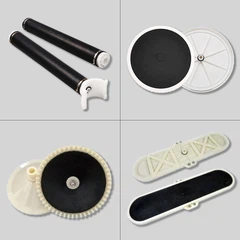
The selection of microporous aeration disks is critical to ensure efficient oxygen transfer in wastewater treatment processes. Several factors need to be considered when selecting the proper size aeration disk, including the size of the wastewater treatment plant, tank design, oxygen demand, and energy efficiency. Here are some suggestions and recommendations for sizing microporous aeration disks.
Aeration Characteristics Of Aerobic Tanks For Domestic Wastewater Biochemical Tanks
Aeration characteristics of aerobic tanks in domestic wastewater treatment are critical because they directly affect wastewater treatment efficiency and operating costs. Below are a few key aeration characteristics:
Aeration:Aeration in aerobic tanks mainly includes mechanical aeration and microporous aeration. Mechanical aeration through the rotating device will introduce air into the water, suitable for treatment capacity of the larger sewage treatment plant; microporous aeration using microporous aerator or aeration disk in the water to release small bubbles, improve the dissolution efficiency and transfer efficiency of oxygen, suitable for energy efficiency and treatment results have higher requirements of the occasion.
Dissolved oxygen control:Aerobic treatment process must ensure adequate dissolved oxygen (DO) levels, which usually maintained at 2-4mg/L to meet the metabolic needs of microorganisms. Too high a DO level may result in wasted energy, while too low a level may affect the efficiency of wastewater treatment.
Oxygen Transfer Efficiency:Oxygen transfer efficiency (OTE) is a key indicator of the efficiency of an aeration system, and an efficient aeration system can reduce energy consumption. Oxygen dissolution efficiency is affected by the design of the aeration system, operation mode, bubble size and distribution and other factors.
Bubble size:Microporous aeration produces small bubbles that can increase the gas-liquid contact area and improve the oxygen dissolution efficiency. Fine bubbles can be suspended in the water for a longer period of time, which promotes the fuller dissolution of oxygen in the water.
Energy efficiency:The aeration process is one of the largest energy consuming parts of a wastewater treatment plant, so optimizing the aeration efficiency is essential to reduce the operating costs of the entire treatment system. Energy consumption can be significantly reduced through the use of efficient aeration equipment and control systems.
System layout and design:The layout and design of the aeration system of the aerobic tank should ensure that the microorganisms in the wastewater are uniformly exposed to oxygen, avoiding insufficient aeration or waste of oxygen. Reasonable design can ensure the uniform distribution of oxygen in the tank and improve the treatment efficiency and economy.
Maintenance and operation:Maintenance and operation strategies for the aeration system are critical to maintaining efficient treatment performance and reducing operating costs. Regular inspection and cleaning of the aeration equipment, as well as adjusting the aeration strategy to actual operating conditions, can effectively extend equipment life and optimize operating efficiency.
By optimizing these aeration characteristics, the efficiency and sustainability of the domestic wastewater treatment process can be improved while reducing environmental impacts and operating costs.
Selection And Recommendation Of Microporous Disc Diffuser For Aerobic Tank Of Domestic Wastewater Treatment
The aerobic tank in the biochemical tank of domestic wastewater removes organic matter from the water through the metabolic process of microorganisms, a process that requires sufficient dissolved oxygen to maintain. According to the aeration characteristics of the aerobic pool, a series of requirements for the aeration disk can be deduced to ensure the effectiveness and efficiency of the aeration system:
1. High oxygen transfer efficiency
Requirement: Aeration trays need to have a high oxygen transfer efficiency to minimize energy consumption while maximizing the availability of dissolved oxygen. This requires that the aeration disk can produce a large number of fine bubbles, because the fine bubbles provide a larger surface area in contact with the water, thereby increasing the rate of dissolved oxygen.
2. Uniform oxygen distribution
Requirements: In order to ensure that the microorganisms in the aerobic pool uniform access to oxygen, the aeration disk should be able to achieve uniform distribution of oxygen in the pool. This requires the reasonable design and layout of aeration disk, in order to avoid the emergence of oxygen supply shortage or excess area.
3. Durability and corrosion resistance
Requirements: Since domestic wastewater may contain a variety of corrosive substances, the aeration disk needs to be made of durable and corrosion-resistant materials, such as polymer materials (EPDM, silicone, etc.), in order to ensure the stability of long-term operation and to reduce maintenance costs.
4. Easy maintenance and replacement
Requirements: Considering the convenience of operation and maintenance, the aeration disk should be designed to be easy to clean, maintain and replace. This requires easy installation and removal process of the aeration disk, to facilitate regular inspection and necessary replacement.
5. Energy efficiency
Requirement: In order to reduce operating costs, the design of aeration trays should focus on energy efficiency, by minimizing energy consumption to achieve the desired aeration effect. This includes choosing the right size, shape and material for the aeration tray, as well as optimizing the overall design of the aeration system.
6. Adaptation to different operating conditions
Requirements: the operating conditions of the aerobic tank (e.g., flow rate, load, etc.) may vary, and the aeration disk should be able to adapt to these variations by adjusting the aeration volume to meet different treatment needs.
In summary, when choosing a suitable aeration disk, it is necessary to consider its oxygen transfer efficiency, uniformity, durability, ease of maintenance, energy efficiency, and adaptability to the operating conditions to ensure that the aerobic tank can operate efficiently and stably.
Aquasust Municipal Wastewater Specialty Disc Diffuser

Catagory: Disc Diffuser
Band: Aqua sust
Type: ASDD270
Disc diffuser Diameter(mm): 270mm
Membrane Material: EPDM 8600n from EXXONMOBIL USA
Carrier Plate: Formula Strengthen ABS Material
Connector: 3/4" NPT Male thread
Bubble size(mm): 1.0-2.0

Catagory: Disc diffuser
Band: Aqua Sust
Type: DD350
Disc diffuser Diameter(mm): 350
Membrane Material: EPDM 8600n from EXXONMOBIL USA
Carrier Plate: Formula Strengthen ABS Material
Connector: 3/4" NPT Male thread
Bubble size(mm): 1.0-2.0