





Introduction
Aeration diffusers are widely used in the biological treatment process of modern wastewater treatment. By dispersing air or oxygen into wastewater, they support aerobic microbial activity, which breaks down organic pollutants.
But with aeration diffusers available in different structures, materials, and pore sizes, do you know how to choose the right one? This guide walks you through the main types of diffusers, their features, and provides purchasing guidance for buyers with different needs.

Types of Diffuser
By Aeration Method
- Blower-Based Diffused Aeration
- Mechanical Aeration
- Hybrid/Jet Aeration

AquaSust Blower-Based Diffusion Aerator
Blower-Based Diffused Aeration: Uses an external blower to push air through submerged diffusers, dissolving oxygen via fine bubbles. Ideal for deep tanks, like municipal (SBR, A2/O) and industrial wastewater treatment. Examples inslude Disc, Tube, Plate, and Ceramic Diffusers.

Water and Wastewaters Mechanical Aeratior
Mechanical Aeration: Such as the paddle wheel, brush aerator, and surface impellers, which agitate water through motor-driven paddles or brushes, introducing oxygen through surface turbulence. No blower needed, suited for shallow, large-area applications (oxidation ponds, lagoons, landscape pools).

Koerting Jet Aerators
Hybrid/Jet Aeration: Combines a water pump or submersible motor to create high-speed flow, drawing air via nozzles/Venturi for gas-water mixing. Jet aerator, Venturi diffuser, aspirating aerator, and aubmersible ejector aerator all belong to the type. They're suitable for high-load industrial wastewater or space-constrained setups.
By Shape
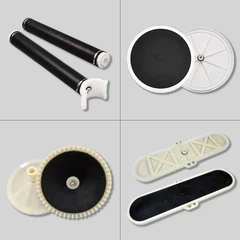
- Disc Diffusers
- Tube Diffusers
- Plate Diffusers
- Bell Diffusers

AquaSust Disc Diffuser
Disc Diffusers: Flat and circular, commonly available in 7", 9", 12", or 20" sizes. They're easy to install, simple to maintain, and provide wide, even air dispersion. People often use them in municipal wastewater plants and biological treatment tanks.

AquaSust Tube Diffuser
Tube Diffusers: Typically 63 mm or 90 mm in diameter, they offer greater airflow capacity and are better suited for long tanks or oxidation ditches. Their linear form allows for flexible layout and consistent aeration across extended areas.

AquaSust Plate Diffuser
Plate Diffusers: Also called panel diffusers, they have a large flat surface that delivers uniform bubble release over deep or wide tanks. They're well-suited for high-efficiency aeration in municipal systems or large lagoons.

Bell Diffusers(Ceramic Microbubble Diffusers)
Bell Diffusers(Ceramic Microbubble Diffusers): The diffusers are made from porous sintered stone, feature a semi-spherical shape that offers stability and fine bubble generation. They're commonly used in aquaculture, hydroponics (DWC systems), and landscape ponds.
By Bubble Size
- Fine Bubble Diffusers
- Coarse Bubble Diffusers
- Nano Bubble Generators

AquaSust Fine Bubble Diffusers
Fine Bubble Diffusers: Produce bubbles between 1~3 mm in diameter, offering high oxygen transfer efficiency (OTE 20–35%). Their slow-rising bubbles provide more contact time with water, making them widely used for activated sludge tanks and biological treatment processes.

AquaSust Coarse Bubble Diffusers
Coarse Bubble Diffusers: Can release larger bubbles, typically 4~13 mm (½ inch), which create strong turbulence and are less prone to clogging. Although they have lower oxygen transfer efficiency (OTE 10–20%, or SOTE < 1%), they are effective in mixing applications such as equalization tanks, grit chambers, and DAF systems.

PURE WATER Nanobubble Generator
Nano Bubble Generators: They produce ultra-fine bubbles smaller than 200 nm, offering deep water penetration and large surface area for oxygen contact. Often integrated into jet or turbine aeration systems, they are currently less common in municipal wastewater but popular in aquaculture, water reuse, and laboratory applications.
By Diffusing Material
- Non-membrane Diffusers
- Membrane Diffusers

AquaSust Non-membrane Diffuser
Non-membrane Diffusers: Made from rigid porous materials such as ceramic (Al₂O₃, SiO₂), stainless steel, or HDPE porous plastic. These materials offer excellent resistance to heat and chemicals. However, they require periodic acid washing or ultrasonic cleaning and typically come at a higher cost. They are best suited for high-load, high-temperature, or corrosive wastewater environments.

Different Membranes Diffusers
Membrane Diffusers: Use flexible synthetic membranes with laser-drilled slits that expand under air pressure. While more sensitive to extreme temperatures and pH levels, they are easy to maintain and cost-effective. Several membrane types are available:
EPDM (Ethylene Propylene Diene Monomer): Durable & cost-effective, mostly used in municipal & industrial wastewater.
Silicone: Offers high resistance to high temperatures and corrosive chemicals.
PTFE: Often used for disc diffusers in high-strength industrial wastewater and biological treatment tanks. It features a non-stick surface that resists fouling.
TPU (Thermoplastic Polyurethane): Resists clogging and stands up to most chemical environments, even under frequent expansion cycles.
By Installation Method
- Fixed Base Diffusers
- Retrievable Diffuser Systems
- Floating Diffuser Systems

Fixed Base Diffusers
Fixed Base Diffusers: The most commonly used diffusers, typically installed at the tank bottom. They include disc, tube, or ceramic types and are widely applied in municipal wastewater treatment plants.

Xylems Sanitaire Aeration Diffuser System
Retrievable Diffuser Systems: Consist of diffusers mounted on removable grids or rails, allowing them to be pulled out without draining the tank. These are ideal for industrial applications or facilities where stopping operation for maintenance is not feasible.

KEVIVA Floating Aeration Moving Chains
Floating Diffuser Systems: Use fine bubble tube diffusers mounted on PE float balls or flexible supports, keeping them about one foot above the tank bottom. Their components remain easily accessible from the surface, and installation/maintenance can be done without emptying the tank. This design is especially suited for river remediation, lakes, or aquaculture ponds.
Conclusion
With so many types of aeration diffusers available, each varying in bubble size, material, structure, and installation method. Whether you're optimizing a municipal WWTP, upgrading an industrial plant, or designing a new aquaculture system, selecting the right diffuser can help improve oxygen transfer performance and operational stability.
For B2B Buyers: How to Choose the Right Aeration Diffuser
- Wastewater Treatment Plants & EPC Contractors
- Water Treatment Equipment Manufacturers
- Distributors & Importers

Wastewater Treatment Plants
Wastewater Treatment Plants & EPC Contractors
For those building integrated aeration tanks, SBR/MBR systems, or containerized wastewater treatment units, modular and easy-to-integrate diffusers can help reduce costs. An ideal partner should offer flexible product configurations tailored to your system's layout and airflow needs, along with mold development and OEM services. We also recommend selecting a manufacturer with stable batch quality, strict quality control, and reliable raw material sourcing.

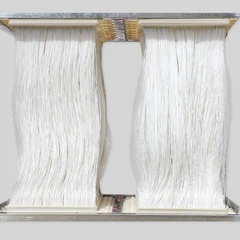
PMCs Aerobic MBR System
Water Treatment Equipment Manufacturers
For those building integrated aeration tanks, SBR/MBR systems, or containerized wastewater treatment units, modular and easy-to-integrate diffusers can help reduce costs. An ideal partner should offer flexible product configurations tailored to your system's layout and airflow needs, along with mold development and OEM services. We also recommend selecting a manufacturer with stable batch quality, strict quality control, and reliable raw material sourcing.

Aerator Wholesaler on Our Exhibition
Distributors & Importers
Your competitiveness comes from a broad product range, pricing flexibility, and quick response times. Look for manufacturers offering tiered bulk discounts, FOB/CIF pricing options, and Multilingual product files to support multi-market sales. And, it would be great to work with suppliers experienced in handling export logistics and documentation for your region can make the process more efficient.
AquaSust Provides Flexible Aeration Diffuser Customization Services
1.Shape Customization
Supports structural customization of disc, tube, dome, and plate diffusers, allowing flexible integration with different aeration systems and installation methods.


2.Bubble Size Customization
Offers bubble size customization within the 1~5mm range, meeting specific oxygen transfer and mixing performance requirements.
3.Material Customization
Base: ABS/PP/high-pressure injection-molded nylon with mechanical strength and chemical resistance.


4.LOGO Customization
Provides logo customization and designated color services to match brand identity or project specifications.
Why Choose AquaSust as Your Aeration Diffuser Supplier?
-

OEM/ODM Production
Learn MoreAquaSust offers both standard wastewater treatment equipment and OEM/ODM solutions to global clients. This includes private labeling, size/material customization, and packaging options. With an over 21,000 m² factory, 15 fully automated diffuser production lines, and a team of engineers with over 20 years of experience, we efficiently handle your bulk orders.
-

International Quality Certifications
Learn MoreOur diffusers are certified by ISO 9001, CE, RoHS, SGS, and FDA. They are safe and efficient for use in WWTPs and recirculating aquaculture systems (RAS), helping improve water quality. Made from premium materials like ABS, 304/316 stainless steel, EPDM, and silicone, all our products undergo strict lab testing and SOTE evaluations.
-

Global Delivery & Support
Learn MoreAquaSust has served clients in over 80 countries, including the USA, Germany, and South Korea. We provide full support, from documentation and customs clearance to technical assistance and after-sales service. By 2030, we aim to support 1,000 water treatment companies and 10,000 projects worldwide.
-

Sustainability
Learn MoreAquaSust is committed to building a greener supply chain. Our factory runs on rooftop solar panels to save carbon emissions, and LED lighting to cut energy use by 85%. We also recycle process water through an internal loop system and apply variable frequency drives (VFDs) to reduce equipment energy waste.
FAQs
-
Q1: Which diffuser type is best for municipal wastewater?
- For Municipal WWTPS: EPDM or PTFE membrane fine bubble membrane diffusers (especially disc and tube types) are suitable for their high oxygen transfer efficiency, energy savings, and compatibility with biological treatment processes.
- In Large-scale Facilities: Grid-mounted systems with fixed or retrievable installation offer easy maintenance and consistent performance.
-
Q2: How to distinguish fine vs coarse bubble diffusers?
Fine bubble diffusers (e.g., disc/tubular) produce 1~3mm bubbles, with higher oxygen transfer efficiency (OTE 20-35%). They're suitable for low-loading wastewater. While coarse bubble diffusers (4~13mm bubbles) have lower OTE (10-20%) but higher durability. People often use them in high-solids sewage.
-
Q3: Can I use disc diffusers in small residential septic tanks?
Disc diffusers are typically designed for larger aerobic systems. For small residential septic tanks, it's more common to use coarse bubble diffusers or compact fine bubble units specifically tailored for low flow rates. Using standard disc diffusers may result in over-aeration or uneven mixing unless the tank design accommodates them properly.
-
Q4: Are ceramic diffusers better than membrane diffusers?
Ceramic diffusers come with a durable and stable pore size, especially for systems with aggressive cleaning cycles or high-temperature conditions. However, membrane diffusers may be more cost-effective, easier to maintain, and better suited for modern biological treatment processes.
-
Q5: How do I select a diffuser for a tank with irregular shape or variable depth?
In tanks with irregular geometry or variable depth, consider how to keep flexibility and even air distribution. Retrievable diffuser systems or pipe-based aeration grids with adjustable supports are often recommended. CFD modeling or system simulation can also help in optimizing diffuser placement to ensure uniform aeration.
Not Sure Which Diffuser Fits Your Tank Conditions?
At AquaSust, we specialize in customized aeration solutions from material selection to installation support. We help our partners build systems that work smarter, last longer, and meet evolving regulatory demands. If you're interested in it, talk to our engineers for a one-on-one consultation and get an expert selection guide.
Get a Free Quote from AquaSust
Please fill out the form, and let us support your water treatment project with reliable products and tailored engineering services.
We promise to respond to your inquiry within 12 hours. Your information will be kept strictly confidential and used solely to respond to your request-we value your needs and privacy.