





Introduction
Both the Membrane Bioreactor (MBR) and the Moving Bed Biofilm Reactor (MBBR) are wastewater treatment technologies that utilize biological processes. They are widely applied in municipal, industrial, and food processing fields due to their high treatment efficiency and compact layout. However, they have obvious differences in operating principles, applicable scenarios, and costs. Do you know which one is more suitable for you? This article will conduct a comparative analysis, introduce the similarities and differences between these two technologies in detail, and help you select the process that is more suitable for your project.
What is MBR?

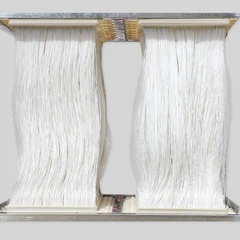
The MBR (Membrane Bio-Reactor) combines the traditional activated sludge process with membrane separation technology. Its principle is to degrade the organic matter in the sewage through microorganisms. At the same time, microfiltration or ultrafiltration membrane modules are used to replace the traditional secondary sedimentation tank to achieve the separation of sludge and water. The highly efficient interception function of the membrane enables the MBR system to separate high-concentration activated sludge and ensure the stability of the effluent water quality. However, the membrane modules of MBR require higher maintenance.
What is MBBR?
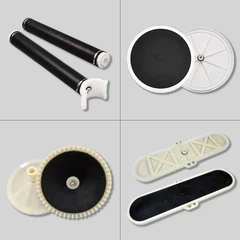
The MBBR (Moving Bed Biofilm Reactor) is a sewage treatment technology based on the biofilm method. Among them, the MBBR medium with a high specific surface area - plastic carriers suspended in the reactor can provide sufficient space for the attachment and growth of microorganisms. During operation, they are kept in continuous motion through aeration or mechanical agitation, allowing the sewage to fully contact with the biofilm to degrade pollutants. In the MBBR, there is no need for sludge return and complex maintenance. But if there are high requirements for the suspended solids in the effluent, it usually needs to be used in combination with other filtration units.

Similarities between MBR and MBBR

• Biological Treatment as the Core: Both rely on the decomposition of organic matter by microorganisms during operation, and are suitable for scenarios with high biodegradability such as domestic sewage and food processing wastewater.
• Compact Layout: Compared with the traditional activated sludge process, both MBR and MBBR do not require additional sludge equipment. They are more suitable for projects with limited space and can save floor space.
• Strong Adaptability: By adjusting operating parameters (such as sludge concentration and filler dosage), they have a strong adaptability to changes in wastewater flow and pollutant concentration. Moreover, the microorganisms attached to these carriers can adsorb and slowly release pollutants, effectively alleviating concentration peaks.
Differences between MBR and MBBR
Although the MBR system and the MBBR reactor have the above similarities, they also have significant differences, such as:
Applicable Fields: The MBR system is more suitable for scenarios with extremely high requirements for effluent water quality, such as the reclaimed water reuse field. It can effectively remove fine particles, bacteria, and viruses in the sewage, and the produced water quality can be directly reused in industrial production or urban miscellaneous use. The MBBR process is commonly used for treating large-scale domestic sewage and industrial wastewater. In some large sewage treatment plants, where the treatment volume of water is huge, the MBBR carriers become the first choice because they can withstand impacts during strong aeration.
Maintenance: The membrane modules of the MBR system need to be cleaned or replaced regularly to prevent a decrease in flux caused by membrane fouling. The cleaning process is relatively complex and involves the use of chemical agents. The maintenance of MBBR is relatively simple. We mainly need to inspect and replenish the carriers to ensure that the fluidization state of the carriers is good.
Cost: Due to the inclusion of expensive equipment such as membrane modules and the frequent cleaning and maintenance required for the membrane modules, the overall cost of MBR is higher. The equipment of the MBBR reactor is simple, the energy consumption is low, and the overall cost is relatively low.
The following is a summary of their differences:
|
Membrane Bioreactor |
Moving Bed Biofilm Reactor |
|
|
Technology |
Use membrane to separate solids and liquids |
Utilize floating media to grow biofilm |
|
Treatment Efficiency |
Higher quality effluent |
Stable, but may require further filtration |
|
Space Requirements |
More compact |
Require more space |
|
Cost |
Higher initial and operating costs |
More cost-effective |
|
Maintenance |
Complex and higher cost |
Less complex and easy to maintain |
|
Effluent Water Quality |
Extremely high (can be directly reused) |
Moderate (needs subsequent filtration for upgrading) |
How to Choose between MBR and MBBR?
(1) Clarify the water quality requirements: If you want the effluent of your project to directly meet the reuse standard or strict discharge limits, please give priority to MBR. If your treatment goal is mainly to reduce COD and ammonia nitrogen, and you accept subsequent filtration treatment, then the overall cost of MBBR is lower.
(2) Evaluate the budget: For projects with sufficient funds and a pursuit of stability, we recommend that you choose the MBR process. When your budget is limited, and you need to carry out large-scale sewage treatment or sewage treatment in a short period of time, MBBR is undoubtedly a better solution.
(3) Operation and maintenance capabilities: Compared with the MBBR system, the MBR system will consume more resources during operation, including the need for you to arrange professional personnel to maintain the appropriate membrane pressure.

Optimize Your Water Treatment Project with AquaSust
As a professional sewage treatment solution provider, AquaSust fully understands the characteristics and advantages of the MBR and MBBR processes. Our professional technical team is highly proficient in customizing efficient and reliable water treatment solutions according to your different needs and actual projects. Contact us for more details.