





SBR (Sequencing Batch Reactor)
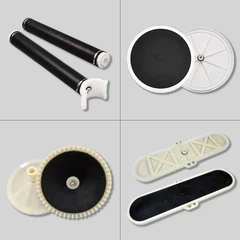
The SBR process is an activated sludge process operated in an intermittent aeration mode. The core of SBR technology is the SBR reactor, which integrates functions such as equalization, primary settling, biological degradation, and secondary settling into one tank. In the same reactor, the process consists of five basic stages: inflow, reaction, settling, drainage, and standby, without a sludge return system. Alternating anaerobic and aerobic processes occur in the tank, thus achieving effective denitrification and phosphorus removal. It is particularly suitable for intermittent discharge and situations with significant flow variations. The decanter is a key equipment in this process.

The SBR process does not require a setting tank, resulting in a lower sludge volume index (SVI), facilitating sludge settlement and reducing the occurrence of sludge bulking. Especially in recent years, with the improvement of automation levels, the widespread use of instruments such as electric valves, level gauges, automatic timers, and programmable controllers has enabled the entire SBR process to be automated. When operated and managed properly, the effluent quality can exceed that of continuous activated sludge processes. Compared to other methods, SBR also occupies a smaller footprint, is resistant to shock loads, and can handle toxic or high-concentration organic wastewater.
Advantages:
High flexibility: Suitable for small and medium-sized treatment plants, and the treatment scale can be adjusted as needed.
Relatively small footprint: Due to batch processing, SBR occupies a relatively small area.
Efficient removal of pollutants: SBR can effectively remove organic matter, nitrogen, and phosphorus pollutants.
Disadvantages:
Requires strict operation management: SBR operation requires strict time control and operation management.
High energy consumption: Significant energy consumption for aeration and agitation is required.
Sensitivity to fluctuations in influent water quality: SBR may be sensitive to fluctuations in influent water quality, which could affect treatment effectiveness.
MBR (Membrane Bioreactor)
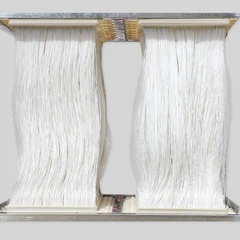
MBR is a new and efficient wastewater treatment process that combines high-efficiency membrane separation technology with traditional activated sludge processes. It uses MBR membrane modules to replace traditional secondary settling tanks. The treated water is pumped out after filtration through the membrane, while the activated sludge is retained by membrane separation and not discharged from the system, thus greatly extending the sludge age and increasing the concentration of activated sludge. Its main feature is to separate the sludge retention time (SRT) from the hydraulic retention time (HRT).

The main component of the MBR process is the membrane module, which is divided into hollow fiber membranes, tubular membranes, plate-and-frame (flat-sheet) membranes, spiral-wound membranes, and capillary membranes. Its function is similar to that of the secondary settling tank in traditional activated sludge processes. The filtration precision of membrane modules is relatively high, generally able to intercept solids ranging from 0.01μm to 0.1μm.
Of course, MBR membranes also need to consider backwashing after long-term operation. When physical cleaning methods are not effective, chemical cleaning is required, which can restore membrane flux relatively well. Common chemical reagents include acids, alkalis, chelating agents, oxidants, enzymes, and surfactants. Although chemical methods can remove pollutants, they may introduce new pollutants, and chemical cleaning agents have certain harmful effects on microorganisms, so operating conditions and methods need attention.
Advantages:
High-quality effluent: MBR's membrane separation technology achieves high-quality solid-liquid separation, ensuring stable effluent quality.
Relatively small footprint: Due to the use of membrane separation technology, MBR occupies a smaller area.
Wide applicability: Suitable for wastewater treatment plants of various water qualities and scales.
Disadvantages:
High energy consumption: Membrane filtration in MBR requires relatively high energy consumption.
Membrane fouling and maintenance difficulty: Regular cleaning and replacement of membranes are required, resulting in higher maintenance costs.
High investment cost: Compared to traditional biological ponds, MBR has higher investment costs.
MBBR (Moving Bed Biofilm Reactor)
MBBR is a new type of biofilm reactor, which is developed based on fixed bed reactors, fluidized bed reactors, and biological filter beds. It is an improved composite biofilm reactor that overcomes the shortcomings of fixed bed reactors requiring periodic backwashing, fluidized bed reactors requiring carrier fluidization, and the complex operation of submerged biological filter beds requiring filter media cleaning and aeration device replacement. MBBR retains the characteristics of traditional biofilm methods such as resistance to shock loads, low sludge production, and long sludge ages. The core of MBBR lies in a special type of media with a density ≈ 1, which is similar to the density of water, allowing it to achieve a fluidized state without requiring significant power.

The main principle of MBBR is to continuously pass sewage through the reactor media carriers, where biofilms are formed on the carriers, facilitating the proliferation of microorganisms and the degradation of organic pollutants. Compared to activated sludge processes, MBBR processes have longer sludge ages, allowing for the retention of more nitrifying bacteria and better denitrification effects.
MBBR can be equipped with secondary settling tanks, or it can operate without them. If operated without secondary settling tanks, it is classified as pure MBBR technology falling within the category of biofilm processes. If secondary settling tanks are installed, it is referred to as a hybrid MBBR system, combining characteristics of both biofilm and activated sludge processes.
Advantages:
High treatment efficiency: MBBR provides a large surface area for biofilm growth and attachment, thereby enhancing microbial growth and improving sewage treatment efficiency.
Strong adaptability: Suitable for different types and scales of wastewater treatment plants.
Strong ability to adapt to load fluctuations: MBBR shows good adaptability to load fluctuations, resulting in relatively stable treatment performance.
Disadvantages:
Requires high operational maintenance: Regular cleaning of media carriers and monitoring of biofilm status are necessary.
Requires high temperature and water quality: MBBR may be less effective in low-temperature environments or poor water quality conditions.
High investment and operational costs: Compared to traditional biological ponds, MBBR has higher investment and operational costs.