

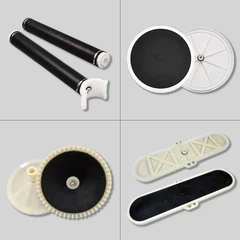


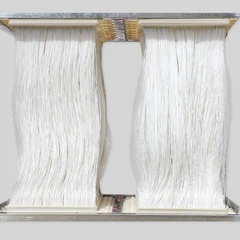


MBBR (Moving Bed Biofilm Reactor) technology uses fillers (also known as carriers) as its core component. These fillers provide a surface for microbial attachment and growth while freely moving within the water treatment system, increasing the probability of contact between the microbes and pollutants in the wastewater. Different shapes and types of fillers are designed with various features and purposes. Below are the characteristics and applications of some common types of fillers:

1. Sponge Filler Carriers
Characteristics: They have a higher specific surface area, allowing more microbes to attach to their surface. The sponge material provides better protection, reducing the shedding of microbes, and has some elasticity to withstand impacts and compression in the reactor.
Applications: Suitable for systems that require a large amount of biofilm development, such as the treatment of high concentration organic wastewater and the biodegradation of hard-to-decompose substances.

2. Coin-shaped Carriers
Characteristics: These carriers are usually designed as small, thin circular discs with possible tiny textured surfaces to increase the specific surface area. Coin-shaped carriers promote water movement and oxygen transfer through their shape and structure.
Applications: Due to their small size and high specific surface area, they are suitable for situations that require improved treatment efficiency and rapid biofilm formation.

3. Plate-shaped Fillers
Characteristics: Plate-shaped fillers are generally flat with a larger surface area to volume ratio. They may have a porous structure or specially designed surfaces to increase the attachment space for microbes.
Applications: This type of filler is suitable for applications that require a larger surface area to enhance biological treatment capabilities, such as urban sewage treatment and industrial wastewater treatment.

4. Cube-shaped Fillers
Characteristics: Cube-shaped fillers have strong structural stability and high space utilization rate. Their shape allows them to be stacked closely together in the reactor, providing a larger surface area.
Applications: Suitable for situations with limited space but requiring high biological treatment efficiency, like compact MBBR systems, small-scale water treatment facilities, etc.
General Characteristics and Considerations When selecting MBBR fillers, the following key factors need to be considered:
Specific Surface Area: Determines how much microbial growth can occur on the fillers, affecting treatment efficiency.
Structure and Shape: Affects the dynamics of water flow and the distribution of oxygen within the system, thereby affecting the efficiency and stability of biological treatment.
Durability and Chemical Stability of the Material: Ensures long-term use without corrosion or decomposition.
Space Utilization Rate: Takes into account the overall design of the system and treatment capacity needs.
Different types of fillers are suitable for different treatment needs and operational conditions. Choosing the right filler is key to optimizing the performance of the MBBR system.