





Introduction
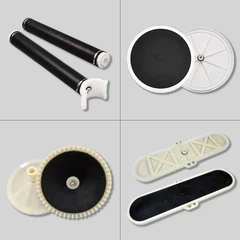
Food and beverage manufacturing generates wastewater from ingredient handling, processing, washing, and equipment cleaning. Depending on the product type and production cycle, the resulting wastewater can have varying COD, BOD, organic loads, and flow characteristics. Biological treatment is commonly used to reduce biodegradable pollutants, with aeration playing a central role in supplying dissolved oxygen to aerobic microorganisms. For this reason, the performance of the aeration system is an important consideration when designing and operating food and beverage wastewater treatment systems. This guide examines the key considerations for selecting and applying Fine Bubble Disc Diffusers in these applications.

Why Aeration Performance Matters in Food and Beverage Wastewater Treatment
Food and beverage wastewater can present more demanding aeration conditions than typical municipal wastewater because of its variable organic loading and the presence of substances such as fats, oils, greases, surfactants, and suspended solids. These characteristics can increase oxygen demand while also contributing to fouling, scaling, or other conditions that affect diffuser performance over time. Production schedules and cleaning operations can further cause significant changes in wastewater flow and organic load, requiring the aeration system to respond to changing oxygen requirements. At the same time, aeration is a major source of energy consumption in biological treatment, making efficient oxygen delivery important for maintaining stable biological performance without excessive blower energy use.
How Fine Bubble Disc Diffusers Improve Aeration Efficiency
Fine Bubble Disc Diffusers address these aeration requirements by combining fine bubble generation with controlled air distribution and efficient airflow. Small bubbles provide a large specific surface area for air-water contact, while their relatively slow rise velocity allows more time for oxygen transfer through the water. A uniform micro-hole distribution helps produce consistent bubble release across the diffuser surface and supports more even dissolved oxygen distribution within the aeration tank. In addition, optimized membrane and airflow designs can help limit pressure loss, while anti-scaling and anti-clogging features support stable bubble formation during continuous operation. Together, these characteristics allow Fine Bubble Disc Diffusers to deliver efficient oxygen transfer while supporting the long-term reliability of the aeration system.
Key Factors for Selecting Fine Bubble Disc Diffusers for Food and Beverage Wastewater
Choosing the right diffuser requires matching its performance and construction to the specific wastewater treatment conditions.

Membrane Material

Oxygen Transfer Efficiency

Anti-Scaling and Anti-Clogging Performance

Tank Depth and Airflow Requirements
Application of Fine Bubble Disc Diffusers in Food and Beverage Wastewater Treatment
Fine Bubble Disc Diffusers are typically installed in biological treatment tanks to
provide the oxygen required for aerobic wastewater treatment.
Supplying Oxygen for Biological Treatment
During aerobic treatment, microorganisms consume oxygen as they break down biodegradable organic matter in food and beverage wastewater. Fine Bubble Disc Diffusers continuously release fine bubbles into the aeration tank, transferring oxygen into the water and supporting the microbial activity required for organic pollutant removal.
Maintaining Oxygen Distribution Throughout the Aeration Tank
In a properly designed aeration system, diffusers are distributed across the treatment tank to provide more uniform air release. The resulting fine-bubble aeration helps distribute oxygen throughout the water volume, reducing poorly aerated zones and supporting more consistent biological activity across the treatment area.
Supporting Continuous Wastewater Treatment
Food and beverage wastewater treatment systems often operate continuously or across repeated production cycles, making reliable aeration important for maintaining treatment performance. Fine Bubble Disc Diffusers are designed for continuous air release and can support stable oxygen transfer throughout extended operating periods, helping the biological process maintain consistent conditions.
Working with Different Biological Treatment Processes
Fine Bubble Disc Diffusers can be incorporated into common aerobic treatment processes, including activated sludge and SBR systems. In continuous aeration systems, they provide ongoing oxygen supply, while in cyclic processes such as SBR, aeration can be operated during designated treatment phases. This allows the same fine-bubble aeration principle to support different biological treatment configurations.
Conclusion
Fine Bubble Disc Diffusers play an important role in food and beverage wastewater treatment by providing efficient and stable oxygen transfer for biological processes. Their performance depends on factors such as oxygen transfer efficiency, membrane material, anti-scaling and anti-clogging performance, airflow capacity, and service life. Rather than selecting a diffuser based solely on initial cost, treatment conditions and long-term operating requirements should be considered to achieve reliable aeration and controlled energy consumption. With different diffuser sizes, membrane configurations, and aeration performance options, AquaSust can provide suitable Fine Bubble Disc Diffuser solutions for different food and beverage wastewater treatment requirements. Contact us to discuss your application and find the right aeration solution for your wastewater treatment system.