





Introduction
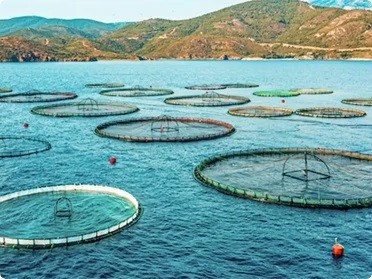
Maintaining stable water quality is one of the most important challenges in recirculating aquaculture systems (RAS). As fish density and feeding rates increase, ammonia, nitrite, and organic waste can accumulate quickly, directly affecting fish health and production stability. MBBR biofilters have become a widely used biological filtration solution in modern fish RAS because they provide efficient biofilm growth, stable nitrification performance, and reliable long-term water treatment capability.
What Is an MBBR Biofilter?
An MBBR biofilter is a biological treatment system that uses mobile plastic carriers, known as MBBR media, to support the growth of beneficial microorganisms. The carriers are suspended in the reactor and kept in constant motion by aeration or mechanical mixing. Water passing through the reactor comes into contact with the biofilm on the carriers, where ammonia and nitrite are converted into less harmful nitrate through nitrification. MBBR systems are widely used in RAS because of their compact footprint, high loading capacity, operational reliability, and resistance to clogging-making them particularly suitable for high-density fish farming.
How MBBR Biofilter Supports Stable Water Quality in Fish RAS
The MBBR biofilter maintains stable water quality through four key mechanisms.
Efficient Ammonia and Nitrite Removal
Ammonia excreted by fish is highly toxic. Nitrifying bacteria attached to MBBR carriers oxidize ammonia to nitrite, and then to nitrate. Nitrate is significantly less toxic to fish and can be removed through water exchange or denitrification. This biological conversion is the foundation of stable water quality in RAS. Without an effective MBBR biofilter, ammonia can accumulate rapidly in high-density systems, potentially reaching levels harmful to fish.
High Surface Area for Microbial Colonization
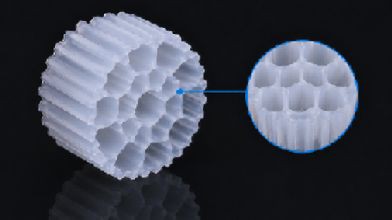
MBBR carriers provide a large protected surface area for nitrifying bacteria to colonize. The greater the surface area, the more bacteria can grow, and the higher the ammonia removal capacity. Different MBBR media offer specific surface areas ranging from over 650 m²/m³ to more than 1700 m²/m³. Higher surface area media support higher stocking densities but require adequate aeration to keep carriers fluidized.
Resistance to Load Fluctuations
Feeding rates, stocking density, and water temperature change throughout the production cycle. MBBR biofilters handle these fluctuations well. The attached biofilm adapts to varying ammonia loads – responding quickly during peak feeding periods and maintaining activity during low-load periods. This resilience ensures consistent effluent quality even when operating conditions vary.
Self-Cleaning and Less Clogging
Carriers in constant motion collide with each other, naturally shearing off old biofilm and exposing fresh surface for new growth. This self-cleaning action prevents excessive biofilm accumulation and eliminates the need for frequent backwashing. Compared to fixed-bed filters, MBBR systems are much less prone to clogging, which helps reduce maintenance frequency and supports more continuous operation.
Key Features of MBBR Media for RAS Applications
Selecting the right MBBR media is critical for RAS performance. The following features determine how well the media will perform in fish farming applications.
Large Specific Surface Area
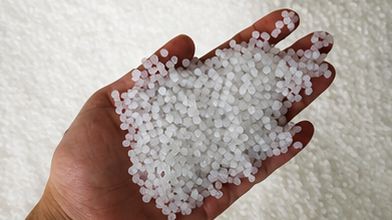
Durable Virgin HDPE Material
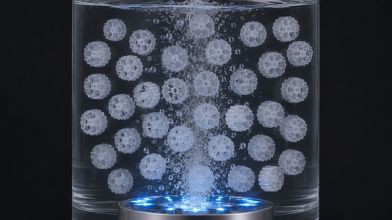
Optimized Density for Stable Fluidization
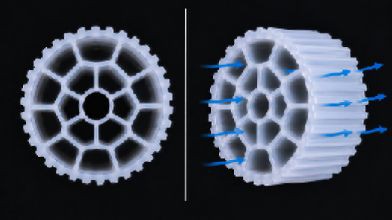
Internal Structure for Mass Transfer
How to Choose the Right MBBR Media for Your RAS
Selecting appropriate MBBR media directly impacts biofilter efficiency and long-term operating costs. Consider these three factors when making your choice.
Match Surface Area to Stocking Density
Higher stocking densities produce higher ammonia loads and require media with greater specific surface area. Low to medium density systems may use media with 650-800 m²/m³, while high-density commercial RAS operations typically require media with 1000-1700+ m²/m³. Matching surface area to actual load prevents over-sizing or under-sizing the biofilter.
Determine the Right Fill Ratio
Fill ratio refers to the percentage of reactor volume occupied by MBBR media. Typical RAS systems operate with fill ratios between 20% and 40%. Higher fill ratios provide more biological treatment capacity but require more aeration to keep carriers fluidized. Start with a lower fill ratio and increase as needed, ensuring the aeration system can maintain proper mixing.
Verify Material Durability
RAS systems operate continuously, often for years without shutdown. MBBR media must withstand constant abrasion from carrier-to-carrier contact and exposure to aeration. Choose media manufactured from 100% virgin HDPE with proven long-term durability. Verified service life of over 20 years indicates reliable material quality and predictable replacement schedules.
Conclusion
The MBBR biofilter removes ammonia and nitrite through nitrifying bacteria on mobile carriers. Key media features include high surface area, virgin HDPE material, optimized density, and internal void structure. Proper media selection ensures stable water quality and efficient RAS operation. Aquasust offers MBBR media with surface area from 650 to over 1700 m²/m³, 20+ year service life, and OEM/ODM support. Contact us today for media selection advice.