





Introduction
When selecting a plate diffuser, factors such as service life, energy consumption, and oxygen transfer efficiency are critical. The market mainly offers two types: non-membrane and membrane plate diffusers, each suited for different treatment needs. This article will provide a comprehensive comparison of the two, helping you find the most suitable solution.
What is a Non-Membrane Plate Diffuser?
A non-membrane plate diffuser is typically made of durable materials such as ceramics or metals, featuring fixed holes or slots through which air is directly introduced into the water. This design produces relatively coarse bubbles that rise quickly, effectively agitating the water in deep tanks and promoting even oxygen distribution.
Key Advantages
• High Durability: Ceramic or metal plates can withstand long-term operation and harsh chemical environments.
• Low Maintenance: Simple structure with fewer components reduces the need for frequent replacement.
• Stable Performance: Ensures reliable air distribution even in high-strength wastewater or water containing abrasive particles.
Applicable Scenarios
1. Deep Aeration Tanks: Fast-rising bubbles ensure efficient water mixing.
2. Wastewater with Particles or Abrasive Components: Robust ceramic or metal plates resist wear better than flexible membranes.
3. Long-Term Operation in Industrial or Municipal Wastewater Treatment Plants: Reduces maintenance frequency and ensures continuous, stable performance.

What is a Membrane Plate Diffuser?
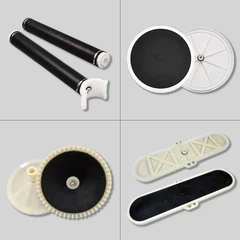
A membrane plate diffuser uses a flexible membrane material, such as EPDM or other elastomers, mounted over a perforated plate. Air is pushed through the membrane's tiny holes, producing uniform, fine bubbles. These slow-rising microbubbles increase the contact area between oxygen and water, improving oxygen transfer efficiency.
Key Advantages
• High Oxygen Transfer Efficiency: Fine bubbles provide a larger surface area, enhancing biological treatment performance.
• Low Operating Noise: Flexible membranes absorb airflow impact, reducing operational noise.
• Easy Replacement: Membranes can be replaced individually without disassembling the entire diffuser, reducing downtime.
Applicable Scenarios
1. Shallow to Medium-Depth Aeration Tanks: Slow-rising microbubbles ensure uniform oxygen distribution.
2. Energy-Efficient Wastewater Treatment Plants: Optimized bubble efficiency reduces energy consumption.
3. Systems Requiring Easy Maintenance: The membrane is easy to replace, reducing operating costs.

Non-Membrane vs Membrane: Key Differences
When choosing between the two types, several factors should guide the decision:
|
Feature |
Non-Membrane Diffuser |
Membrane Diffuser |
|
Bubble Size |
Coarser |
Fine |
|
Oxygen Transfer Efficiency |
Moderate |
High |
|
Durability |
Very High |
Moderate |
|
Maintenance |
Low |
Moderate (membrane replacement) |
|
Noise |
Moderate |
Low |
Decision Considerations
• When the aeration tank is deep, the wastewater contains abrasive particles, or long-term durability is a key requirement, choose non-membrane diffusers such as ceramic plate diffusers.
• When the system requires high oxygen utilization, aims to save energy, or prioritizes quiet operation, opting for membrane diffusers like EPDM membrane diffusers is the better choice.
Conclusion
Selecting the right plate diffuser depends on your system's specific needs. Non-membrane and membrane plate diffusers each have strengths tailored to different applications. For professional guidance and high-quality options, Aquasust offers a wide range of plate diffusers designed to optimize wastewater aeration. Contact us today to discover how our solutions can enhance your water treatment efficiency.