





Introduction
In industrial wastewater treatment, the choice of diffuser membrane often determines the efficiency and lifespan of the entire system. Different membrane materials vary in chemical resistance, maintenance needs, and overall cost-effectiveness. This article will explore which diffuser membrane works best for industrial wastewater applications.
Why Diffuser Membranes Matter
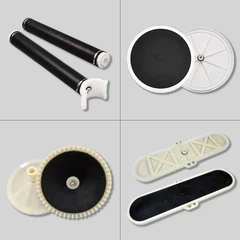
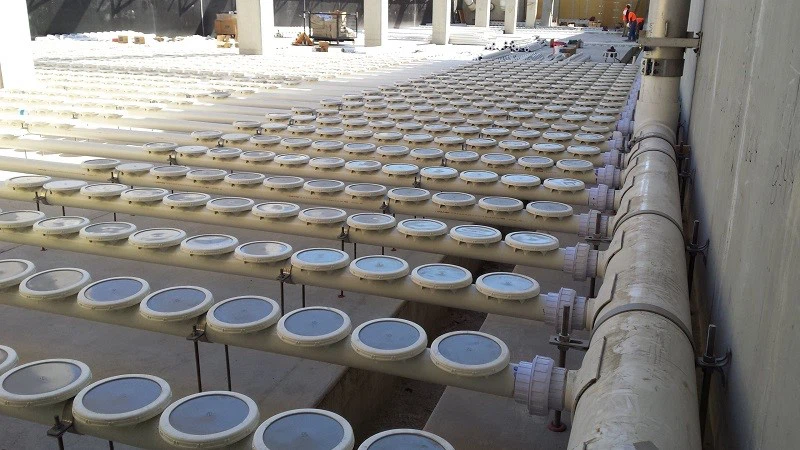
The membrane is the core component of a disc diffuser, responsible for releasing air as fine bubbles that enhance oxygen transfer and improve wastewater treatment efficiency. Choosing the right membrane material not only boosts system performance but also extends equipment lifespan and reduces operational and maintenance costs, making it a key factor in industrial wastewater treatment.
Common Types of Diffuser Membrane Materials
In industrial wastewater treatment, the material of a membrane disc diffuser greatly influences oxygen transfer, system performance, and maintenance requirements. The most common types include:

EPDM Membrane
EPDM (Ethylene Propylene Diene Monomer) membranes are highly elastic and tear-resistant, providing stable performance under typical industrial wastewater conditions. They are suitable for most municipal and industrial treatment systems.
Advantages: Cost-effective, easy to install and replace, suitable for general industrial wastewater applications.
Limitations: Performance may decline in high-fat or chemically aggressive environments.

PTFE Membrane
PTFE membranes are made from polytetrafluoroethylene, offering excellent chemical resistance and fouling prevention. They maintain consistent oxygen transfer efficiency even in high-strength or chemically complex wastewater.
Advantages: Long service life, stable oxygen transfer, and reduced cleaning and maintenance requirements.
Limitations: Higher initial cost compared to EPDM, requiring a larger upfront investment.

Other Membranes (Silicone, PU)
Silicone membranes are highly flexible and resistant to low temperatures, suitable for specialized process conditions. PU (polyurethane) membranes offer strong abrasion resistance for environments with mechanical friction or high solids.
Advantages: Can provide better low-temperature adaptability or wear resistance for specific applications.
Limitations: Typically lower chemical resistance and shorter lifespan than EPDM and PTFE, not suitable for most industrial wastewater.
How to Choose the Best Membrane for Your Facility
In industrial wastewater treatment, selecting the right membrane for a disc diffuser requires considering the following practical factors:
Wastewater Type
Analyze the composition of your wastewater, including fats, chemicals, and suspended solids. PTFE membranes are suitable for high-strength or chemically aggressive wastewater, while EPDM membranes are sufficient for standard industrial sewage.
01
System Airflow and Diffuser Depth
Consider the tank depth and required oxygen transfer. Flexible membranes that produce fine bubbles, such as EPDM or silicone, can improve oxygen transfer efficiency in deep tanks or high-demand systems.
02
Cleaning and Maintenance Method
Determine the cleaning strategy of your facility. Wear-resistant membranes (PU or PTFE-coated) suit frequent backwashing, whereas lightweight, easy-to-install membranes (EPDM) are better for manual maintenance.
03
Lifespan and Cost Balance
Assess both initial cost and expected service life. Durable membranes like PTFE or EPDM can reduce overall operating costs for high-use or continuously running systems.
04
Conclusion
In short, for industrial wastewater treatment, the most suitable disc diffuser membranes should be selected based on wastewater characteristics and system requirements. EPDM membranes are sufficient for standard wastewater, while PTFE membranes are recommended for high-strength or chemically aggressive wastewater, ensuring efficient, durable, and cost-effective treatment.
Contact Us to Optimize Your Wastewater Treatment System
Looking to make your industrial wastewater treatment more efficient and stable? Aquasust offers disc diffusers made from a variety of membrane materials, including EPDM, PTFE, and silicone, tailored to suit different wastewater types and system conditions. Contact us today for professional guidance and customized solutions!