





As a seasoned supplier of MBBR media, I've witnessed firsthand the intricate relationship between temperature fluctuations and the performance of Moving Bed Biofilm Reactor (MBBR) media. In this blog post, I'll delve into the scientific aspects of how temperature variations impact MBBR media and why it's crucial for your wastewater treatment and aquaculture projects.
Understanding MBBR Media
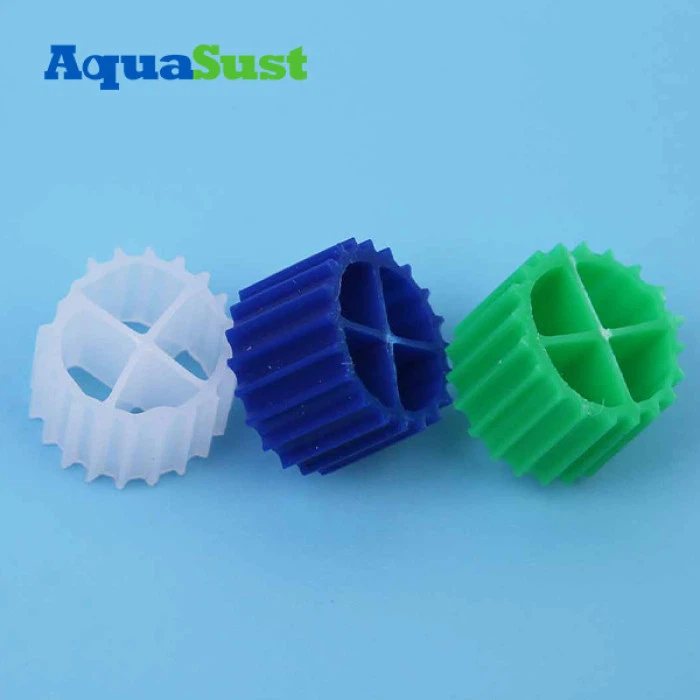
MBBR media, such as our MBBR Media AS - MBBR04 For Aquaculture, are plastic carriers designed to provide a large surface area for the growth of biofilms. These biofilms are composed of microorganisms that play a vital role in the biological treatment of wastewater and maintaining water quality in aquaculture systems. The media's movement within the reactor helps to enhance the contact between the biofilm and the wastewater or aquaculture water, facilitating the degradation of organic matter, removal of nutrients, and other purification processes.
Impact of Temperature on Microbial Activity
Temperature is one of the most critical environmental factors affecting the activity of microorganisms in the biofilms attached to MBBR media. Microorganisms have an optimal temperature range within which they can grow and metabolize most efficiently. For most common wastewater - treating and aquaculture - related microorganisms, this range is typically between 20°C and 30°C.
High Temperatures
When the temperature rises above the optimal range, several things can happen. Firstly, the metabolic rate of microorganisms initially increases. This means that they consume organic matter and nutrients at a faster pace, potentially leading to more rapid treatment of wastewater. However, as the temperature continues to rise, proteins and enzymes within the microorganisms start to denature. Enzymes are essential for biochemical reactions in the cells, and their denaturation disrupts the normal metabolic processes of the microorganisms.
For example, at temperatures above 40°C, many aerobic bacteria that are responsible for the oxidation of organic compounds in wastewater treatment can experience a significant decline in activity. This can result in a decrease in the removal efficiency of chemical oxygen demand (COD) and biological oxygen demand (BOD). In aquaculture systems, high temperatures can also lead to the production of harmful by - products by the stressed microorganisms, which can be detrimental to the health of the aquatic organisms.
Low Temperatures
Conversely, low temperatures slow down the metabolic activity of microorganisms. At temperatures below 10°C, the growth rate of many bacteria and other microorganisms decreases significantly. The diffusion of substrates and nutrients into the biofilm is also reduced, as the viscosity of water increases at lower temperatures. This makes it more difficult for the microorganisms to access the necessary resources for growth and metabolism.
In wastewater treatment plants using MBBR media, low temperatures can lead to a longer hydraulic retention time (HRT) being required to achieve the same level of treatment efficiency. In aquaculture, the reduced microbial activity can result in a build - up of ammonia and other harmful substances in the water, as the nitrifying bacteria that convert ammonia to nitrite and then to nitrate are less active.
Physical Changes in MBBR Media
Temperature fluctuations can also cause physical changes in the MBBR media themselves. Most MBBR media are made of plastic materials, which have different coefficients of thermal expansion. When the temperature changes, the media may expand or contract.
Expansion
During high - temperature periods, the MBBR media can expand. This expansion can affect the packing density of the media within the reactor. If the media expand too much, they may cause blockages or disrupt the normal flow pattern of the water within the reactor. This can lead to uneven distribution of the biofilm and reduced contact between the media and the wastewater or aquaculture water, ultimately affecting the treatment efficiency.
Contraction
In cold temperatures, the media contract. This contraction can lead to gaps between the media, which may allow the biofilm to slough off more easily. A significant loss of biofilm can reduce the number of microorganisms available for treatment, resulting in a decrease in the overall performance of the MBBR system.
Influence on Biofilm Attachment and Growth
Temperature also plays a role in the attachment and growth of biofilms on MBBR media. At optimal temperatures, microorganisms can attach to the surface of the media more easily and form a stable biofilm. The extracellular polymeric substances (EPS) produced by the microorganisms help to anchor the biofilm to the media surface.

High temperatures can disrupt the production of EPS. As the microorganisms are stressed, they may produce less EPS, or the quality of the EPS may be affected. This can make the biofilm less stable and more prone to detachment. On the other hand, low temperatures can slow down the initial attachment process of microorganisms to the media. The cold environment may inhibit the motility of the microorganisms, making it more difficult for them to reach and adhere to the media surface.
Practical Considerations for MBBR Media Users
If you're using MBBR media in your wastewater treatment or aquaculture projects, it's essential to monitor and control the temperature as much as possible. In wastewater treatment plants, heating or cooling systems can be installed to maintain the temperature within the optimal range for the microorganisms. In aquaculture, the use of insulated tanks or temperature - controlled water sources can help to mitigate the effects of temperature fluctuations.
When selecting MBBR media, it's also important to choose media that are resistant to thermal expansion and contraction. Our MBBR Media AS - MBBR04 For Aquaculture is designed with high - quality plastic materials that have excellent thermal stability, ensuring reliable performance even under varying temperature conditions.
Conclusion
Temperature fluctuations have a profound influence on MBBR media, affecting both the activity of the microorganisms in the biofilms and the physical properties of the media themselves. Understanding these effects is crucial for optimizing the performance of MBBR systems in wastewater treatment and aquaculture.
As a trusted supplier of MBBR media, we are committed to providing high - quality products that can withstand the challenges posed by temperature variations. If you're interested in learning more about our MBBR media or have specific requirements for your projects, we invite you to contact us for a detailed discussion. Our team of experts is ready to assist you in selecting the most suitable MBBR media for your needs and ensuring the success of your treatment systems.
References
- Rittmann, B. E., & McCarty, P. L. (2001). Environmental Biotechnology: Principles and Applications. McGraw - Hill.
- Metcalf & Eddy. (2014). Wastewater Engineering: Treatment and Reuse (5th ed.). McGraw - Hill.
- Tchobanoglous, G., Burton, F. L., & Stensel, H. D. (2003). Wastewater Engineering: Treatment, Disposal, and Reuse (4th ed.). McGraw - Hill.