

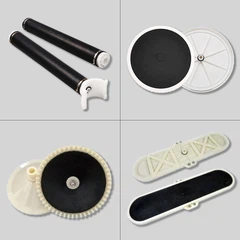


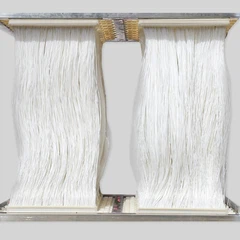


International municipal water utilities and global industrial wastewater EPC contractors face acute supply chain risks when procuring aeration systems from overseas manufacturing bases. Because fine bubble diffusers are permanently submerged at the bottom of active bioreactors, localized structural failures-such as membrane blow-offs, injection-molded base fractures, or thread leakages-incur catastrophic basin dewatering and downtime costs that dwarf the initial purchase price.
According to global engineering procurement and quality assurance frameworks, international buyers auditing manufacturing partners frequently encounter three persistent vulnerabilities: technical disconnect in standard transposition, batch consistency drifts in high-volume production runs, and transit degradation during intercontinental maritime freight. Establishing a rigorous quality assurance protocol-spanning technical data lock-in, golden sample sealing, standardized Factory Acceptance Testing (FAT), and export-grade barrier packaging-is paramount to safeguarding project execution.

Figure 1: Real workshop photo of precision injection molding floor and core aeration component manufacturing at Aquasust Factory.
1. Key Quality Bottlenecks in International EPC Aeration Equipment Procurement
In large-scale biological aeration installations, engineering managers frequently confront persistent procurement gaps when sourcing diffusers internationally:
- Technical Disconnect in Standard Transposition: Mismatches between overseas specifications (e.g., ASTM, DIN, ISO) and domestic manufacturing benchmarks (GB, CJ/T) regarding tensile pull rates, vulcanization temperature tolerances, or liquid test media;
- Batch Consistency Drifts in High-Volume Runs: Golden pre-production samples comply rigorously, but multi-thousand unit commercial production exhibits durometer hardness variances due to raw resin fluctuations or uneven molding thermal profiles;
- Transit Degradation During Intercontinental Ocean Freight: High-humidity maritime corridors across equatorial waters degrade substandard corrugated packaging, causing structural crush loads that impose permanent compressive deformation on stacked elastomer membranes.
2. Four Systematic Quality Control Gateways in Aeration Manufacturing
Within the standardized operating procedures of Aquasust Factory, quality assurance follows four mandatory milestones compliant with ISO 9001:2015:
2.1 Gateway 1: Technical Agreement Specification Lock-In
Prior to manufacturing release, collaborative engineering teams freeze all dimensional tolerances, thread standards (NPT vs. BSP), raw EPDM polymer mass content (> 30%), plasticizer extractables, tear resistance (ASTM D624), and dynamic operating flux envelopes via bilateral bilingual signed execution documents.
2.2 Gateway 2: Golden Sample Mutual Sealing
Following tooling qualification, three pre-production assemblies are produced. Both entities sign and tamper-seal the specimens: one set serves as the buyer's port-of-entry acceptance benchmark; one set anchors the factory line QC comparator; and one set undergoes certified third-party laboratory verification (e.g., SGS / TÜV).
2.3 Gateway 3: Rigorous Factory Acceptance Testing (FAT)
Final finished inventory undergoes statistical quality auditing under international standard ISO 2859-1 / ANSI/ASQ Z1.4 (Sampling Procedures for Inspection by Attributes). Operating at General Inspection Level II with Acceptable Quality Limit AQL 1.0 (Critical Defect AQL 0.0), technicians execute pneumatic submersion tests (0.05–0.08 MPa pneumatic hold for 60 seconds without housing joint bubbling) and slit distribution checks.
2.4 Gateway 4: Heavy-Duty Ocean Export Packaging
Discarding domestic-grade cartons, all exports utilize heavy-gauge 5-ply water-resistant corrugated outer cartons (> 250 g/m²). Individual assemblies are cushioned in sealed anti-static barrier bags. Units are consolidated on heat-treated ISPM 15 export pallets, reinforced with edge board protectors and six layers of industrial stretch film to eliminate maritime moisture and crushing.

Figure 2: Automated assembly line and continuous inline quality inspection on the Aquasust Factory floor.
3. Comprehensive Aeration Equipment FAT Inspection and Acceptance Matrix
| QC Inspection Parameter | Field Method & Test Standards | Acceptance Tolerance Baseline | Defect Classification (AQL) |
|---|---|---|---|
| Base & Support Ring Material | Differential Scanning Calorimetry (DSC) / ISO 11357 | 100% Virgin Polypropylene (PP) + 20% Short Glass Fiber | Critical Defect (AQL 0.0) (Zero regrind allowed) |
| Elastomer Durometer Hardness | Shore A Durometer / ASTM D2240 | 55 ± 5 Shore A (Intra-batch variation ≤ 3 points) | Major Defect (AQL 1.0) |
| Tensile Strength & Elongation | Electronic Tensile Testing / ASTM D412 Dumbbell Specimen | Tensile Strength ≥ 10.0 MPa; Elongation at Break ≥ 400% | Major Defect (AQL 1.0) |
| Submerged Air-Tightness | 0.06 MPa Submerged Pressure Hold (60s) / CJ/T 264 | Zero bubble release at thread, clamp, and seal interfaces | Critical Defect (AQL 0.0) |
| Thread Fit Accuracy | Thread Go/No-Go Gauges / ISO 7-1 (BSP) or ASME B1.20.1 (NPT) | Go-gauge threads smoothly; No-go gauge enters ≤ 2 turns | Major Defect (AQL 1.0) |
| Packaging & Pallet Integrity | Free-Fall Drop & Compression / ASTM D5276 & ASTM D642 | Bursting strength ≥ 1,400 kPa; Pallet stack deformation ≤ 2% | Minor Defect (AQL 2.5) |
4. Automated Manufacturing Verification and FAT Documentation Protocols
For international EPC clients, engineering transparency hinges upon full documentation traceability. Every commercial consignment originating from Aquasust Factory includes a verified bilingual Factory Acceptance Test (FAT) dossier and Certified Mill Test Reports (MTR):
- Raw Material Batch Traceability: Mill certificates certifying virgin polymer pedigree (from premier petrochemical producers), detailing compound properties alongside third-party RoHS and REACH compliance audits;
- Laser Slit Micro-Geometry Inspection Logs: Optical microscopy scans verifying slit spacing, perforation length, and blade bevel edge integrity, proving consistent elastic opening-closing dynamics under operating flux without bonding;
- Submerged Pneumatic Verification Video Archives: Consignments are accompanied by synchronized pneumatic gauge video footage and inspector-signed test logs, cataloged within our digital ERP tracking platform for a minimum 5-year retention period to ensure end-to-end QR batch traceability.

Figure 3: High-strength glass-fiber reinforced PP pipe saddle connector engineered for secure lateral aeration grid distribution.
5. Frequently Asked Questions (FAQ)
Q1: How can overseas buyers conduct remote Factory Acceptance Testing (Remote FAT) when travel is constrained?
A: Aquasust Factory regularly hosts accredited third-party inspection firms (including SGS, Bureau Veritas, and TÜV) for on-site auditing. Additionally, our testing laboratory is outfitted with multi-angle high-definition live video feeds, allowing EPC engineers to witness submerged pressure tests, gauge verification, and random container unpacking in real time. Digital raw data logs are transmitted instantaneously for electronic signature verification.
Q2: How does the factory prevent elastomer membrane sticking or cross-linking during equatorial ocean transit?
A: Inside sealed shipping containers, equatorial temperature fluctuations can cause ambient interior heat to exceed 50°C. Following automated micro-slit perforation, all membrane surfaces undergo electrostatic dusting with high-purity food-grade anti-blocking powder. Oil-resistant barrier interleaving sheets are inserted between layered membranes, and moisture-absorbing desiccant packs are enclosed in each master carton, eliminating heat-induced vulcanization adhesion.
Rigorous quality control protocols and verifiable Factory Acceptance Testing are the cornerstone of reliable wastewater aeration systems. Contact the Aquasust Factory technical team for custom project specifications, FAT procedure checklists, and export logistics consultations.