





Introduction
Wastewater will be produced at any time in our daily life and industrial activities. This ranges from the sewage water in household kitchens to the wastewater containing various chemical substances discharged by factories. If the wastewater is directly discharged into the environment without proper treatment, it will pose great harm to the ecosystem and human health. Therefore, various wastewater treatment equipment has been designed. Through operations such as aeration, sedimentation, and filtration, these equipment purify the wastewater and enable it to be safely discharged or reused. In this article, we will take a deeper look at what wastewater treatment is and list common wastewater treatment equipment and their advantages.
What is Wastewater Treatment?

Simply put, wastewater treatment is the process of separating pollutants (such as suspended solids, organic matter, heavy metals, microorganisms, etc.) in wastewater or converting them into harmless substances, thus purifying the wastewater. This process involves various physical, mechanical, biological, and chemical methods. Eventually, the treated wastewater can be safely discharged into natural water bodies or used for purposes such as irrigation and industrial recycling.
The Main Processes of Wastewater Treatment
Wastewater treatment includes the following main processes:
1. Pretreatment: Remove large-particle suspended solids and floating objects in the wastewater through equipment such as grids and screens.
2. Primary treatment: Remove suspended solids and part of the organic matter in the wastewater. Commonly used equipment includes sedimentation tanks and flotation tanks.
3. Secondary treatment: Use biological treatment methods such as the activated sludge process and the biofilm process to remove organic matter and nutrients such as nitrogen and phosphorus in the wastewater.
4. Tertiary treatment: Adopt advanced oxidation, membrane separation, and other technologies to further remove trace pollutants in the wastewater.
5. Sludge treatment: Concentrate, dewater, and dispose of the sludge generated during the treatment process. This step requires the use of sludge thickening tanks and sludge dewatering machines.

Why is Wastewater Treatment So Important?
Protect Public Health: Wastewater treatment can remove pathogenic bacteria, viruses, and parasites in sewage. Otherwise, untreated wastewater will contaminate drinking water sources and spread diseases.
Water Resource Management: Treated water can be safely reused for irrigation, industrial processes, and replenishing groundwater resources. This helps to reduce the pressure on water supply in areas with scarce water resources.
Meet Regulatory Requirements: Wastewater treatment plants must meet regulatory requirements and protect public health and the environment by preventing pollution, ensuring water quality, and complying with legal standards.
Economic Benefits: Wastewater treatment plants can generate revenue by recycling valuable resources such as sludge fertilizers and energy. They can also provide more job opportunities.
Common Wastewater Treatment Equipment and Their Advantages

Ultrafiltration System
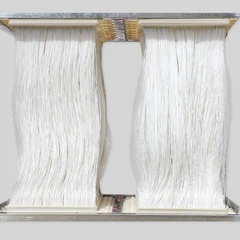
The ultrafiltration system uses semi-permeable membrane separation technology. Driven by pressure, it separates suspended solids, colloids, macromolecular organic matter, etc. in the wastewater. It includes semi-permeable membranes, feed tanks, pumps, and cleaning devices. This system is commonly used for producing high-quality drinking water, treating industrial process water, and removing suspended solids in water treatment plants.
• Advantages:
(1) High-Purity Water: The pore size of the ultrafiltration membrane is between 0.01 and 0.1 microns, which can provide water with extremely high purity and low sediment density.
(2) Pollutant Removal: It can effectively remove suspended solids and microorganisms regardless of the initial water quality.
(3) Compact and Chemical-Free: Compared with traditional filtration systems, it requires less installation space and hardly uses any chemicals(except for membrane cleaning).
Reverse Osmosis (RO) System
It can use a semi-permeable membrane to separate water molecules from the solution under high pressure. It is most commonly used for producing high-purity drinking water, desalinating seawater, and treating industrial water. The system includes components such as sediment filters, carbon filters, RO membranes, post-filters, and storage tanks.
• Advantages:
(1) Efficient Reduction Of Pollutants: The pore size of the reverse osmosis membrane is about 0.0001 microns, which can effectively remove almost all pollutants in water, such as ions, organic matter, and microorganisms.
(2) Improved Water Quality: The RO system can make the water cleaner and odor-free.
(3) Softening Of Water: The reverse osmosis system is an effective way to remove hard water minerals that cause problems in pipes and electrical appliances.


Sludge Dewatering System
The sludge dewatering system can concentrate the sludge generated by wastewater treatment plants and various industrial manufacturing plants into a high-solid filter cake. It includes various components such as plate and frame filter presses, belt filter presses, centrifuges, screw presses, and geomembranes.
• Advantages:
(1) Efficient Solid-Liquid Separation: It is especially suitable for wastewater treatment where the sludge contains a high proportion of water.
(2) Reduction Of Sludge Volume: By dewatering the sludge, it can reduce the volume of the sludge and lower the transportation cost.
(3) Improved Treatment Process: The dewatered sludge is easier to handle and process, such as incineration or landfill disposal.
Polymer Batching System
The polymer batching system is composed of components for storing, mixing, and dispensing polymers, including storage tanks, mixing devices, metering pumps, and control systems. It is used to prepare polymer solutions (liquid or powder) in various water and wastewater treatments, ensuring a uniform concentration of flocculants and immediate usability.
• Advantages:
(1) Polymer Activation and Flocculation: This system can batch prepare polymer solutions and fully activate them. The sludge particles will flocculate more effectively, improving the dewatering efficiency.
(2) Reduced Intervention: The automated preparation system can reduce the number of dosage errors caused by manual operation.
(3) Suitable for Specific Applications: The polymer batching system is designed to ensure more effective polymer activation, helping with the flocculation, thickening, and dewatering of wastewater treatment.


DFA (Dissolved Air Flotation)
Dissolved Air Flotation (DAF) is a water treatment process used in industries, the oil and gas sector, and the mining industry. It consists of components such as an air dissolution system, a flocculation chamber (optional), a flotation tank, and a skimmer. The purpose is to use microbubbles to separate suspended solids, oil, and grease in water or wastewater, making it easier to remove the impurities that float to the surface.
• Advantages:
(1) Efficient Removal: Dissolved Air Flotation can effectively remove suspended solids and grease in wastewater, resulting in good effluent water quality.
(2) Easy Operation: The equipment in this system has a simple structure, does not occupy too much space, and is easy to maintain.
Conclusion
Now we can summarize that wastewater treatment equipment mainly includes ultrafiltration systems, reverse osmosis systems, sludge dewatering systems, polymer batching systems, and dissolved air flotation systems. They have different functions and advantages and work together to improve the effluent water quality and reduce the impact on the environment.
When choosing equipment, it is very important to seek the advice of professionals. AquaSust is a reliable water treatment solution provider with rich experience in manufacturing high-quality wastewater treatment equipment. All of our equipment exceeds industry standards and has extremely high wastewater treatment efficiency. Please feel free to contact us to learn how they upgrade your system.