





Introduction
In fields such as water treatment, industrial aeration, and aquaculture, the choice of aeration diffusers directly impacts oxygen transfer efficiency and operational costs. Fine bubble and coarse bubble diffusers are currently the two mainstream technologies, and they differ significantly in various aspects. This article will compare their technical principles, industry adaptability, and advantages and disadvantages to help you make a better choice of aeration diffuser.
Technical Principles and Design Differences

Fine Bubble Diffusers
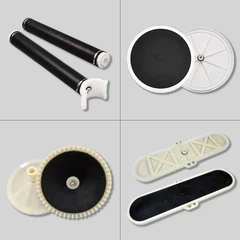
Fine bubble diffusers generate tiny bubbles through precise materials like ceramics or elastic membranes. These small bubbles rise slowly, resulting in a longer contact time between gas and liquid, which significantly improves oxygen dissolution efficiency. Their structures are mostly disc-shaped or tubular, requiring higher air pressure to operate. They are suitable for scenarios with strict requirements for dissolved oxygen.

Coarse Bubble Diffusers
Coarse bubble diffusers, usually made of rubber or plastic, produce large bubbles. These bubbles rise quickly and vigorously mix the water, mainly functioning through mixing rather than efficient oxygen dissolution. Their simple structure (such as perforated pipes) and low operating air pressure make them suitable for environments that require rapid mixing or where clogging is a concern.
Application Scenarios and Industry Adaptability
Municipal Wastewater Treatment Plants
During the secondary biological treatment stage, microorganisms require high concentrations of dissolved oxygen to decompose organic matter. The fine bubbles from fine bubble diffusers can extend the gas-liquid contact time, enhancing oxygen transfer efficiency (high OTR) and reducing the energy cost per unit of oxygen. This meets the continuous aeration demand. In contrast, coarse bubble diffusers have lower oxygen dissolution rates, requiring longer aeration times, which may actually result in higher overall energy consumption.
Industrial Wastewater Treatment
Industrial wastewater often contains impurities like oils and fibers that can easily clog pipelines. The large bubbles from coarse bubble diffusers can quickly mix the water, preventing the deposition of suspended solids. Their simple structure (such as perforated pipes) and large pore sizes make them less prone to clogging, thus lowering maintenance costs. Fine bubble diffusers are more likely to get clogged in such scenarios, necessitating frequent cleaning and increasing the risk of downtime.
Aquaculture
Aquaculture requires stable and evenly distributed dissolved oxygen in the water. The fine bubbles from fine bubble diffusers rise slowly and disperse evenly throughout the water, improving dissolved oxygen concentration by increasing the gas-liquid contact area. This effectively avoids localized hypoxia. Additionally, the lower energy from bubble bursting results in gentle water disturbance, reducing physical stress and stress responses in fish and shrimp.
Winter Wastewater Treatment
The large bubbles from coarse bubble diffusers can vigorously stir the water surface, preventing ice formation. They operate at low air pressure, consuming less energy. Fine bubble diffusers, due to their small bubbles and slow rise, provide insufficient surface water disturbance, resulting in poor anti-icing effects. Additionally, elastic membranes can harden and break under low temperatures.

Advantages and Disadvantages of Fine Bubble vs. Coarse Bubble Diffusers
|
Comparison Item |
Fine Bubble Diffusers |
Coarse Bubble Diffusers |
|
Advantages |
high oxygen dissolution efficiency low long-term energy consumption suitable for high-precision treatment needs |
strong anti-clogging ability low maintenance cost strong mixing effect suitable for complex water quality |
|
Disadvantages |
high initial investment prone to clogging requiring frequent maintenance dependent on clean water quality |
low oxygen transfer efficiency requiring longer aeration time may increase overall energy consumption |
Conclusion
The above content has elaborated on the differences between fine bubble diffusers and coarse bubble diffusers in various aspects. Fine bubble technology is suitable for fine treatment with high oxygen transfer rates, while coarse bubble technology adapts better to complex water qualities. The choice between the two should be weighed against scenario requirements, dissolution efficiency, and other factors.
AquaSust: Professional Aerator Diffuser Manufacturers
As a professional manufacturer of aerator diffusers, AquaSust can provide you with a variety of different diffusers and offer customized solutions for various wastewater treatment projects. If you have any questions regarding water treatment, please feel free to contact us anytime.