



Introduction

Walk into any wastewater treatment plant and you'll notice thousands of small plastic carriers quietly flowing in the aeration tank. They don't make noise, but take on the biological treatment work that purifies water.
These simple-looking plastic rings are MBBR biofilter carriers. In this article, we take you inside the MBBR media factory and explore how high-quality MBBR biofilter media are produced from start to finish.
Stage 1: Prepare the Raw Materials of MBBR Media
In the market, the most commonly used materials of MBBR media include:
-
Expanded Polystyrene (EPS)
-
Recycled Plastic
-
Polyethylene (PE)
-
Polyvinyl Chloride (PVC)
-
Polypropylene (PP)
-
High-Density Polyethylene (HDPE)


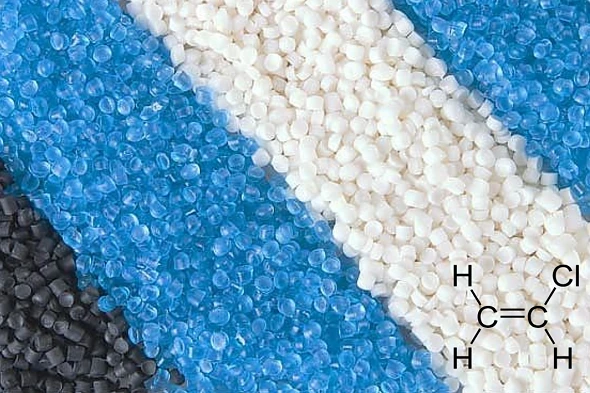


▫️ Long-chain structure for water impact
▫️ Chemical resistance
▫️ Very low water absorption
▫️ Up to a 20-year lifespan
After selecting and preparing the raw materials, we use a screening machine to remove impurities, sort the plastic pellets and additives, and automatically blend them according to the required formulation.
Stage 2: MBBR Bio Carrirer Injection Molding
Next is the injection molding stage, where the MBBR media take their final form. In the AquaSust MBBR media factory, multiple high-speed, fully automated injection machines run alongside traction units. Each machine is equipped with independent temperature control, pressure regulation modules, and robotic arms for automatic part handling.

So, what does the process involve?
• Melting: HDPE particles are heated to a fully molten, flowable state.
• Injection: Then it's injected into molds (K-type, C-type, or multi-channel tubes) with controlled wall thickness, hole size, and internal support structures.
• Cooling: The mold remains closed while the plastic cools and solidifies.
• Demolding: The molded media are removed from the molds.
• Cutting (if required): Use an automatic slicer to cut long, tubular media into individual segments.
• Preliminary inspection: Each batch is checked for size and appearance here.

Stage 3: Surface Treatment, Cleaning & Drying
The molded filter media cannot be shipped directly from the factory. They would go through several finishing steps, such as:

Surface Treatment: To promote rapid biofilm attachment, manufacturers adjust the surface roughness and micro-porosity of the media according to the model. The micro-textures can provide additional points for microorganisms to settle.

Cleaning: The media are thoroughly cleaned to remove any residual oils, dust, or impurities that could affect biofilm growth.

Hot-Air Drying: Next, the MBBR media are fully dried using a hot-air circulation system, ensuring stable performance during density testing, packaging, and transportation.
Stage 4: Strict Quality Control
After production is complete, the MBBR filter media undergoes a series of rigorous quality inspections, such as:
|
Test Item |
What We Check |
Tools Used |
Purpose |
|
Visual Inspection |
Cracks, deformation, molding defects |
Inspection station, high-intensity lighting |
Remove defective pieces that may fail during operation |
|
Dimensional Accuracy |
OD, ID, height, hole size, symmetry |
Calipers, micrometers, CMM |
Ensure each piece meets design specs for surface area & flow |
|
Density & Buoyancy Test |
Floating/settling behavior |
Water tanks, density testers |
Verify correct movement in MBBR reactors |
|
Raw Material Verification |
Resin purity and chemical stability |
Spectrometers |
Confirm the use of 100% virgin HDPE |
|
Strength & Impact Resistance |
Shock resistance, durability under aeration |
Impact tester, compression tester |
Prevent cracking during long-term mixing |
|
Biofilm Adhesion Test |
Microbial attachment rate and growth |
Biofilm test tanks, microscopy |
Ensure fast start-up and stable biomass formation |
|
UV & ESC Resistance |
UV stability, crack resistance under stress |
UV aging chamber, ESC testers |
Ensure durability during storage and real-world operation |
Some manufacturers, including AquaSust, complement these standard tests with long-term cycling trials to observe performance under real wastewater conditions. This combination of continuous monitoring, lab testing, and real-use simulation ensures every batch can withstand operational demands.
Stage 5: Packing, Final Inspection, and Dispatch
Qualified media are then securely packed to prevent damage during transport. We package and mark them with production date, batch number, specification number, etc., using laser marking or coding equipment. Before shipment, each batch receives a final quality check to make sure everything is defect-free. Then, the products are stored in the warehouse and dispatched as soon as the booked trucks or containers arrive.

Can MBBR Media Be Customized for Your Projects?
Now that you know how MBBR media are produced, you may wonder: "Can I customize the media for my project?" Absolutely! AquaSust provides several customization solutions, including:
● Density (0.92–1.05 g/cm³, etc): Tailored for aerobic, anaerobic, anoxic, or high-load tanks.
● Specific Surface Area: For municipal upgrades, industrial retrofits, or high-efficiency bioreactors.
● Structural: K-type, C-type, H-type, multi-channel, 3D structured carriers, etc.
● Material Formulation Upgrades: Anti-oxidation additives, stronger chemical resistance, special-grade HDPE.
● OEM Packaging & Private Mold Development: From CAD → simulation → sample molding → biofilm testing → mass production,
Learn More

Why Choose AquaSust
AquaSust: Your Trusted MBBR Media Factory in China


Trusted By Partners in 100+ Countries
With 2,000+ completed projects, AquaSust continues to support global partners with stable and reliable wastewater treatment solutions.