





Introduction
Dissolved oxygen (DO) is one of the most important parameters in aquaculture systems, directly influencing the health and productivity of cultured species. As fish farming operations become more intensive, maintaining adequate oxygen levels becomes increasingly challenging due to higher stocking densities, increased feeding rates, and greater biological activity within the water. To address these challenges, modern aquaculture facilities rely on effective aquaculture aeration systems that continuously deliver oxygen and improve water circulation. Among the key components of these systems, aeration diffusers and blowers work together to support efficient oxygen transfer and help maintain stable dissolved oxygen levels throughout fish farming systems.

Why Dissolved Oxygen Is Critical in Fish Farming
Dissolved oxygen is fundamental to maintaining a stable and productive aquaculture environment. Adequate oxygen levels support the biological processes that keep aquatic systems functioning efficiently, including fish respiration, nutrient cycling, and organic matter decomposition. When oxygen availability becomes limited, system balance can quickly deteriorate, leading to increased environmental stress, reduced operational efficiency, and greater management challenges. Maintaining sufficient dissolved oxygen is therefore essential for ensuring stable culture conditions and supporting long-term aquaculture success.
Key Factors That Affect Dissolved Oxygen Levels
Dissolved oxygen levels are influenced by multiple factors, highlighting the importance of effective aeration in fish farming systems.
- Stocking Density and Biomass: As fish populations increase, oxygen consumption rises accordingly. Higher stocking densities place greater demand on available oxygen resources, making efficient aeration increasingly important.
- Water Temperature: Warmer water naturally holds less dissolved oxygen than cooler water. At the same time, fish often require more oxygen as their metabolic activity increases, creating additional pressure on the system.
- Organic Waste Accumulation: Uneaten feed, fish waste, and other organic matter consume oxygen during decomposition. Excessive waste buildup can significantly increase biological oxygen demand and reduce oxygen availability.
- Water Circulation and Aeration Efficiency: Poor circulation can result in uneven oxygen distribution and localized low-oxygen zones. Effective aeration systems help improve water movement and maintain more consistent dissolved oxygen levels throughout the culture environment.
How Aeration Diffusers and Blowers Work Together
Aeration diffusers and blowers function as complementary components within an aquaculture aeration system. Blowers generate and deliver a continuous supply of air, while aeration diffusers distribute that air into the water as bubbles to facilitate oxygen transfer. As the bubbles move through the water column, oxygen dissolves into the surrounding water, helping to increase dissolved oxygen levels and improve circulation. By working together, these components support more efficient oxygen distribution throughout ponds, tanks, and recirculating aquaculture systems, contributing to a healthier and more stable aquatic environment.

Selecting the Right Aeration System for Your Aquaculture Application
Choosing the right aeration system involves evaluating oxygen demand, system conditions, and long-term operational goals to ensure efficient and reliable performance.
The required aeration capacity should be based on fish biomass, stocking density, feeding rates, and production targets. Systems with higher oxygen demand typically require greater airflow and more efficient oxygen transfer to maintain stable dissolved oxygen levels.
Pond size, tank dimensions, and water depth all influence aeration performance. Proper placement of blowers and aeration diffusers helps achieve uniform oxygen distribution and minimizes areas with insufficient circulation.
Aeration systems often operate continuously, making energy consumption an important consideration. Selecting efficient aquaculture diffusers and a properly matched blower for aquaculture can help maximize oxygen transfer while reducing long-term operating costs.
Aquaculture environments require equipment that can perform consistently under demanding conditions. Durable aeration components with simple maintenance requirements can reduce downtime and improve overall system reliability.
As production capacity grows, oxygen demand may increase. Choosing scalable aeration solutions allows operators to expand their systems more easily without replacing major equipment or redesigning the entire aeration network.
Explore Aquasust Aeration Diffuser and Blower Solutions
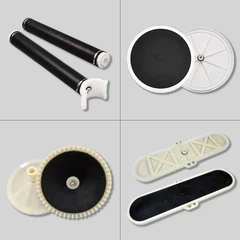
AquaSust is a professional manufacturer of aeration diffusers and blowers for aquaculture and wastewater treatment, with over 12 years of industry experience. Our product range includes disc diffusers, tube diffusers, coarse bubble diffusers, and plate diffusers-available in EPDM, TPU, PTFE, and silicone membrane materials to match different water conditions and application requirements. AquaSust also supplies ultra air suspension blowers, high-speed turbo blowers, Roots blowers, and rotary blowers designed to provide reliable, energy-efficient air supply for diffuser systems.
Key advantages of AquaSust solutions include:
- High oxygen transfer efficiency – Fine bubble diffusers achieve ≥38% SOTE at 6-meter submersion
- Durable construction – Anti-scale membrane formulas and UV-resistant materials for long service life
- Complete system compatibility – Blowers and diffusers engineered to work together seamlessly
- Flexible options – Choice of membrane materials and blower technologies to match specific farm needs
- Technical support – SOTE curve analysis, installation guidance, and maintenance assistance

Conclusion
Maintaining adequate dissolved oxygen is essential for successful fish farming, directly impacting fish health, growth, and farm profitability. Understanding the key factors that affect DO levels allows you to implement effective aeration strategies tailored to your specific operation. Aeration diffusers and blowers work together as an integrated system to deliver oxygen efficiently: diffusers create fine or coarse bubbles to transfer oxygen into the water, while blowers supply the compressed air needed to drive them. By selecting the right combination of equipment, you can achieve optimal DO levels, reduce energy consumption, and improve overall system reliability. Contact us today to discuss your aquaculture aeration requirements and find the right diffuser and blower solution for your system.