





Introduction
Aeration is the process of introducing air into a liquid (water) and facilitating its circulation, mixing, or dissolution. It is commonly found in biological wastewater treatment, especially in activated sludge systems. Uniform aeration enables better dissolved oxygen (DO) distribution in the wastewater, enhances microbial activity, and improves treatment efficiency. However, non-uniform aeration caused by operational or biological factors can disrupt these processes, resulting in inefficient wastewater treatment and failure to meet effluent standards. Today, AquaSust will engage in a discussion with you about the causes, consequences, and solutions to the problem of non-uniform aeration.
Why Does Non-Uniform Aeration Occur?
⑴ Blockage of Aeration Diffusers
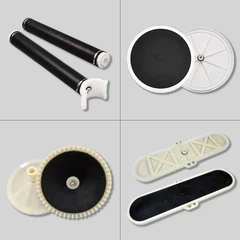
Due to long-term biofilm growth, inorganic scaling (such as calcium carbonate or iron oxide), or accumulation of particulate matter, the surface pores of fine-bubble EPDM membrane aerators are often blocked. At this time, the pores are unable to output air properly, which is likely to create "dead zones" with insufficient dissolved oxygen, that is, the aeration volume is relatively low.
⑵ Improper Adjustment of the Aeration Rate
If the aeration equipment is not adjusted properly, it will also lead to non-uniform aeration. Some blowers may supply more air than required, while others supply less. In addition, incorrectly set flow control valves can also cause this problem. The airflow distribution in different areas of the aeration tank may become inconsistent.
⑶ Fluctuations in Water Quality and Flow
Industrial discharges or stormwater inflows can cause sudden changes in organic load, temperature, or pH. When the sewage flow rate is much higher than the design capacity of the aeration equipment, more oxygen is needed for microorganisms to decompose pollutants. If the aeration system cannot adapt to these changes in a timely manner, the oxygen distribution in the aeration tank will become uneven.
⑷ Excessive Floating Matter in the Water
When there is a large amount of plankton in the water to be treated, they will accumulate on the surface of the aeration diffusers. As these organisms reproduce and grow, a layer of substances will form, hindering the normal release of air from the diffusers. They will also increase the viscosity of the water, which in turn affects the flow pattern of bubbles in the water, resulting in non-uniform aeration.
⑸ Aging and Wear of Aeration Equipment
Due to chemical exposure (such as hydrogen sulfide) or mechanical stress, the diffusion membrane will degrade over time, leading to uneven pore sizes and airflows. A study by the Water Environment Federation (WEF) found that after 5-7 years of operation, membrane diffusers will lose 30-60% of their initial oxygen transfer efficiency.
The Impact of Non-Uniform Aeration on Sewage Treatment
⑴ Reduced Treatment Efficiency
Non-uniform aeration can affect the activity of microorganisms in the sewage and lower the efficiency of wastewater treatment. For example, in areas with insufficient oxygen supply, the decomposition of pollutants such as biochemical oxygen demand (BOD) and chemical oxygen demand (COD) is inhibited. This leads to higher concentrations of these pollutants in the treated water, failing to meet the specified discharge standards.
⑵ Increased Energy Costs
Compensating for non-uniform aeration usually requires higher blower output. The U.S. Environmental Protection Agency estimates that unoptimized aeration accounts for 45-60% of a plant's energy consumption, and blocked diffusers can increase energy demand by up to 40%.
⑶ Sludge Settlement Problems
Non-uniform aeration can trigger sludge-related problems, such as sludge bulking and foam generation. In low-oxygen areas, filamentous bacteria may grow faster than other microorganisms. These filamentous bacteria will produce poorly flocculated sludge and result in high turbidity in the effluent.
⑷ Odor Emission
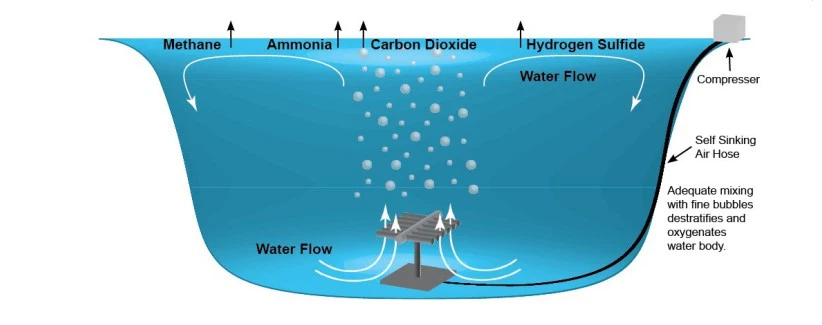
Due to non-uniform aeration, some areas have insufficient oxygen supply, leading to anaerobic conditions in certain parts of the aeration tank. The anaerobic decomposition of organic matter will produce odorous gases such as hydrogen sulfide (\(H_2S\)), methane (\(CH_4\)), and ammonia (\(NH_3\)).
Solutions to Address Non-Uniform Aeration
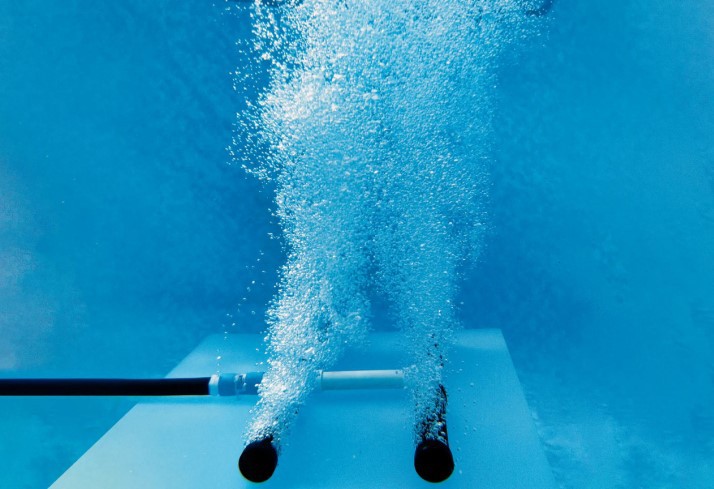
• Regular Diffuser Maintenance: Use high-pressure water jets or acid washing (e.g., citric acid for carbonate scaling) every 6–12 months, and install coarse-bubble backup systems or self-cleaning diffusers.
• Dynamic Aeration Control Systems: Implement DO probes linked to automated blowers for real-time adjustments.
• Flow Equalization and Pretreatment: Balance hydraulic/load fluctuations with equalization tanks, or we can remove floating matter using dissolved air flotation (DAF) or fine screens (<3 mm).
• Diffuser Upgrades and Redundancy: We can replace aging membranes with robust materials (e.g., EPDM), and use modular grids with isolated zones to isolate clogged sections, without shutdowns.
• Monitoring and Training: Conduct routine airflow tests (e.g., ASCE Standard 2-06) and train staff on data-driven maintenance.
Conclusion
As mentioned above, non-uniform aeration may have negative impacts on the efficiency, energy consumption, sludge management, and odor of sewage treatment. However, we can also adopt some comprehensive methods to control it.
If you want to learn more about relevant knowledge, please feel free to contact us. With rich water treatment experience for global customers, AquaSust is confident to provide effective solutions for your actual aeration project.