





Introduction
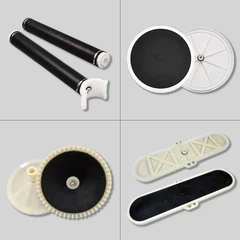
When selecting an aerator type, different operating conditions require varying levels of oxygen supply and water mixing. Coarse and fine bubble diffusers are suited to different scenarios, so when should you choose coarse bubble diffusers over fine bubble ones? This article will help you understand the appropriate situations for using coarse bubble diffusers.
Coarse vs Fine Bubble Diffusers: Key Differences
To better understand the differences between coarse and fine bubble diffusers, here is a clear comparison of their key features:
|
Feature |
Coarse Bubble Diffusers |
Fine Bubble Diffusers |
|
Bubble Size |
Large bubbles that rise quickly |
Tiny bubbles for maximum water contact |
|
Oxygen Transfer Efficiency |
Moderate |
High, suitable for intensive biological treatment |
|
Mixing Effect |
Strong, keeps sludge in suspension |
Moderate, slower mixing but more uniform oxygen distribution |
|
Maintenance |
Lower, resistant to fouling |
Higher, more prone to fouling and requires regular cleaning |
|
Energy Consumption |
Lower |
Higher due to smaller bubbles and increased contact time |
When to Use Coarse Bubble Diffusers Instead of Fine Bubble Diffusers
In wastewater treatment, coarse bubble diffusers are preferred over fine bubble diffusers in situations where strong water mixing is required, while maximum oxygen transfer efficiency is not critical. Typical applications include:
1. High Sludge Concentration Tanks
Large, fast-rising bubbles generate strong water currents, preventing sludge sedimentation and keeping solids in suspension.
2. Tanks Requiring Uniform Mixing
In mixing tanks or multi-stage treatment tanks, coarse bubbles promote water circulation, ensuring even distribution of oxygen and nutrients, and improving overall process uniformity.
3. Environments With Low Maintenance Requirements
Large bubbles and wider pore sizes make coarse bubble diffusers less prone to clogging, reducing cleaning and maintenance frequency.
4. Energy-Sensitive or Cost-Conscious Operations
Coarse bubbles encounter lower resistance, resulting in reduced energy consumption, suitable for large tanks or facilities with limited energy budgets.
FAQ
Q: What types of wastewater are coarse bubble diffusers suitable for?
A: Coarse bubble diffusers are particularly suitable for wastewater with high suspended solids or high viscosity, as the large bubbles effectively stir the water and prevent sedimentation.
Q: Can coarse bubble diffusers be combined with other aeration systems?
A: Yes. In scenarios that require both strong mixing and high oxygen transfer, coarse and fine bubble diffusers can be used together, providing localized high oxygen dissolution while maintaining overall water circulation.
Q: What tank depth is a coarse-bubble diffuser suitable for?
A: Coarse bubble diffusers are best for shallow to medium-depth tanks, where large bubbles can circulate the water efficiently. In deep tanks, oxygen transfer is lower, so fine bubbles are preferred.
Conclusion
Coarse bubble diffusers are best suited for conditions that require strong water mixing, sludge suspension, low maintenance, and energy efficiency. In these scenarios, they are more cost-effective than fine bubble diffusers, improving circulation while reducing operational costs.
Want to Make Your Wastewater Treatment System More Efficient and Energy-Saving?
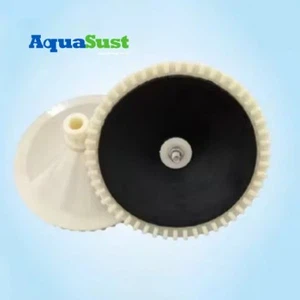
Choose Aquasust coarse bubble diffuser solutions to achieve better mixing and lower operating costs. Contact Aquasust today and start your journey toward smarter aeration optimization!