





Can MBBR Media be Used in Industrial Wastewater Treatment?
As a supplier of MBBR (Moving Bed Biofilm Reactor) media, I've encountered numerous inquiries regarding the applicability of our products in industrial wastewater treatment. In this blog post, I'll delve into the feasibility, advantages, and considerations of using MBBR media in this challenging domain.
Understanding MBBR Media
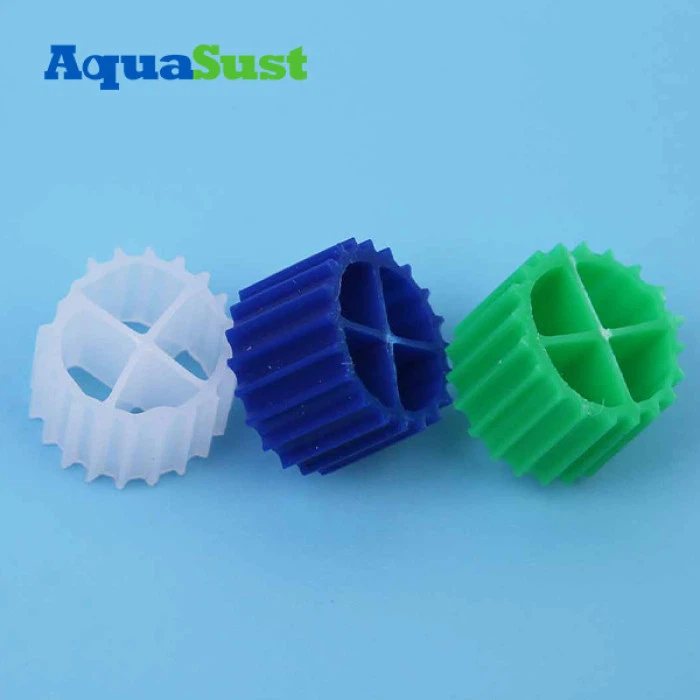
MBBR media are specifically designed plastic carriers that provide a large surface area for the attachment and growth of microorganisms. These microorganisms form a biofilm on the surface of the media, which plays a crucial role in the biological treatment of wastewater. The media are suspended in the wastewater by agitation, allowing for efficient contact between the biofilm and the pollutants in the water.
One of our popular products, MBBR Media AS - MBBR04 For Aquaculture, is engineered to optimize the growth of beneficial bacteria. Its unique shape and structure enhance the attachment and retention of the biofilm, ensuring a stable and effective treatment process.
Feasibility of Using MBBR Media in Industrial Wastewater Treatment
Industrial wastewater is a complex mixture of various pollutants, including organic compounds, heavy metals, and toxic substances. The feasibility of using MBBR media in industrial wastewater treatment depends on several factors.
Firstly, the type and concentration of pollutants in the wastewater are critical. MBBR systems are effective in treating organic pollutants through the process of biodegradation. The microorganisms in the biofilm break down the organic matter into carbon dioxide and water, reducing the chemical oxygen demand (COD) and biochemical oxygen demand (BOD) of the wastewater. However, for heavy metals and some toxic substances, additional treatment steps may be required.
Secondly, the physical and chemical characteristics of the wastewater, such as temperature, pH, and salinity, can affect the performance of the MBBR media. Most microorganisms in the biofilm thrive in a relatively narrow range of environmental conditions. For example, a temperature between 20 - 30°C and a pH between 6.5 - 8.5 are generally optimal for the growth and activity of the biofilm. If the wastewater has extreme conditions, pre - treatment may be necessary to adjust these parameters.

Advantages of Using MBBR Media in Industrial Wastewater Treatment
Despite the challenges, there are several significant advantages of using MBBR media in industrial wastewater treatment.
- High Treatment Efficiency: The large surface area provided by the MBBR media allows for a high density of microorganisms to grow. This results in a more efficient treatment process compared to traditional activated sludge systems. The biofilm on the media can adapt to different types of pollutants, enabling the removal of a wide range of organic compounds.
- Flexibility: MBBR systems are highly flexible and can be easily integrated into existing wastewater treatment plants. They can be used as a standalone treatment unit or in combination with other treatment processes, such as chemical precipitation or membrane filtration. This flexibility makes it suitable for various industrial applications with different wastewater characteristics.
- Low Sludge Production: Compared to activated sludge systems, MBBR systems produce less sludge. The biofilm on the media has a longer retention time, which means that the microorganisms have more time to break down the organic matter. This reduces the amount of excess sludge that needs to be disposed of, saving on sludge treatment and disposal costs.
- Resistance to Shock Loads: Industrial wastewater often experiences fluctuations in flow rate and pollutant concentration. MBBR systems are more resistant to these shock loads compared to traditional systems. The biofilm on the media can quickly adapt to changes in the environment, maintaining a stable treatment performance.
Considerations for Using MBBR Media in Industrial Wastewater Treatment
While MBBR media offer many advantages, there are also some considerations that need to be taken into account when using them in industrial wastewater treatment.
- Media Selection: Different types of MBBR media have different properties, such as surface area, porosity, and density. The selection of the appropriate media depends on the specific characteristics of the wastewater and the treatment requirements. For example, if the wastewater contains a high concentration of suspended solids, a media with a larger pore size may be more suitable to prevent clogging.
- Pre - treatment Requirements: As mentioned earlier, industrial wastewater may have extreme physical and chemical characteristics. Pre - treatment, such as screening, sedimentation, and pH adjustment, may be necessary to ensure the optimal performance of the MBBR system. Failure to properly pre - treat the wastewater can lead to reduced treatment efficiency and damage to the MBBR media.
- Monitoring and Maintenance: Regular monitoring of the MBBR system is essential to ensure its proper operation. Parameters such as COD, BOD, pH, and dissolved oxygen need to be monitored regularly. Additionally, the media may need to be periodically cleaned or replaced to maintain its effectiveness.
Case Studies
To illustrate the effectiveness of MBBR media in industrial wastewater treatment, let's look at some case studies.
In a food processing plant, the wastewater contained high levels of organic matter, mainly from food residues and cleaning agents. An MBBR system was installed, using our MBBR Media AS - MBBR04. After the treatment, the COD and BOD of the wastewater were significantly reduced, meeting the discharge standards. The system also showed good resistance to fluctuations in the flow rate and pollutant concentration, ensuring a stable treatment performance.
In a chemical manufacturing plant, the wastewater contained a mixture of organic solvents and heavy metals. A combination of pre - treatment (chemical precipitation for heavy metals) and an MBBR system was used. The MBBR system effectively removed the remaining organic pollutants, and the overall treatment process achieved a high level of pollutant removal.
Conclusion
In conclusion, MBBR media can be effectively used in industrial wastewater treatment. They offer high treatment efficiency, flexibility, low sludge production, and resistance to shock loads. However, proper media selection, pre - treatment, and monitoring are crucial for the successful operation of the MBBR system.
If you are interested in using MBBR media for your industrial wastewater treatment needs, we are here to provide you with the best solutions. Our team of experts can help you select the most suitable media and design a customized treatment system based on your specific requirements. Contact us for a detailed consultation and let's work together to solve your wastewater treatment challenges.
References
- Winkler, U., & Straka, H. (2013). Moving Bed Biofilm Reactor (MBBR) technology for wastewater treatment. Water Science and Technology, 67(1), 1 - 9.
- Rusten, B., & Ødegaard, H. (1993). A full - scale moving bed biofilm reactor for wastewater treatment. Water Science and Technology, 27(4 - 5), 133 - 142.
- Kargi, F., & Pamukoglu, K. (2004). Treatment of olive oil mill wastewater by a moving - bed biofilm reactor. Process Biochemistry, 39(7), 947 - 954.