





Introduction
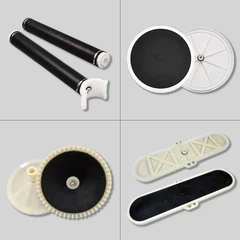
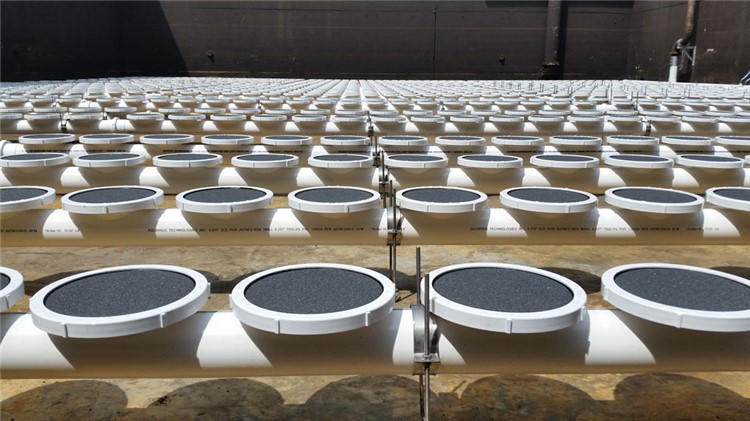
In wastewater treatment, aeration diffusers are used to keep the water healthy. They provide oxygen to improve the growth environment for aquatic life. However, over time, they can become fouled by mineral scaling, biological growth, or debris accumulation, leading to reduced performance and increased energy costs. In this article, we will explore common causes of diffuser fouling and provide practical solutions to maintain stable operation.
Common Causes of Diffuser Clogs
1. Biofouling: Biofouling is when microorganisms accumulate on the surface of diffusers, forming a biofilm that restricts air flow and reduces oxygen transfer efficiency. The specific microorganisms involved depend greatly on water quality and temperature.
2. Inorganic Scaling: Mineral deposits, such as calcium carbonate (scale) and iron oxide, can deposit on the surface of diffusers, causing clogging. This is especially common in water with high mineral content or high pH. The extent of scaling is often affected by water hardness and temperature. For example, hard water is more susceptible to calcium carbonate scaling.
3. Organic Accumulation: Organic matter accumulation: Organic substances in water, including fats, oils, and other particulate matter, will deposit on the surface of the diffuser, causing blockage. Industrial wastewater often contains higher concentrations of organic matter, so it is more prone to scaling.
4. Design flaws: Insufficient spacing or unsuitable materials can also exacerbate the blockage issue of diffusers. Diffusers with smaller spacing are more susceptible to blockage compared to those with larger spacing. Moreover, corrosible materials are prone to pitting and cracking, which attract microbial attachment and accelerate the formation of fouling.

5. Operational Factors
During the operation of the aeration system, the following factors can accelerate fouling of the aeration discs:
(1) Unstable high blower airflow - Airflow fluctuations disrupt uniform bubble distribution, promoting solid deposition.
(2) Insufficient or incomplete backwashing - Fails to remove accumulated solid particles effectively.
(3) High nutrient content (e.g., phosphorus) - Accelerates biofilm growth and inorganic scaling.
Consequences of Clogged Aeration Diffusers
• Increased Energy Consumption
Clogging reduces air flow, forcing the blower to work harder to maintain the required aeration rate, which increases energy consumption.
• Reduced Treatment Efficiency
Clogging restricts air flow, resulting in smaller bubbles and less surface area for oxygen exchange. This limits the available oxygen supply for the microorganisms responsible for wastewater treatment, hindering their activity and reducing overall treatment efficiency.
• Increased Maintenance Costs
Clogged diffusers require more frequent cleaning or outright replacement. This increases maintenance costs and downtime. Cleaning and repair costs can be quite expensive, especially if the clog is severe or requires specialized equipment.
• System Failure
In some cases, complete diffuser clogs can lead to the sewage aeration tank failure, stopping the entire treatment process or causing environmental contamination. This may result in more financial losses.

How to Fix and Prevent Fouling

1. Physical Cleaning: Check and remove the accumulated fouling and biofilm on the diffuser surface. You can use methods such as manual brushing, high-pressure water jets, or ultrasonic cleaning.
2. Chemical Cleaning: Mineral fouling or biofouling is suitable for chemical cleaning. You can use specific agents to dissolve impurities. Common chemicals include acids (for inorganic fouling), oxidants (for organic matter and biofilm), and chelating agents (for removing metal ions).
3. Optimizing Operating Parameters: This includes optimizing aeration rates to avoid excessive biofilm growth or deposition, ensuring adequate backwash frequency and intensity, and maintaining appropriate water quality parameters (e.g., pH, dissolved solids).
4. Improved Diffuser Design: Choosing a diffuser with a fouling-resistant design is beneficial for long-term use. This includes selecting materials that are less susceptible to biofouling or fouling and employing designs that reduce pore size variation and improve air distribution efficiency. The geometry of the diffuser and its location within the aeration tank should also be considered.
5. Preventive Maintenance: Taking a proactive approach to prevention is very useful. You can set up a regular cleaning schedule based on specific operating conditions and daily observations. Real-time monitoring of the pressure difference across the diffuser can provide early warning of the increase in fouling, allowing timely intervention and preventing blockage. This allows preventive cleaning before performance deteriorates.
Conclusion
In wastewater treatment, aeration diffusers often foul due to microbial growth, organic buildup, insufficient spacing, and airflow fluctuations. This increases system energy consumption, reduces treatment efficiency, and may even cause failures. But don't worry, we can handle these through cleaning, optimizing operational parameters, and improving diffuser design.
Aquasust - Professional Water Treatment Solution Providers
As a professional manufacturer and supplier of aeration diffusers, Aquasust offers high-quality products and services. Contact our factory today to discuss your wholesale and custom aeration diffuser needs.