





Introduction
In the field of wastewater treatment, the choice of treatment process often leads to differences in efficiency, operational complexity, and effluent quality. Among the available technologies, Moving Bed Biofilm Reactor (MBBR) and Sequential Batch Reactor (SBR) are two popular and closely related methods. So, what's the difference between SBR and MBBR? As a professional water treatment solutions provider, AquaSust will compare their advantages and suitable applications in this blog to help you make the right decision.
What is MBBR?

MBBR is a biofilm-based treatment process that typically requires a secondary clarifier for sludge separation. It utilizes plastic media with a high surface area to cultivate biofilm for biological treatment. This method efficiently removes organic matter, nitrogen, and other pollutants within a relatively compact footprint.
What is SBR?
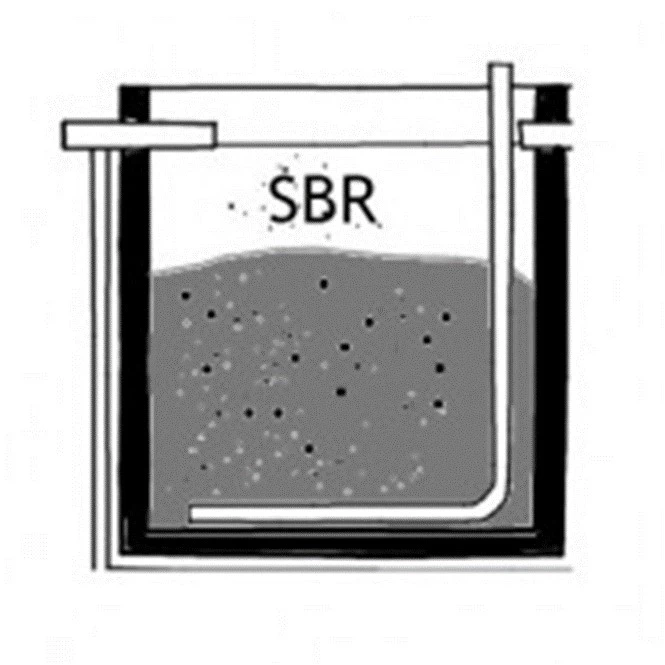
SBR is a variation of the activated sludge process. It is particularly suitable for treating wastewater with fluctuating quality and does not require a secondary clarifier. SBR treats wastewater in batches within a single tank, with stages including filling, reaction, settling, and decanting.

Detailed Comparison Between MBBR vs SBR
|
Comparison Criteria |
MBBR |
SBR |
|
Process Type |
Continuous flow |
Intermittent batch flow |
|
Microbial Growth Form |
Attached (biofilm) |
Suspended (activated sludge) |
|
Reactor Configuration |
Aeration tank + secondary clarifier (shallow tank) |
Single deep tank (integrated functions) |
|
Footprint |
Smaller (high biomass density) |
Larger (must accommodate full-cycle volume) |
|
Operational Complexity |
Simple (controls: DO, carrier fill rate, etc.) |
Complex (relies on automated timing control) |
|
Shock Load Resistance |
Strong (biofilm protects microbes) |
Moderate (depends on phase duration adjustment) |
|
Nitrogen/Phosphorus Removal Efficiency |
Requires zoning or specialized carriers |
Innate advantage (time-controlled anaerobic/aerobic phases) |
|
Sludge Production |
Low (long sludge age) |
Higher (similar to conventional activated sludge) |
|
Expansion/Retrofit Flexibility |
Easy (add carriers/modules) |
Costlier (requires new reactor units) |
Which Technology is Better for Your Project?

✅ Choose MBBR When
• Project space is constrained
• Expanding/retrofitting existing facilities (e.g., upgrading activated sludge tanks)
• Treating highly fluctuating or shock-load wastewater (industrial effluent)
• Low sludge production and stable operation are priorities
• Rapid startup is needed
✅ Compared to MBBR, SBR is More Suitable for
• High-efficiency nitrogen/phosphorus removal is required
• Municipal wastewater demands stringent effluent quality
• Flow is small and intermittent (e.g., rural or park sewage)
• Site has irregular dimensions but sufficient depth
Conclusion
For different wastewater treatment needs, MBBR and SBR each have unique strengths and limitations. The choice depends on your project's specific requirements, such as water quality, flow rate, site conditions, and budget. If you're still uncertain, consult professional water treatment suppliers like AquaSust for expert technical support.
Upgrade Your Water Treatment Efficiency with AquaSust
Unsure which water treatment process to choose? AquaSust delivers ROI for your project through:
✔ Free Consultation: Simulate process performance based on your wastewater data.
✔ Pilot Testing: Compare the real-world performance of both technologies with our samples.
✔ Customized Design: Including hybrid solutions like MBBR-SBR integration.
At AquaSust, we specialize in various high-efficiency water treatment solutions. Contact us anytime for expert technical support!