





Introduction
In various industries, the textile industry is one of the industries with the most serious water consumption and pollution. Its wastewater contains high concentrations of harmful substances, including dyes, sizing agents, surfactants, heavy metals, etc. These components can damage the aquatic ecosystem and enter the food chain, thus affecting human health. Please continue reading to learn with AquaSust about how to effectively manage them.
What Does Textile Wastewater Contain?

Textile production covers multiple processes such as spinning, weaving, dyeing and finishing. Each process generates wastewater with different properties, including the following components:
• Dyes and Pigments (azo dyes, reactive dyes, etc.)
• Chemical Auxiliaries (sizing agents, surfactants, softeners, etc.)
• Acid and Alkali Substances
• Heavy Metals (chromium, copper)
• High-concentration Organic Substances (COD, BOD)
• Salts (a large amount of inorganic salts)
Characteristics of Textile Wastewater
1. Great Fluctuation in Water Quality - The components of wastewater from different processes (dyeing, printing, finishing) vary greatly.
2. Poor Biodegradability - Some dyes and fixing agents are difficult to degrade, and the BOD/COD ratio is low.
3. High Chromaticity - Dyes make the wastewater have a deep color, resulting in low light transmittance of the water body.
4. High Salt Content - It affects the activity of microorganisms and increases the difficulty of treatment.
5. Potential Toxicity - Dyes and auxiliaries may be biologically toxic.

How to manage textile wastewater
Pretreatment
Common pretreatment methods include physical treatments such as grids, grit chambers, and equalization basins, as well as chemical treatments such as neutralization and coagulation sedimentation. They can remove suspended solids and some organic substances in textile wastewater and regulate the quality and quantity of water.
Biological treatment
Biological treatment is the main part of textile wastewater treatment. It uses the metabolic action of microorganisms to decompose the organic pollutants in the wastewater. It includes:
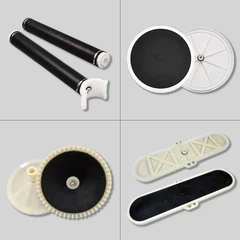
• Activated Sludge Method: The activated sludge method involves using aeration equipment to ensure full contact between microorganisms and wastewater. It uses microorganisms to decompose organic substances into carbon dioxide and water.
• Biological Membrane Method: This method refers to the formation of a microbial membrane on the surface of the MBBR carrier. When the wastewater flows through, the pollutants are adsorbed and degraded by the microorganisms on the surface of the medium. In an anaerobic environment, the biological membrane method is also suitable for treating high-concentration organic wastewater.

Advanced treatment and reuse
In order to meet the discharge standards and recycle water resources, textile wastewater also needs advanced treatment. This includes membrane separation, advanced oxidation, adsorption, etc.
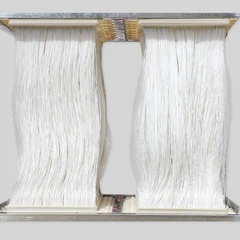
• Membrane Separation: Reverse osmosis/nanofiltration can remove tiny particles, organic substances and inorganic salts in the wastewater.
• Advanced Oxidation: Fenton oxidation/ozone oxidation can completely decompose refractory organic substances into carbon dioxide and water by generating strongly oxidizing free radicals.
• Adsorption Method: Using activated carbon/diatomite to adsorb the residual dyes and organic substances in the wastewater and reduce the chromaticity of the wastewater.
Through advanced treatment, textile wastewater can be reused in production processes with lower requirements for water quality, including fabric rinsing and workshop cleaning.
Conclusion
Managing textile wastewater involves the use of various technologies, including pretreatment, biological treatment, advanced treatment and reuse. After treatment, we can reduce environmental pollution and the cost of water resource use. As a water treatment expert, AquaSust provides different wastewater treatment solutions. If you are interested, please feel free to contact us or leave a comment below.