





Introduction
Aeration is a critical step in wastewater treatment for oxygen transfer, and its efficiency is closely related to bubble size. Smaller bubbles can increase the gas-liquid contact area and enhance the oxygen dissolution rate, but they require higher equipment precision and maintenance. Larger bubbles, while having lower mass transfer efficiency, are suitable for complex water quality environments with more impurities. This article will elaborate on the generation principles and influencing factors of bubble sizes in aeration diffusers, helping you understand this link.
Definition and Classification of Bubble Size
Definition
Bubble size refers to the diameter range of bubbles formed by gas dispersion in liquid, usually categorized based on the ratio of surface area to volume. The difference between fine and coarse bubbles directly affects oxygen transfer efficiency and energy consumption.
Classification and Characteristics:
1. Fine Bubbles: Generated by micropore materials or elastic membranes, fine bubbles have small and uniform diameters, suitable for scenarios requiring high oxygen mass transfer efficiency. Such diffusers need regular maintenance to prevent pore blockage.


2. Coarse Bubbles: Produced through larger pores or jet devices, coarse bubbles rise quickly and have strong mixing capabilities, suitable for wastewater treatment containing suspended solids or oils, offering better clog resistance but longer aeration times.


Key Factors Affecting Bubble Size
Diffuser Material and Structure
The material type and pore design of the diffuser directly determine the bubble generation method. Ceramic or sintered metal materials with micropore structures produce fine bubbles through precise pores (usually 0.1-0.5 millimeters), while elastic membranes (such as TPU or rubber) adjust pore opening and closing states through deformation, balancing clog resistance and bubble uniformity. If pores are covered with impurities, gas release is hindered, leading to bubble coalescence and increased size, thus reducing mass transfer efficiency.
Air Pressure and Flow Control
Air pressure and gas flow can also dynamically adjust bubble size. Increased air pressure accelerates gas release speed, easily forming irregular large bubbles; whereas, under low pressure, bubble growth time is extended, resulting in more uniform sizes. Excessive gas flow can destabilize bubbles, promoting the coalescence of small bubbles into large ones, requiring variable frequency technology to balance pressure and flow.
Water Quality Effects
The surface tension and impurity content of water significantly alter bubble size. Water containing surfactants reduces surface tension, facilitating bubble breakup into smaller sizes; however, water with oils or suspended solids tends to clog pores, forcing bubbles to coalesce and grow larger.
Conclusion
The above content illustrates that bubble size regulation requires a balance between oxygen mass transfer efficiency and equipment operation stability. Fine bubbles are suitable for efficient aeration in clean water, while coarse bubbles meet the clog resistance needs of complex water bodies. In practical applications, optimizing bubble size can be achieved by considering multiple factors.
AquaSust: Professional Aerator Diffuser Manufacturers
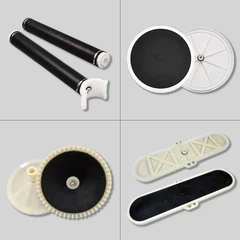
As a professional manufacturer of wastewater treatment equipment, AquaSust can provide you with various aeration diffusers capable of producing different bubble sizes. We can also offer customized solutions for different wastewater treatment projects. Should you have any questions regarding water treatment, please feel free to contact us.