





Introduction
If you operate a small to medium-sized wastewater treatment plant, you may frequently encounter unstable treatment performance, such as fluctuating efficiency due to varying influent quality or sludge bulking. Is there a simpler process that can stabilize operations while reducing sludge production? Today, AquaSust explores extended aeration technology and how it addresses these problems.
What is Extended Aeration?

In conventional activated sludge processes, microbes are typically aerated for only 4–8 hours, leaving organic pollutants (COD/BOD) inadequately degraded before entering settling tanks. Extended aeration, however, prolongs aeration to 12–24 hours after anoxic (oxygen-limited) storage or treatment, allowing microbes ample time to break down organics. Its core principles include:
• Complete Organic Degradation: Extended reaction time ensures thorough pollutant removal.
• Simultaneous Nitrogen Removal: Nitrification and denitrification occur under low-oxygen conditions, enhancing ammonia (NH3-N) removal.
• Sludge Reduction: Microbes enter endogenous respiration under low sludge loading, reducing biomass production.
Conventional Activated Sludge vs Extended Aeration
|
Comparison Items |
Conventional Activated Sludge Process |
Extended Aeration Process |
|
Aeration Duration |
4 - 8 hours |
12 - 24 hours |
|
Sludge Production |
High |
Reduced by more than 40% |
|
Denitrification Effect |
Requires additional processes |
Simultaneous nitrification and denitrification |
|
Energy Consumption |
Moderate |
Higher (but can be reduced through optimization) |
|
Suitable Scale |
Large plants |
Small - and medium - sized plants |
Why Choose Extended Aeration?
1. Resilience to Shock Loads
Extended aeration maintains microbial communities in a low-load state, enabling them to adapt to influent fluctuations without efficiency loss.
2. Lower Sludge Disposal Costs
Sludge yield is reduced to 0.2–0.4 kgDS/kgBOD (vs. 0.6–0.8 in conventional processes), cutting transport and storage expenses.
3. Ideal for Small/Medium Projects
Suited for decentralized systems (daily capacity: 500–5,000 tons) with compact footprints and simplified operation.

Considerations for Implementation

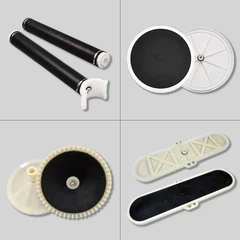
• Aeration Equipment: Use fine-bubble diffusers or surface aerators for stable oxygen supply.
• Sludge Loading & Concentration: Maintain F/M ratio at 0.03–0.05 kgBOD₅/(kgMLSS·d). Excess MLSS raises energy costs; insufficient levels weaken floc structure.
• Dissolved Oxygen (DO): Sustain 2–4 mg/L in aeration tanks for microbial needs.
• Sludge Bulking Prevention: Monitor sludge volume index (SVI). If SVI >150 mL/g, adjust DO, add coagulants (e.g., ferric salts), or reduce sludge age.
• Nutrient Balance: Maintain BOD₅:N:P ≈ 100:5:1. Nutrient-deficient wastewater risks turbid effluent.
Conclusion
Compared to conventional activated sludge process, extended aeration performs better in organic removal and nitrogen elimination by prolonging reaction time. Please contact us if your project struggles with sludge disposal or influent variability, for a tailored wastewater treatment solution.