





Introduction
In the complex sewage treatment process, the aeration tank is a fundamental component. Its operation is much like the our lungs. By injecting oxygen into the sewage, it activates the metabolic capacity of microorganisms, thus efficiently breaking down pollutants. This can effectively transform highly concentrated sewage into a cleaner and more environmentally friendly state. Today, we will learn about the functions, components, types of the aeration tank, and why aeration is so crucial in this article.
What Is An Aeration Tank?

Sewage discharged by people often contains a large amount of organic pollutants (such as proteins, fats, and carbohydrates) and nutrients like nitrogen and phosphorus. However, these substances cannot be directly removed from the water through physical sedimentation or chemical neutralization. At this point, if the sewage is discharged into lakes or fields, it will lead to eutrophication of water bodies and unpleasant odors. The aeration tank is the main unit of the Activated Sludge Process. It can create a suitable growth environment for microorganisms by artificially supplying oxygen. It utilizes the metabolic capacity of "aerobic microorganisms" to convert these pollutants into harmless carbon dioxide, water, and the microorganisms' own cellular substances.
The functions of the aeration tank can be mainly summarized into three points:
• Oxygen Supply: Continuously deliver oxygen into the sewage through the gas delivery system and aeration diffusers to maintain the activity of microorganisms.
• Mixing: Make the sewage fully contact with the activated sludge to prevent the sludge from settling.
• Degradation: Microorganisms convert pollutants into stable substances through steps such as adsorption, oxidation, and decomposition.
What are in an Aeration Tank?
(1) Tank Body: The tank body is constructed from reinforced concrete or corrosion-resistant composite materials. Its shape is mostly rectangular or circular, which is determined by the hydraulic retention time (HRT), that is, the length of time the sewage stays in the tank.
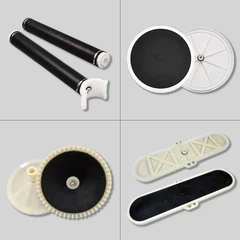
(2) Aeration System: It is the "heart" of the aeration tank. Generally, air is pressed into the diffusers at the bottom of the tank (such as disc diffusers) by a fan, or the water body is vigorously stirred by a surface impeller. Both methods can make the water body form small bubbles, increasing the oxygen dissolution efficiency.
(3) Inlet and Outlet Water System: The inlet of the aeration tank is used to evenly distribute the water flow to prevent local short-circuiting. The effluent weir can control the water level and separate the treated clear water from the activated sludge, preventing the sludge from being carried out.

Common Types of Aeration Tanks
|
Aeration Pool Type |
Aeration Method |
Applicable Scenarios |
Oxygen Transfer Efficiency |
|
Blower Aeration Pool |
Rely on a blower to transport air to the diffusers at the bottom of the pool. |
Large - scale sewage treatment plants, handling large amounts of sewage with high water quality complexity. |
High oxygen transfer efficiency for microporous diffusers / relatively low oxygen transfer efficiency for coarse - porous diffusers. |
|
Mechanical Aeration Pool |
Use an aerator to stir the water surface or introduce air into the water body through mechanical motion. |
Small - scale sewage treatment plants or situations where the organic load of sewage is relatively low. |
Medium, depending on the type of aerator and operating parameters. |
|
Mechanical - Blower Aeration Pool |
The mechanical aerator and diffused aeration operate in coordination. |
Sewage treatment plants with large changes in sewage flow and organic load. |
The oxygen transfer efficiency can be flexibly adjusted. |
The Biological Processes in an Aeration Tank
The aeration tank is essentially a complex ecosystem. The main participants include bacteria, protozoa, and metazoa. Taking the activated sludge process as an example, its biological process can be divided into three stages:
(1) Adsorption Stage (0.5-1 Hour): Microorganisms quickly adsorb the suspended organic matter in the sewage through the polysaccharide mucous layer on the cell surface, forming "zoogloea".
(2) Oxidation and Decomposition Stage (Several Hours): Aerobic bacteria (such as Pseudomonas and nitrifying bacteria) secrete extracellular enzymes to break down macromolecular organic matter into small molecules (such as glucose and amino acids), and further oxidize them into CO₂ and H₂O. At the same time, the nitrifying bacteria in the aeration tank convert ammonia nitrogen into nitrate.
(3) Sludge Flocculation Stage: Microorganisms enter the endogenous respiration phase when food is scarce. They secrete polysaccharide substances to promote sludge flocculation, which facilitates subsequent sedimentation and separation.
In these biological processes, it is of primary importance for us to control the dissolved oxygen (DO, 2-4 mg/L), the mixed liquor suspended solids (MLSS, 2000-5000 mg/L), and the sludge retention time (SRT) in the sewage. All of them will affect the treatment efficiency and stability.
Why is Aeration Important for Sewage Treatment?

• Provide Oxygen For Microorganisms: As mentioned before, aerobic microorganisms need oxygen to survive and carry out metabolic activities. In the sewage, the existing organic matter is the food source for these microorganisms. Aeration can provide a continuous supply of oxygen for them, so as to remove organic pollutants from the sewage.
• Mix And Suspend The Sewage: Whether it is the rising bubbles in diffused aeration or the agitation caused by a mechanical aerator, they can mix the sewage well. This mixing allows microorganisms to evenly contact the organic pollutants in the tank. It can also prevent organic particles, silt, and clay from settling in the tank, leading to blockages.
• Promote Flocculation: During aeration, the mechanical shear force generated by the system prompts microorganisms to aggregate and form larger flocs. Larger flocs are easier to settle during the final clarification stage. And this can help separate the treated water from the biomass.
Obtain an Efficient Aeration System from AquaSust
AquaSust deeply understands the importance of the aeration tank in sewage treatment. As an industry leader, we provide the best aeration system design and component manufacturing services. We ensure that your aeration tank can treat wastewater effectively and efficiently. If you have any questions, please contact us.