





Introduction
In wastewater treatment processes, aeration technologies are used to maintain dissolved oxygen (DO) concentrations in water and activating aerobic microorganisms to degrade pollutants. Among them, surface aeration and bottom diffused aeration are the most commonly used two types. But why are more people now choosing bottom diffused aeration? This article will analyze the principles of both technologies and explain the reasons behind this trend.
Definition and Principle of Surface Aeration
Surface aeration is a method that uses mechanical devices (such as impellers or rotating brushes) on the water surface to agitate the water, allowing air to come into contact with the water flow. When the aerator rotates at high speed, it creates small water splashes that absorb oxygen from the air, expanding the contact area between the water and air. The dissolved oxygen is then distributed to deeper layers through water circulation.

Definition and Principle of Bottom Diffused Aeration

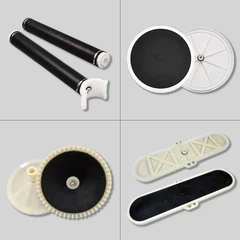
Bottom diffused aeration is a technology that releases tiny bubbles into the water through micro-pore aerators (such as rubber membrane discs or ceramic tubes) at the bottom of the tank. When the air is delivered by the blower, the micro-pores on the membrane discs open and release tiny bubbles. These bubbles rise to the water surface, carrying away the bottom water and promoting the transfer of oxygen from the atmosphere. This process also helps with water circulation and improves the overall water quality.
Comparison of the Two Aeration Methods
|
Comparison Item |
Surface Aeration |
Bottom Diffused Aeration |
|
Oxygenation Efficiency |
Moderate (relies on surface dissolution) |
High (oxygen dissolves throughout bubble ascent) |
|
Applicable Water Depth |
≤3 meters (shallow tanks) |
≥5 meters (deep tanks) |
|
Maintenance Cost |
High (impellers easily damaged, frequent replacement) |
Low (membrane lifespan: 3-7+ years) |
|
Noise |
High |
Low |
|
Initial Cost |
Lower |
Higher (requires laying bottom pipelines) |
|
Energy Consumption |
High (high-power motors run continuously) |
Low (energy-efficient low-pressure blowers) |
Advantages of Bottom Diffused Aeration
1. High Uniformity in Dissolved Oxygen Distribution
The small bubbles released by the bottom diffused aeration system fully interact with the water during their ascent. Due to the long, uniform path of bubble movement, oxygen from the bubbles penetrates all depths of the tank, eliminating dissolved oxygen disparities between surface and bottom layers and ensuring stable microbial metabolic efficiency.
2. Improved Energy Efficiency
Bottom diffused aeration uses low-pressure blowers, while surface aeration relies on high-power mechanical devices. The smaller bubbles and longer dissolution path of bottom aeration result in higher oxygen transfer rates.
3. Durability
Bottom diffused aerators are made of corrosion-resistant materials (such as rubber and ceramics), which can withstand the erosion of chemical substances in wastewater for a long time. They also have an ABS shell and EPDM membrane, along with UV protectants.
4. Low Maintenance Costs
Since there are no high-speed rotating parts in the bottom diffused aeration system, the risk of mechanical wear is extremely low. Routine maintenance only requires regular inspection for aerator blockage, and the maintenance cost is significantly lower than that of surface aeration equipment.
Conclusion
The above content has introduced in detail the differences between bottom diffused aeration and surface aeration, showing that bottom diffused aeration is a more suitable choice in most scenarios. With many advantages, bottom diffused aeration is widely used in municipal and industrial wastewater treatment plants, industrial high-concentration wastewater treatment, aquaculture, and other scenarios with deep water and high pollution.
AquaSust: Professional Aerator Diffuser Manufacturers
As professional manufacturers and producers of aerator diffusers, AquaSust can provide you with different customized solutions. We also offer OEM and ODM services. If you have any questions, please feel free to contact us at any time.