





As a supplier of EPDM disc diffusers, I've witnessed firsthand the ever - evolving landscape of water treatment technology. In this blog, I'll delve into the suitability of EPDM disc diffusers for large - scale water treatment plants, exploring their features, advantages, potential drawbacks, and real - world applications.
Understanding EPDM Disc Diffusers
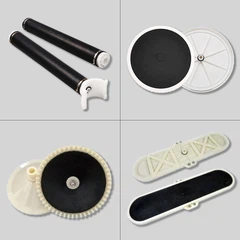
EPDM, or ethylene propylene diene monomer, is a synthetic rubber known for its excellent resistance to weathering, ozone, and a wide range of chemicals. EPDM disc diffusers are used in water treatment processes to introduce air or oxygen into the water. These diffusers typically consist of a circular disc made of EPDM rubber, which is perforated with tiny holes. When air is forced through these holes, it forms small bubbles that rise through the water, facilitating the transfer of oxygen and promoting biological processes such as the decomposition of organic matter.
Advantages of EPDM Disc Diffusers in Large - Scale Water Treatment
1. Durability
One of the most significant advantages of EPDM disc diffusers is their durability. In large - scale water treatment plants, equipment is often subjected to harsh operating conditions, including exposure to various chemicals and continuous use. EPDM's resistance to chemicals, ozone, and UV radiation ensures that the diffusers can withstand these conditions for an extended period. This reduces the need for frequent replacements, resulting in lower long - term maintenance costs. For example, in a large municipal water treatment plant, EPDM disc diffusers can last for several years without significant degradation, even when treating water with high levels of contaminants.
2. High Oxygen Transfer Efficiency
EPDM disc diffusers are designed to produce fine bubbles, which have a large surface area - to - volume ratio. This characteristic allows for efficient oxygen transfer from the air bubbles to the water. In large - scale water treatment, where a large volume of water needs to be aerated, high oxygen transfer efficiency is crucial. It enables the treatment process to be more effective in removing organic pollutants and supporting the growth of beneficial microorganisms. For instance, in a large - scale industrial wastewater treatment plant, EPDM disc diffusers can ensure that sufficient oxygen is supplied to the activated sludge process, leading to better removal of chemical oxygen demand (COD) and biological oxygen demand (BOD).
3. Uniform Aeration
Large - scale water treatment plants require uniform aeration across the treatment tanks to ensure consistent treatment results. EPDM disc diffusers can be installed in a grid pattern, providing even distribution of air bubbles throughout the tank. This uniform aeration helps to prevent the formation of dead zones in the tank, where oxygen levels may be insufficient for effective treatment. As a result, the overall treatment efficiency is improved, and the quality of the treated water is more consistent.
4. Cost - Effectiveness
Although the initial cost of EPDM disc diffusers may be comparable to other types of diffusers, their long - term cost - effectiveness is evident. As mentioned earlier, their durability reduces the need for frequent replacements. Additionally, their high oxygen transfer efficiency means that less energy is required to achieve the same level of aeration compared to some other diffuser types. This translates into lower energy costs, which is a significant factor in large - scale water treatment plants where energy consumption is a major expense.
Potential Drawbacks
1. Clogging
One potential drawback of EPDM disc diffusers is the risk of clogging. In water with high levels of suspended solids or particulate matter, the tiny holes in the EPDM discs can become blocked over time. This can reduce the oxygen transfer efficiency and increase the energy required to maintain the desired air flow. However, this issue can be mitigated through proper pre - treatment of the water to remove suspended solids and regular maintenance, such as backwashing the diffusers.
2. Sensitivity to Temperature
EPDM has a certain temperature range within which it performs optimally. In extremely cold or hot environments, the physical properties of EPDM may change, potentially affecting the performance of the diffusers. For example, in very cold temperatures, EPDM may become more brittle, increasing the risk of cracking. In large - scale water treatment plants located in regions with extreme temperatures, additional measures may be needed to ensure the proper functioning of the EPDM disc diffusers.
Real - World Applications
EPDM disc diffusers have been widely used in large - scale water treatment plants around the world. In municipal water treatment, they are used in the activated sludge process to treat domestic sewage. The high oxygen transfer efficiency of EPDM disc diffusers helps to break down organic matter in the sewage, removing harmful contaminants and producing clean water that can be safely discharged into the environment.
In industrial water treatment, EPDM disc diffusers are also commonly employed. For example, in the food and beverage industry, large - scale water treatment plants use these diffusers to treat wastewater containing high levels of organic compounds. The uniform aeration provided by EPDM disc diffusers ensures that the biological treatment process is effective in removing these compounds, meeting the strict environmental regulations.
Another application is in aquaculture. The MBBR Media AS - MBBR04 For Aquaculture often requires proper water aeration to maintain a healthy environment for fish and other aquatic organisms. EPDM disc diffusers can be used in large - scale aquaculture ponds or tanks to provide sufficient oxygen, promoting the growth and survival of the aquatic species.


Conclusion
In conclusion, EPDM disc diffusers are generally suitable for large - scale water treatment plants. Their durability, high oxygen transfer efficiency, uniform aeration, and cost - effectiveness make them a popular choice in various water treatment applications. While they do have some potential drawbacks, such as clogging and temperature sensitivity, these issues can be managed through proper design, pre - treatment, and maintenance.
If you're considering implementing EPDM disc diffusers in your large - scale water treatment plant or have any questions about our products, I encourage you to reach out for a detailed discussion. We can provide you with more information on the specific features and benefits of our EPDM disc diffusers and how they can be tailored to meet your unique water treatment needs.
References
- Metcalf & Eddy. (2003). Wastewater Engineering: Treatment and Reuse. McGraw - Hill.
- Tchobanoglous, G., Burton, F. L., & Stensel, H. D. (2003). Wastewater Engineering: Treatment, Disposal, and Reuse. Pearson Education.