





Hey there! As a supplier of MBBR mixers, I've been getting a lot of questions lately about how these mixers interact with the carriers in the MBBR (Moving Bed Biofilm Reactor) system. So, I thought I'd take some time to break it down for you.
First off, let's talk about what an MBBR system is. It's a type of wastewater treatment technology that uses floating plastic carriers to provide a surface for microorganisms to grow on. These microorganisms form a biofilm on the carriers, which helps to break down organic matter in the wastewater. The MBBR mixer plays a crucial role in this process by keeping the carriers in suspension and ensuring that they are evenly distributed throughout the reactor.
So, how does the MBBR mixer interact with the carriers? Well, it all comes down to the design of the mixer and the characteristics of the carriers. Most MBBR mixers are designed to create a gentle, circular flow pattern in the reactor. This flow pattern helps to keep the carriers in motion, preventing them from settling to the bottom of the reactor. At the same time, it also ensures that the carriers are evenly distributed throughout the reactor, which is important for maintaining a consistent biofilm growth.
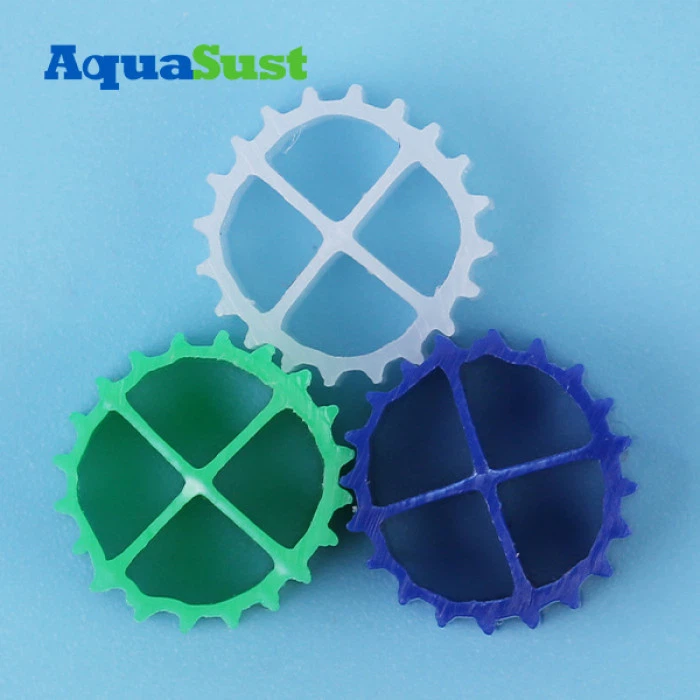
The shape and size of the carriers also play a role in how they interact with the mixer. Most carriers are designed to be lightweight and have a high surface area-to-volume ratio. This makes them easy to suspend in the water and provides a large surface area for the biofilm to grow on. The mixer needs to be able to generate enough force to keep these carriers in motion, but not so much that it causes them to collide with each other or the walls of the reactor.
One of the key factors in the interaction between the MBBR mixer and the carriers is the flow velocity. The mixer needs to be able to generate a flow velocity that is high enough to keep the carriers in suspension, but not so high that it causes the biofilm to be sheared off. The optimal flow velocity will depend on a number of factors, including the size and shape of the carriers, the type of wastewater being treated, and the design of the reactor.

Another important factor is the mixing intensity. The mixer needs to be able to provide enough mixing intensity to ensure that the carriers are evenly distributed throughout the reactor. This is important for maintaining a consistent biofilm growth and ensuring that the wastewater is evenly treated. However, too much mixing intensity can also cause the biofilm to be sheared off, so it's important to find the right balance.
In addition to keeping the carriers in suspension and ensuring that they are evenly distributed, the MBBR mixer also plays a role in oxygen transfer. The biofilm on the carriers requires oxygen to grow and function properly. The mixer helps to transfer oxygen from the air or from an aeration system into the water, which is then available to the biofilm. This is important for maintaining a healthy biofilm and ensuring that the wastewater is effectively treated.
Now, let's talk about some of the different types of MBBR mixers that are available. There are several different types of mixers that can be used in an MBBR system, including propeller mixers, paddle mixers, and jet mixers. Each type of mixer has its own advantages and disadvantages, and the choice of mixer will depend on a number of factors, including the size and shape of the reactor, the type of wastewater being treated, and the desired flow velocity and mixing intensity.
Propeller mixers are one of the most common types of MBBR mixers. They are relatively simple and inexpensive, and they can generate a high flow velocity. However, they can also be prone to clogging if the carriers are too large or if there is a lot of debris in the wastewater.
Paddle mixers are another popular option. They are more gentle than propeller mixers and are less likely to cause the biofilm to be sheared off. However, they can also be less efficient at generating a high flow velocity, and they may require more energy to operate.
Jet mixers are a newer type of MBBR mixer that uses a high-pressure jet of water to create a flow pattern in the reactor. They are very efficient at generating a high flow velocity and can be used in a wide range of reactor sizes and shapes. However, they can also be more expensive than other types of mixers, and they may require more maintenance.
So, there you have it! That's a basic overview of how an MBBR mixer interacts with the carriers in the MBBR system. As you can see, it's a complex process that requires careful consideration of a number of factors. If you're in the market for an MBBR mixer, it's important to choose a mixer that is designed to work with the specific carriers and wastewater that you'll be using.
At our company, we offer a wide range of MBBR mixers that are designed to work with a variety of carriers and wastewater types. Our mixers are built to last and are backed by our industry-leading warranty. If you're interested in learning more about our products or have any questions about how they work, please don't hesitate to contact us. We'd be happy to help you find the right mixer for your needs.
And if you're looking for high-quality MBBR carriers, be sure to check out the MBBR Media AS-MBBR04 For Aquaculture. These carriers are specifically designed for use in aquaculture applications and are made from a high-quality, durable material that provides a large surface area for biofilm growth.
So, what are you waiting for? Contact us today to learn more about our MBBR mixers and how they can help you improve your wastewater treatment process. We look forward to hearing from you!
References
- Metcalf & Eddy, Wastewater Engineering: Treatment and Reuse, 5th Edition
- WEF Manual of Practice No. 8, Biological Waste Treatment
- Environmental Protection Agency, Wastewater Technology Fact Sheet: Moving Bed Biofilm Reactors