





As a supplier of MBBR media, I've had numerous discussions with clients about the applicability of our products in various wastewater treatment scenarios. One question that often arises is whether MBBR media can be effectively used in small - scale wastewater treatment plants. In this blog, I'll delve into the details to provide a comprehensive answer.
Understanding MBBR Media
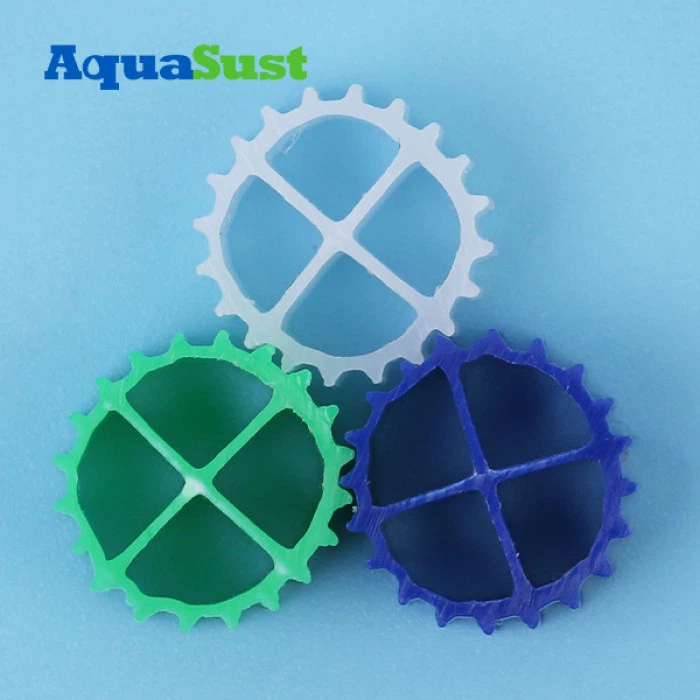
Moving Bed Biofilm Reactor (MBBR) media is a key component in modern wastewater treatment systems. These media provide a large surface area for the growth of biofilms, which are communities of microorganisms that break down organic matter in wastewater. The media typically consist of small, plastic carriers that are suspended in the wastewater and move freely within the reactor. This movement enhances the contact between the biofilm and the wastewater, improving the treatment efficiency.
Our MBBR Media AS - MBBR04 For Aquaculture is a prime example of high - quality MBBR media. It is designed to have an optimal shape and surface structure to promote the growth of a diverse range of microorganisms. The unique design allows for a high biomass concentration, which is crucial for effective wastewater treatment.
Advantages of Using MBBR Media in Small - scale Wastewater Treatment Plants
High Treatment Efficiency
One of the main advantages of using MBBR media in small - scale plants is the high treatment efficiency. The large surface area provided by the media allows for the growth of a significant amount of biofilm. This biofilm can quickly and effectively break down organic pollutants, nitrogen, and phosphorus in the wastewater. Even in small - scale operations, where the volume of wastewater may be relatively low, the MBBR media can ensure that the treatment process is thorough and efficient.
For example, in a small - scale domestic wastewater treatment plant, the MBBR media can help reduce the chemical oxygen demand (COD) and biological oxygen demand (BOD) to acceptable levels. This is essential for ensuring that the treated water can be safely discharged into the environment or reused for non - potable purposes.
Flexibility
Small - scale wastewater treatment plants often have to deal with fluctuating influent flows and pollutant loads. MBBR media offer great flexibility in such situations. The biofilm on the media can adapt to changes in the wastewater characteristics relatively quickly. When there is a sudden increase in the pollutant load, the microorganisms in the biofilm can increase their metabolic activity to break down the additional pollutants. Similarly, during periods of low influent flow, the biofilm can maintain its viability and be ready to resume full - scale treatment when the flow increases again.
Compact Design
Space is often a constraint in small - scale wastewater treatment plants. MBBR systems can be designed to be relatively compact compared to traditional treatment methods. Since the MBBR media can achieve high treatment efficiency in a smaller volume, the overall footprint of the treatment plant can be reduced. This is particularly beneficial for small communities, rural areas, or industrial facilities with limited space.

Low Maintenance
MBBR media require relatively low maintenance compared to some other treatment technologies. The media do not need to be backwashed like some filtration systems, and the biofilm on the media is self - sustaining to a large extent. As long as the operating conditions are maintained within the appropriate range, the MBBR system can operate smoothly with minimal intervention. This is a significant advantage for small - scale plants, which may not have the resources or expertise for extensive maintenance.
Challenges and Considerations
Initial Investment
One of the challenges associated with using MBBR media in small - scale plants is the initial investment. The cost of purchasing the MBBR media and setting up the MBBR system can be relatively high compared to some simpler treatment methods. However, it's important to consider the long - term benefits. The high treatment efficiency, low maintenance, and compact design can result in cost savings over the life of the treatment plant.
Media Selection
Selecting the right MBBR media is crucial for the success of a small - scale treatment plant. Different types of media have different characteristics, such as surface area, density, and shape. These characteristics can affect the performance of the biofilm and the overall treatment efficiency. As a supplier, we work closely with our clients to understand their specific requirements and recommend the most suitable media. For example, in a small - scale aquaculture wastewater treatment plant, the media need to be able to handle the specific pollutants and flow conditions associated with aquaculture operations. Our MBBR Media AS - MBBR04 For Aquaculture is specifically designed for such applications.
Operational Conditions
Maintaining the appropriate operational conditions is essential for the proper functioning of the MBBR system. Factors such as temperature, pH, dissolved oxygen, and hydraulic retention time can all affect the growth and activity of the biofilm. In small - scale plants, it may be more challenging to control these conditions precisely. However, with proper monitoring and control systems, it is possible to ensure that the MBBR system operates at optimal efficiency.
Case Studies
Small - scale Domestic Wastewater Treatment
In a small rural community, a domestic wastewater treatment plant was upgraded to incorporate MBBR media. Prior to the upgrade, the plant was struggling to meet the effluent quality standards. After installing the MBBR media, the treatment efficiency improved significantly. The COD and BOD levels in the treated water were reduced by more than 80%, and the nitrogen and phosphorus removal rates also increased. The compact design of the MBBR system allowed the plant to fit within the limited available space, and the low maintenance requirements made it easy for the local operators to manage.
Small - scale Industrial Wastewater Treatment
A small - scale food processing facility was facing challenges in treating its wastewater. The wastewater had a high organic load and variable flow rates. By using MBBR media in the treatment plant, the facility was able to achieve consistent treatment results. The MBBR system was able to adapt to the fluctuating influent conditions, and the treated water met the discharge standards. This not only helped the facility avoid potential environmental penalties but also reduced the cost of water disposal.
Conclusion
In conclusion, MBBR media can be effectively used in small - scale wastewater treatment plants. The high treatment efficiency, flexibility, compact design, and low maintenance make them a viable option for a wide range of small - scale applications. While there are some challenges, such as the initial investment and media selection, these can be overcome with proper planning and support.
If you are considering using MBBR media in your small - scale wastewater treatment plant, I encourage you to reach out to us. Our team of experts can provide you with detailed information about our products, help you select the most suitable media for your specific needs, and offer guidance on the installation and operation of the MBBR system. We are committed to providing high - quality solutions to meet your wastewater treatment requirements.
References
- Ødegaard, H. (2006). Moving bed biofilm reactors (MBBRs): an efficient and flexible wastewater treatment option. Water Science and Technology, 53(10), 1-8.
- Winkler, U., & Wilderer, P. A. (2000). The moving bed biofilm reactor (MBBR)-a case study for an industrial wastewater treatment. Water Science and Technology, 41(10), 317-324.
- Rusten, B., & Ødegaard, H. (1993). Development of a moving bed biofilm reactor. Water Science and Technology, 27(8), 1-10.