





During the process of establishing a healthy aquatic environment, the cycling process is a crucial phase. Bio balls, as a popular biological filtration media, play a significant role in this process. As a Bio Balls supplier, I often receive questions from customers about whether Bio Balls need to be monitored during the cycling process. In this blog, I will delve into this topic and provide some insights based on scientific knowledge and practical experience.
Understanding the Cycling Process
Before discussing the monitoring of Bio Balls, it's essential to understand the cycling process in an aquarium or aquaculture system. The cycling process refers to the establishment of a beneficial bacterial colony in the filtration system. These bacteria are responsible for breaking down harmful substances such as ammonia and nitrite, which are produced by fish waste, uneaten food, and decaying organic matter.
The cycling process typically consists of two main stages: the ammonia - oxidizing stage and the nitrite - oxidizing stage. In the first stage, ammonia - oxidizing bacteria convert ammonia (NH₃) into nitrite (NO₂⁻). In the second stage, nitrite - oxidizing bacteria convert nitrite into nitrate (NO₃⁻), which is relatively less toxic to fish.
The Role of Bio Balls in the Cycling Process
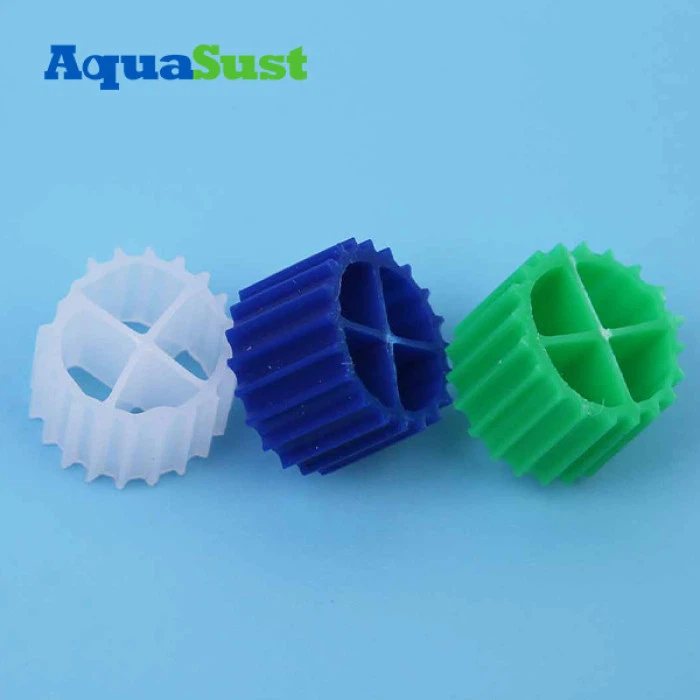
Bio Balls are designed to provide a large surface area for the colonization of beneficial bacteria. Their porous structure allows bacteria to attach and grow, creating a biological filter that helps to remove ammonia and nitrite from the water. When placed in the filtration system, Bio Balls act as a home for the ammonia - oxidizing and nitrite - oxidizing bacteria, facilitating the cycling process.

Do Bio Balls Need to be Monitored During the Cycling Process?
The answer is yes, and here are several reasons:
1. Bacterial Growth and Colonization
Monitoring Bio Balls during the cycling process can help ensure that the beneficial bacteria are growing and colonizing properly. In the initial stages of cycling, it may take some time for the bacteria to attach to the Bio Balls. By monitoring the water parameters such as ammonia, nitrite, and nitrate levels, we can indirectly assess the growth of the bacterial colony. If the ammonia and nitrite levels do not start to decrease after a reasonable period, it could indicate that the bacteria are not growing as expected. This might be due to factors such as low water temperature, high levels of chlorine or other chemicals in the water, or insufficient oxygen.
2. Water Quality Maintenance
Monitoring Bio Balls also helps in maintaining the overall water quality during the cycling process. As the bacteria break down ammonia and nitrite, the water quality should gradually improve. However, if the Bio Balls become clogged with debris or if the water flow through them is restricted, it can affect the efficiency of the biological filtration. This can lead to a build - up of ammonia and nitrite, which can be harmful to the fish. Regular monitoring allows us to detect any issues with the Bio Balls and take appropriate measures, such as cleaning or adjusting the filtration system.
3. System Stability
A stable cycling process is crucial for the long - term health of the aquatic system. By monitoring Bio Balls, we can ensure that the biological filtration system is functioning properly and that the cycling process is progressing smoothly. Any disruptions in the cycling process, such as a sudden drop in bacterial activity, can lead to fluctuations in water quality, which can stress the fish and make them more susceptible to diseases.
How to Monitor Bio Balls During the Cycling Process
Here are some ways to monitor Bio Balls during the cycling process:
1. Water Parameter Testing
Regularly test the water for ammonia, nitrite, and nitrate levels. This can be done using water testing kits, which are readily available in the market. During the cycling process, the ammonia level should initially rise, followed by an increase in nitrite levels. As the cycling progresses, the ammonia and nitrite levels should start to decrease, and the nitrate level should increase. If the ammonia or nitrite levels remain high for an extended period, it may indicate a problem with the Bio Balls or the bacterial colony.
2. Visual Inspection
Periodically inspect the Bio Balls visually. Look for signs of clogging, such as debris accumulation on the surface of the Bio Balls. If the Bio Balls are clogged, it can reduce the water flow through them and affect the efficiency of the biological filtration. In such cases, the Bio Balls may need to be cleaned gently to remove the debris.
3. Flow Rate Monitoring
Ensure that the water flow rate through the Bio Balls is appropriate. A proper flow rate is necessary to provide the bacteria with a constant supply of oxygen and nutrients. If the flow rate is too low, the bacteria may not receive enough oxygen, which can inhibit their growth. On the other hand, if the flow rate is too high, it may wash away the bacteria before they have a chance to attach to the Bio Balls.
The Importance of High - Quality Bio Balls
As a Bio Balls supplier, I understand the importance of providing high - quality products. High - quality Bio Balls are made from materials that are non - toxic to fish and provide an ideal surface for bacterial colonization. They have a large and uniform pore structure, which allows for efficient water flow and maximum contact between the water and the bacteria.
One example of a high - quality media is the MBBR Media AS - MBBR04 For Aquaculture. This media is specifically designed for aquaculture applications and offers excellent performance in biological filtration. It provides a large surface area for bacterial growth and is resistant to clogging, ensuring long - term efficiency in the cycling process.
Conclusion
In conclusion, monitoring Bio Balls during the cycling process is essential for the successful establishment of a healthy aquatic environment. By monitoring water parameters, visually inspecting the Bio Balls, and ensuring proper flow rates, we can ensure that the beneficial bacteria are growing and functioning properly. As a Bio Balls supplier, I am committed to providing high - quality products and sharing knowledge to help our customers achieve optimal results in their aquatic systems.
If you are interested in purchasing Bio Balls or other biological filtration media for your aquarium or aquaculture system, please feel free to contact us for more information and to discuss your specific needs. We are here to assist you in creating a thriving and sustainable aquatic environment.
References
- Spotte, S. (1979). Captive Seawater Fishes: Their Selection, Maintenance, and Pathology. Wiley - Interscience.
- Wheaton, F. W. (1977). Aquaculture: Farming Aquatic Animals and Plants. Wiley - Blackwell.
- Timmons, M. B., & Ebeling, J. M. (2013). Recirculating Aquaculture Systems. Wiley - Blackwell.