





Hey there! I'm a supplier of Dissolved Air Flotation (DFA) systems. You might be wondering, "How does a DFA work?" Well, let me break it down for you in a way that's easy to understand.
First off, what's a DFA system? In simple terms, it's a water treatment technology that's super effective at removing suspended solids, oils, and other contaminants from water. It's used in a bunch of industries, like food and beverage, chemical, and aquaculture. I'll focus a bit on aquaculture later on since it's a big area where our DFA systems shine.
So, how does it all work? The basic principle behind a DFA system is based on the concept of air flotation. You see, when tiny air bubbles are introduced into water that has contaminants, these bubbles attach themselves to the contaminants. Once attached, the combined air - bubble and contaminant unit becomes less dense than water. This causes them to float to the surface of the water, where they can be easily skimmed off.
Let's go through the process step by step.
Step 1: Inlet and Mixing
The first thing that happens is the contaminated water enters the DFA system through an inlet. Along with the water, a stream of pressurized water that's saturated with air is also introduced. This pressurized air - saturated water is usually created in a separate saturation tank. When this pressurized water mixes with the incoming contaminated water, the pressure drops suddenly. This drop in pressure causes the dissolved air in the pressurized water to come out of solution in the form of tiny bubbles. These bubbles are really small, typically in the range of 20 - 100 micrometers.
Step 2: Bubble Attachment
Once the bubbles are formed, they start to interact with the suspended solids and other contaminants in the water. The contaminants can be anything from small particles of dirt to oil droplets. The bubbles attach to these contaminants through various mechanisms. Sometimes it's due to physical forces like surface tension, and other times it might be because of chemical reactions between the surface of the contaminant and the air bubble. For example, if there are some charged particles in the water, the bubbles might have an opposite charge, causing them to attract each other.
Step 3: Flotation
As more and more bubbles attach to the contaminants, the combined mass becomes buoyant. This means it starts to rise to the surface of the water. Think of it like a balloon floating in the air. The air in the balloon makes it lighter than the surrounding air, so it goes up. Similarly, the air - bubble and contaminant combination is lighter than the surrounding water, so it floats to the top.
Step 4: Skimming
Once the contaminants have floated to the surface, they form a layer of sludge. This sludge needs to be removed from the water. That's where the skimming mechanism comes in. A skimmer, which is usually a mechanical device, moves across the surface of the water and scrapes off the sludge. The removed sludge is then collected in a separate container for further treatment or disposal.
Step 5: Treated Water Outlet
After the sludge has been removed, the remaining water is much cleaner. This treated water exits the DFA system through an outlet. The quality of the treated water can be quite high, depending on the initial contamination level and the design of the DFA system. In many cases, the treated water can be reused within the industrial process or discharged safely into the environment.
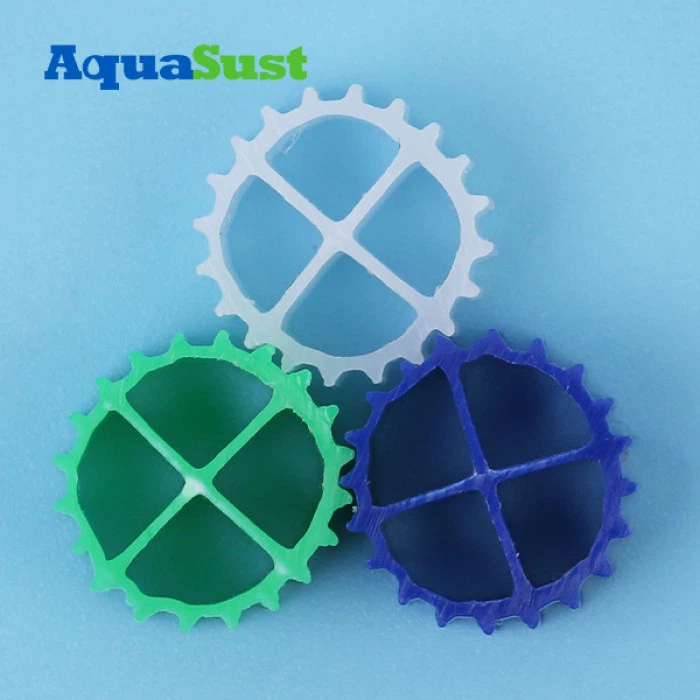
Now, let's talk a bit about aquaculture. In aquaculture, water quality is crucial for the health and growth of fish and other aquatic organisms. The water can get contaminated with fish waste, uneaten feed, and other organic matter. A DFA system can be a great solution for treating this water. For example, we have the MBBR Media AS - MBBR04 For Aquaculture which can work in conjunction with our DFA systems. This media helps in the biological treatment of the water, breaking down organic matter further. The DFA system can then remove the remaining suspended solids and other contaminants, ensuring that the water in the aquaculture tanks remains clean and healthy for the fish.
One of the great things about DFA systems is their efficiency. They can remove a high percentage of contaminants in a relatively short period of time. This means that industries can treat large volumes of water quickly, which is important for maintaining continuous production processes. Also, they're quite flexible in terms of design. We can customize the DFA systems according to the specific needs of different industries. Whether it's a small - scale aquaculture farm or a large - scale chemical plant, we can design a system that fits their requirements.

Another advantage is that DFA systems are relatively easy to operate and maintain. Most of the components are simple and durable. The skimmers and other moving parts are designed to be reliable, and with regular maintenance, they can last for a long time. We also provide training and support to our customers to make sure they can operate the systems effectively.
In addition to the basic DFA system, there are also some advanced features that we can offer. For example, we can integrate chemical dosing systems. Sometimes, adding certain chemicals to the water can enhance the bubble - attachment process. These chemicals can help to coagulate the contaminants, making it easier for the bubbles to attach to them. This can further improve the efficiency of the DFA system.
We also have monitoring and control systems for our DFA systems. These systems can measure various parameters like the level of contaminants in the water, the flow rate, and the pressure. Based on these measurements, the system can automatically adjust the operation to ensure optimal performance. This means that our customers don't have to constantly monitor the system manually, saving them time and effort.
So, if you're in an industry that needs water treatment solutions, whether it's aquaculture, food and beverage, or any other sector, a DFA system from us could be the answer. Our DFA systems are designed to be efficient, reliable, and customizable. We've got the experience and expertise to provide you with the best - suited system for your needs.
If you're interested in learning more about our DFA systems or want to discuss a potential purchase, don't hesitate to reach out. We're always happy to have a chat and see how we can help you improve your water treatment processes.
References
- Smith, J. (2018). Water Treatment Technologies. ABC Publishing.
- Johnson, R. (2020). Aquaculture Water Management. XYZ Press.