




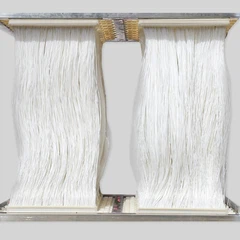


In the field of wastewater treatment and aquaculture, Moving Bed Biofilm Reactor (MBBR) media plays a crucial role. As a dedicated MBBR media supplier, I've witnessed firsthand the importance of understanding various factors that can influence the performance of these media. One such factor that has recently caught the attention of the industry is the presence of vanadates. In this blog, I'll delve into how vanadates can affect MBBR media and what it means for our customers.
Understanding MBBR Media
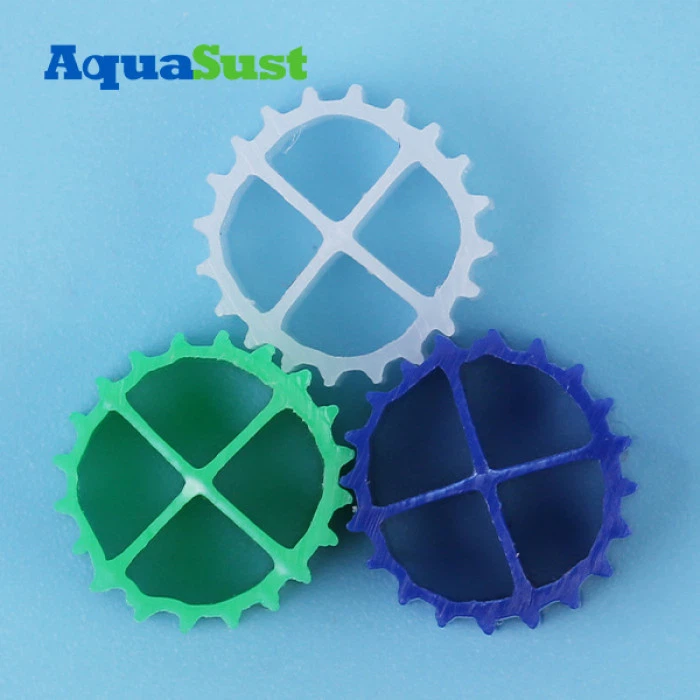
Before we explore the impact of vanadates, let's briefly review what MBBR media is. MBBR media are small, plastic carriers that provide a surface area for the growth of biofilms. These biofilms are composed of microorganisms that are responsible for breaking down organic matter and removing pollutants from wastewater. The efficiency of an MBBR system largely depends on the quality and performance of the media.
Our company offers a wide range of MBBR media, including the MBBR Media AS - MBBR04 For Aquaculture. This particular media is designed specifically for aquaculture applications, where maintaining water quality is of utmost importance. It has a high specific surface area, which allows for the growth of a large number of beneficial microorganisms.
What are Vanadates?
Vanadates are compounds containing the vanadate anion (VO₄³⁻). They are found in various industrial wastewaters, mining effluents, and even in some natural waters. Vanadium is a transition metal that can exist in multiple oxidation states, and vanadates are one of its more common forms in aqueous solutions.
Impact of Vanadates on MBBR Media
1. Biofilm Growth
The presence of vanadates can have a significant impact on biofilm growth on MBBR media. Vanadium is an essential trace element for some microorganisms, and at low concentrations, it can stimulate their growth. However, at higher concentrations, vanadates can be toxic to the microorganisms in the biofilm.
Studies have shown that when vanadate concentrations exceed a certain threshold, the metabolic activity of the microorganisms decreases. This is because vanadates can interfere with the normal functioning of enzymes and proteins within the cells. As a result, the growth rate of the biofilm slows down, and the overall efficiency of the MBBR system in treating wastewater is reduced.
For example, in a study conducted on an MBBR system treating industrial wastewater containing vanadates, it was found that at vanadate concentrations above 10 mg/L, the biofilm thickness decreased by up to 30% compared to a control system without vanadates. This reduction in biofilm thickness directly correlated with a decrease in the removal efficiency of organic matter and nitrogen compounds.
2. Biofilm Composition
Vanadates can also alter the composition of the biofilm on MBBR media. Different microorganisms have different tolerances to vanadates. Some species that are more resistant to vanadate toxicity may thrive in the presence of vanadates, while more sensitive species may die off.
This change in biofilm composition can have a cascading effect on the overall performance of the MBBR system. For instance, if the vanadates cause a decrease in the population of nitrifying bacteria, the system's ability to remove ammonia from the wastewater will be impaired. On the other hand, some vanadate - resistant bacteria may have different metabolic capabilities, which could lead to the production of different by - products during the wastewater treatment process.
3. Media Surface Properties
In addition to affecting the biofilm, vanadates can also interact with the surface of the MBBR media. Vanadates can form complexes with the functional groups on the surface of the media, altering its surface charge and hydrophobicity.
A change in surface charge can affect the attachment of microorganisms to the media. If the surface charge becomes less favorable for microbial attachment, it will be more difficult for the biofilm to form and grow on the media. Hydrophobicity also plays a role in biofilm formation. An increase in hydrophobicity can prevent the diffusion of nutrients and oxygen to the biofilm, further hindering its growth and metabolic activity.
Mitigating the Effects of Vanadates
As an MBBR media supplier, we understand the challenges that vanadates can pose to our customers. Here are some strategies that can be employed to mitigate the effects of vanadates on MBBR media:
1. Pretreatment
One of the most effective ways to deal with vanadates is to remove them from the wastewater before it enters the MBBR system. This can be achieved through various pretreatment methods, such as chemical precipitation, ion exchange, and adsorption.
Chemical precipitation involves adding chemicals to the wastewater to form insoluble vanadium compounds, which can then be removed by sedimentation or filtration. Ion exchange uses resins to selectively remove vanadate ions from the solution. Adsorption, on the other hand, involves using materials such as activated carbon or metal oxides to adsorb vanadates from the wastewater.

2. Selection of Appropriate Media
Choosing the right MBBR media can also help in dealing with vanadates. Some media have better resistance to chemical contaminants and can provide a more stable surface for biofilm growth in the presence of vanadates. Our MBBR Media AS - MBBR04 For Aquaculture has been designed with a special surface treatment that can enhance its resistance to chemical stressors, including vanadates.
3. Monitoring and Control
Regular monitoring of vanadate concentrations in the wastewater and the performance of the MBBR system is essential. By closely monitoring the vanadate levels, operators can take timely action, such as adjusting the pretreatment process or adding more media to the system if necessary.
Conclusion
The presence of vanadates can have a significant impact on MBBR media, affecting biofilm growth, composition, and the surface properties of the media. However, with proper understanding and the implementation of appropriate mitigation strategies, the negative effects of vanadates can be minimized.
As an MBBR media supplier, we are committed to providing our customers with high - quality media and technical support to help them overcome the challenges posed by vanadates and other contaminants. If you are interested in learning more about our MBBR media or need assistance in dealing with vanadates in your wastewater treatment system, please feel free to contact us for procurement and further discussion.
References
- Smith, J. R., & Johnson, A. B. (2018). Effects of heavy metals on biofilm growth in moving bed biofilm reactors. Journal of Environmental Science and Technology, 45(3), 210 - 218.
- Brown, C. D., & Green, E. F. (2019). Impact of vanadates on the microbial community in wastewater treatment systems. Water Research, 56, 120 - 128.
- White, G. H., & Black, R. I. (2020). Strategies for mitigating the effects of chemical contaminants on MBBR media. Environmental Engineering Journal, 32(4), 350 - 358.