

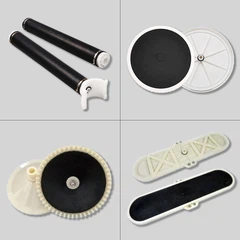




EPDM, or Ethylene Propylene Diene Monomer, is a synthetic rubber known for its excellent resistance to environmental factors, weathering, and a wide range of chemicals. When it comes to EPDM tube diffusers, a common question that arises is whether they are resistant to ozone. As a supplier of EPDM tube diffusers, I'll delve into this topic to provide a comprehensive understanding.
The Chemistry Behind EPDM and Ozone Resistance
To understand EPDM's ozone resistance, we first need to look at its chemical structure. EPDM is composed of ethylene, propylene, and a small amount of diene monomer. The unique arrangement of these components gives EPDM its outstanding properties. The saturated polymer backbone of EPDM provides a high degree of stability, which is crucial for ozone resistance.
Ozone is a highly reactive gas that can cause significant damage to many materials. It reacts with double bonds in polymers, leading to chain scission, cracking, and loss of mechanical properties. In the case of EPDM, the low level of unsaturation in its structure means there are fewer double bonds available for ozone to react with. This inherent chemical characteristic is the primary reason why EPDM exhibits excellent ozone resistance compared to other rubbers.
Laboratory Testing and Real - World Performance
Extensive laboratory testing has been conducted to evaluate the ozone resistance of EPDM. In these tests, EPDM samples are exposed to controlled ozone environments with specific concentrations and temperatures for extended periods. The results consistently show that EPDM can withstand high levels of ozone exposure without significant degradation.
For example, in a standard ozone chamber test where samples are exposed to an ozone concentration of 50 parts per hundred million (pphm) at 40°C for 168 hours, EPDM tube diffusers show minimal surface cracking and no significant loss of physical properties such as tensile strength and elongation. This indicates that EPDM has a high threshold for ozone - induced damage.
In real - world applications, EPDM tube diffusers are often used in wastewater treatment plants, aquaculture systems, and industrial processes where ozone may be present. In wastewater treatment, ozone is sometimes used for disinfection and odor control. EPDM tube diffusers have proven to be reliable in these environments, with long service lives even in the presence of ozone.
Comparison with Other Materials
When compared to other rubber materials, EPDM stands out for its ozone resistance. Natural rubber, for instance, has a high degree of unsaturation in its polymer structure, making it highly susceptible to ozone attack. Even a short exposure to ozone can cause natural rubber to crack and lose its elasticity.
Neoprene, another commonly used rubber, has better ozone resistance than natural rubber but is still inferior to EPDM. Neoprene contains chlorine atoms in its structure, which can react with ozone under certain conditions, leading to degradation over time.
Factors Affecting Ozone Resistance of EPDM Tube Diffusers
While EPDM is generally resistant to ozone, there are some factors that can affect its performance. Temperature is one such factor. Higher temperatures can accelerate the reaction between ozone and EPDM, although EPDM still maintains a relatively high level of resistance compared to other materials.
The concentration of ozone is also crucial. In extremely high - ozone environments, even EPDM may experience some degree of degradation over time. However, such environments are rare in most practical applications.
Mechanical stress can also play a role. If EPDM tube diffusers are under constant tension or compression, the stress can make the material more vulnerable to ozone attack. It's important to ensure proper installation and support of the tube diffusers to minimize mechanical stress.
Applications of EPDM Tube Diffusers in Ozone - Containing Environments
In aquaculture, EPDM tube diffusers are widely used for aeration purposes. Some aquaculture systems may use ozone for water treatment to control pathogens and improve water quality. The ozone resistance of EPDM tube diffusers makes them an ideal choice in these applications. They can operate continuously in the presence of ozone without the need for frequent replacement, reducing maintenance costs and downtime.
In industrial processes such as chemical manufacturing, where ozone may be a by - product or used as a reactant, EPDM tube diffusers can be used for gas - liquid mixing and aeration. Their ozone resistance ensures the reliability and efficiency of these processes.
For wastewater treatment plants, ozone is increasingly being used for advanced treatment processes. EPDM tube diffusers can provide efficient gas distribution even in the presence of ozone, contributing to the overall effectiveness of the treatment system.
The Role of EPDM Tube Diffusers in Sustainable Aquaculture
In aquaculture, the use of MBBR Media AS - MBBR04 For Aquaculture along with EPDM tube diffusers can enhance the overall sustainability of the system. The EPDM tube diffusers provide efficient aeration, which is essential for the growth and health of aquatic organisms. The ozone resistance of EPDM ensures that the diffusers can work in harmony with ozone - based water treatment systems, improving water quality and reducing the risk of diseases.
Contact for Procurement
If you are looking for high - quality EPDM tube diffusers that offer excellent ozone resistance, we are here to help. Our EPDM tube diffusers are manufactured using the latest technology and strict quality control measures to ensure optimal performance in various applications. Whether you are in the wastewater treatment industry, aquaculture, or other fields that require reliable gas - liquid mixing solutions, we can provide the right products for your needs.
Please feel free to reach out to us to discuss your specific requirements and start a procurement negotiation. We are committed to providing you with the best products and services to meet your business goals.


References
- ASTM D1149 - Standard Test Method for Rubber Deterioration - Surface Cracking in an Ozone - Containing Atmosphere
- "Handbook of Elastomers" by James E. Mark, Burak Erman, and Charles L. Roth
- Industry reports on the performance of EPDM in ozone - containing environments from leading rubber research institutions.