

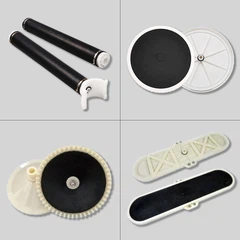




Hey there! I'm a supplier of tube diffusers, and I know it might seem a bit odd for me to talk about the disadvantages of the product I sell. But hey, being transparent is key, right? So, let's dive into the not - so - shiny aspects of using a tube diffuser.


1. Initial Installation Complexity
One of the first things you'll notice when dealing with tube diffusers is the installation process. It's not as straightforward as slapping on some simple equipment. You've got to carefully plan the layout of the tubes. They need to be placed at the right depth and spacing in the water body. If you're installing them in a large tank or a pond, this can be a real headache.
For example, if the tubes aren't evenly spaced, the distribution of oxygen will be uneven. Some areas will get too much oxygen, while others won't get enough. This uneven distribution can lead to problems in the water environment, like the growth of unwanted algae in areas with excessive oxygen.
Also, the installation often requires specialized tools and skills. You can't just have anyone do it. You might need to hire a professional, which adds to the overall cost. And if you're doing it yourself, it can take a lot of time and effort to get it right.
2. Maintenance Requirements
Tube diffusers demand regular maintenance. Over time, the pores in the tubes can get clogged. This clogging is usually caused by debris, sediment, or biofilms that form on the surface of the tubes. When the pores are clogged, the efficiency of the diffuser drops significantly. The oxygen transfer rate decreases, and you'll notice that the water quality starts to deteriorate.
To keep the tubes working properly, you've got to clean them regularly. This can be a messy and time - consuming job. You might have to take the tubes out of the water, soak them in a cleaning solution, and then scrub them to remove the buildup. And if you don't clean them often enough, you might end up having to replace the tubes, which can be quite expensive.
Another maintenance issue is the potential for mechanical damage. The tubes are made of materials that can be damaged by sharp objects or rough handling. If there are any sharp rocks or other debris in the water, they can puncture the tubes. Once a tube is punctured, it will leak air unevenly, and you'll have to replace it.
3. Limited Oxygen Transfer in Deep Water
Tube diffusers aren't the best option for deep water applications. As the depth of the water increases, the pressure on the tubes also increases. This increased pressure can make it difficult for the air to escape from the pores of the tubes.
In deep water, the oxygen transfer efficiency of tube diffusers drops. The air bubbles that are released from the tubes are smaller and rise more slowly. This means that the oxygen doesn't have as much time to dissolve into the water before the bubbles reach the surface. As a result, the overall oxygenation of the water is less effective compared to using other types of diffusers.
For instance, in a deep aquaculture pond, if you rely solely on tube diffusers, you might find that the bottom layers of the water don't get enough oxygen. This can lead to problems like fish stress and even death in extreme cases.
4. Noise Pollution
Tube diffusers can be quite noisy, especially when they're operating at high flow rates. The sound is mainly produced by the air escaping from the pores of the tubes and the movement of the water around the tubes.
This noise can be a problem, especially if the diffusers are installed in a residential area or a place where noise needs to be kept to a minimum. For example, if you have an aquaculture system in a backyard pond, the constant noise from the tube diffusers can be annoying to you and your neighbors.
You can try to reduce the noise by using noise - dampening materials or by adjusting the flow rate. But these solutions can add to the cost and complexity of the system.
5. Compatibility Issues
Tube diffusers might not be compatible with all types of water treatment systems or aquaculture setups. Some water treatment processes require specific oxygen transfer rates or bubble sizes. Tube diffusers might not be able to meet these requirements.
For example, in a wastewater treatment plant that uses a specific biological treatment process, the tube diffusers might not provide the right amount of oxygen in the right way. The bacteria in the treatment process need a certain level of oxygen to break down the pollutants effectively. If the tube diffusers can't deliver the required oxygen, the treatment efficiency will be reduced.
Also, if you're using other equipment in your aquaculture or water treatment system, the tube diffusers might not work well with them. There could be issues with air flow, pressure, or chemical compatibility.
Conclusion
Even though tube diffusers have their disadvantages, they still have many advantages in the right applications. They're relatively cost - effective in some cases, and they can provide good oxygen transfer in shallow water. If you're aware of the potential problems, you can take steps to mitigate them.
If you're considering using tube diffusers for your aquaculture or water treatment needs, I'd be more than happy to discuss your specific situation. We can figure out if tube diffusers are the right choice for you, and if they are, we can work together to address any potential issues. And if you're also looking for other related products, check out MBBR Media AS - MBBR04 For Aquaculture. It might be a great addition to your system.
So, if you're interested in purchasing tube diffusers or want to learn more, don't hesitate to reach out. Let's have a chat and see how we can make your water system work better.
References
- Smith, J. (2018). Water Treatment Equipment Handbook. Publisher X.
- Johnson, A. (2020). Aquaculture Systems and Technologies. Publisher Y.