





Introduction
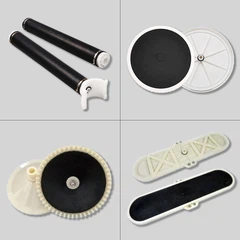
Fine bubble diffusers play an important role in wastewater treatment by supplying oxygen to support biological processes. Disc diffusers and tube diffusers are two common choices for aeration systems. Although both generate fine bubbles, their structural designs, installation methods, and aeration coverage differ. Understanding these differences helps buyers evaluate which type better suits their tank layout and operating requirements.
Why Aeration Efficiency Matters in Modern Wastewater Systems
Aeration is one of the major energy-consuming processes in wastewater treatment plants. Its efficiency affects oxygen availability for microorganisms, treatment performance, and overall operating costs. Fine bubble aeration increases the contact area between air and water, supporting oxygen transfer while helping reduce unnecessary air consumption. Therefore, selecting suitable diffusers is important for balancing oxygen demand, energy use, and long-term system operation.
What are Disc and Tube Diffusers
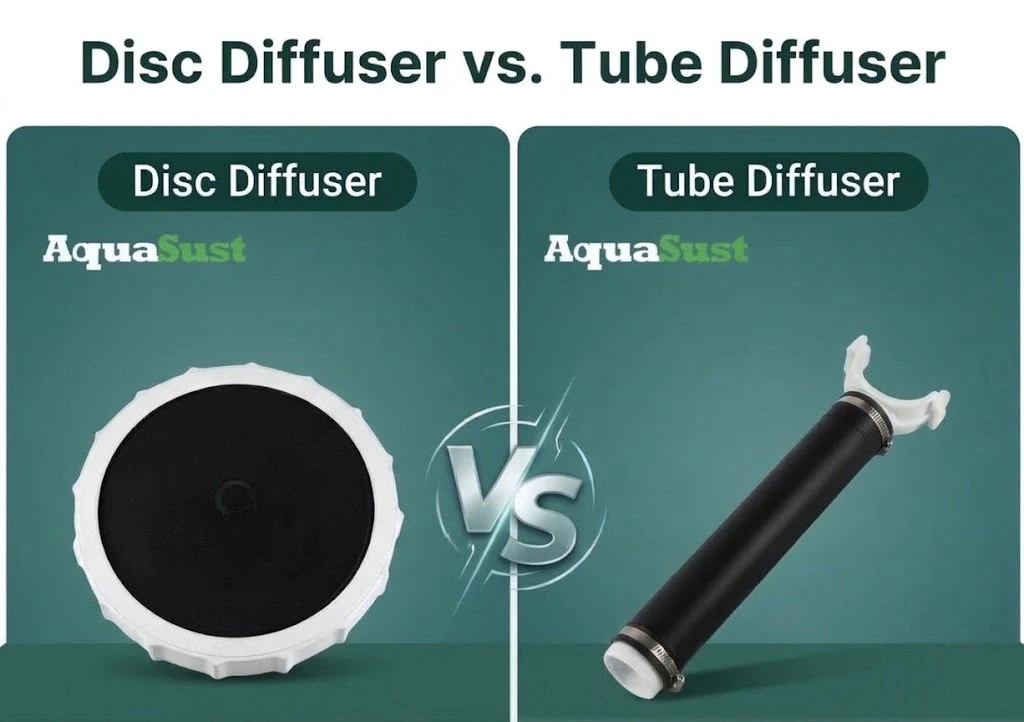
Disc and tube diffusers both use flexible membranes with small perforations to release fine bubbles into wastewater. Their main difference lies in membrane shape and aeration surface, which influence how they distribute air across a treatment tank.
Fine Bubble Disc Diffusers
Disc diffusers feature a circular membrane mounted on a supporting base. Compressed air passes through the membrane perforations to generate fine bubbles, typically around 1–2 mm in suitable configurations. Their compact structure allows multiple units to be arranged across the tank floor, making them suitable for distributed aeration layouts. Common membrane options include EPDM, PTFE, silicone, and TPU.

Fine Bubble Tube Diffusers
Tube diffusers feature an elongated cylindrical membrane that releases fine bubbles along its length. This extended aeration surface makes them suitable for installation in parallel rows, long tanks, and aeration channels. Their elastic membrane openings can close when the air supply stops, helping reduce wastewater backflow into the air distribution system. Different diameters, lengths, and membrane materials are available for various installation requirements.

Key Differences between Disc and Tube Diffuser
Although both types provide fine bubble aeration, their structural and installation differences can affect system design, maintenance, and operating costs.
|
Feature |
Disc Diffuser |
Tube Diffuser |
|
Structure |
Circular membrane with a compact, flat design. |
Elongated cylindrical membrane with an extended aeration surface. |
|
Aeration Coverage |
Distributes bubbles across individual circular surfaces. |
Releases bubbles continuously along the tube membrane. |
|
Bubble Distribution |
Generates fine bubbles across the disc surface. |
Generates fine bubbles along the tube length. |
|
Oxygen Transfer |
Supports oxygen transfer through distributed fine bubbles. |
Supports oxygen transfer through extended fine bubble distribution. |
|
Size Options |
Common diameters include 215 mm, 270 mm, and 350 mm. |
Available in 63 mm, 93 mm, and 113 mm diameters, with different lengths. |
|
Membrane Materials |
EPDM, PTFE, silicone, and TPU. |
EPDM, PTFE, silicone, and TPU. |
|
Installation |
Multiple units can be arranged across the tank floor. |
Units can be installed in parallel rows or along aeration channels. |
|
Maintenance |
Individual membranes can be replaced when necessary. |
Maintenance depends on tube accessibility and assembly design. |
|
Anti-Clogging |
Membrane formulation and perforation design influence clogging resistance. |
Elastic self-closing openings help reduce wastewater backflow. |
|
Typical Applications |
Municipal and industrial wastewater treatment, including biological aeration tanks. |
Municipal and industrial wastewater treatment, including oxidation ditches and aeration channels. |
|
Cost Considerations |
Depends on diffuser quantity, pipeline connections, and replacement requirements. |
Depends on tube dimensions, support structures, and maintenance accessibility. |
How to Choose the Right Aeration Diffuser for Your Wastewater Treatment Project?
The differences between disc and tube diffusers provide a starting point for selection, but the final decision should also reflect actual project conditions. Consider the following factors before determining the most suitable configuration.
Evaluate Tank Dimensions and Layout
Start by assessing the tank's dimensions, shape, and existing air distribution system. Disc diffusers are suitable for layouts requiring distributed aeration across a large tank floor, while tube diffusers can fit long, narrow tanks and aeration channels. Installation space and pipeline arrangements should also be considered.
Assess Oxygen Demand and Airflow
The selected diffuser configuration must provide sufficient oxygen for the biological treatment process. Evaluate wastewater loading, dissolved oxygen targets, operating water depth, required airflow, and pressure loss to determine the appropriate diffuser quantity and operating conditions.
Choose the Right Membrane Material
Membrane selection should reflect wastewater composition and operating conditions. EPDM is commonly used in general wastewater applications, while PTFE offers strong chemical resistance. Silicone and TPU provide alternative properties for projects with specific temperature, flexibility, or mechanical requirements.
Consider Maintenance and Service Life
Maintenance accessibility can influence long-term operating costs. Disc diffusers allow individual membrane replacement, while tube diffuser maintenance depends on the installation and support structure. Consider inspection access, replacement procedures, and whether a retrievable aeration system is needed.
Compare Specifications and Operating Costs
Compare membrane dimensions, thickness, perforation design, recommended airflow, oxygen transfer performance, and headloss when evaluating different products. Also consider initial installation costs, blower energy consumption, replacement frequency, and maintenance expenses to assess the overall operating cost of the aeration system.
Conclusion
Disc and tube diffusers both provide fine bubble aeration for municipal and industrial wastewater treatment systems, but their different structures make them suitable for different installation conditions. Disc diffusers offer compact designs for distributed tank-floor arrangements, while tube diffusers provide extended aeration surfaces for elongated layouts. The right choice depends on tank dimensions, oxygen demand, membrane materials, and maintenance requirements. AquaSust supplies fine bubble disc and tube diffusers with multiple specifications and material options for different wastewater treatment projects. Contact us to discuss your project requirements and find a suitable aeration solution.