





Introduction
Activated sludge systems depend on a continuous, controlled oxygen supply to sustain biological treatment. Aeration diffusers are the core interface for air delivery into wastewater, directly shaping oxygen transfer kinetics, volumetric air distribution, and overall process performance. Selecting the optimal diffuser requires evaluating mechanical design, polymer chemistry, operating pressure drop, and lifecycle costs against the unique hydraulic and biological demands of the treatment plant.

Why Diffuser Selection Is the Key Lever for Sludge System Efficiency
Diffuser selection determines how efficiently oxygen dissolves into the mixed liquor and how uniformly air is distributed across the aeration basin. High-efficiency fine-bubble diffusers produce micro-bubbles that dramatically expand gas-liquid contact surface area, whereas coarse-bubble diffusers generate high-shear mixing to keep heavy solids in suspension. Beyond oxygen transfer, diffuser airflow ranges and operating head losses dictate blower backpressure and power consumption. Improper selection leads to uneven oxygen distribution, rapid membrane fouling, and premature material failure-driving up maintenance labor and risking compliance breaches. A well-engineered diffuser balances oxygen transfer efficiency, mixing intensity, energy demand, and structural durability.
Key Technical Factors to Evaluate When Choosing Aeration Diffusers
Evaluating core technical parameters before procurement ensures seamless integration with both the biological treatment process and the existing air piping infrastructure.
Diffuser Type and Bubble Dynamics
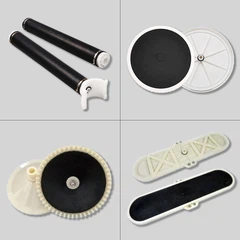
Diffuser architecture dictates bubble geometry, oxygen transfer rates, and basin hydraulics. Fine-bubble disc and tube configurations maximize Standard Oxygen Transfer Efficiency (SOTE) in secondary treatment tanks. Coarse-bubble systems excel in high-solids applications, such as aerobic digesters or equalization basins, where clog resistance and aggressive mixing take priority over oxygen transfer. Strip and plate diffusers offer high-density coverage for deep or narrow tank geometries. Selection must balance biological oxygen demand (BOD) with required mixing velocities.

Oxygen Transfer Efficiency and Aeration Performance
Oxygen transfer metrics determine the volume of air required to achieve target dissolved oxygen (DO) levels. When reviewing manufacturer performance curves, evaluate Standard Oxygen Transfer Efficiency (SOTE), flux rates, and test depth protocols. Because field performance fluctuates with wastewater salinity, temperature, sludge age, and tank depth, baseline clean-water test data must be contextualized within actual site operating parameters rather than evaluated as a standalone figure.

Membrane Material and Chemical Resistance
Membrane materials govern service life, elasticity retention, and resistance to chemical attack. Standard EPDM membranes suit typical municipal wastewater, while engineered formulations-such as silicone, PTFE-coated polymers, or TPU-are essential for industrial effluents containing fats, oils, greases (FOG), solvents, or extreme pH levels. Verifying chemical compatibility prevents plasticizer migration, membrane embrittlement, and structural tearing under cyclic inflation.

Airflow Range and Operating Pressure Drop
Diffusers must operate reliably within a defined airflow flux without causing dynamic distortion or excessive backpressure. Operating below the minimum airflow threshold leads to incomplete membrane opening and localized sludge deposition; exceeding maximum limits increases bubble coalescence and head loss. Lowering the initial and operational dynamic pressure loss across the membrane assembly reduces blower motor load, yielding direct energy savings over the product lifespan.

Dimensional Compatibility and Installation Layout
Physical integration parameters must be verified prior to retrofitting or new construction. Crucial factors include grid connection threads, pipe diameter tolerances, lateral spacing, and structural mounting brackets. Matching the diffuser geometry to tank floor layout ensures optimal floor coverage, eliminates anaerobic dead zones, and streamlines grid assembly during installation.

How Advanced Diffuser Engineering Overcomes Activated Sludge Bottlenecks
Modern aeration engineering mitigates common operational bottlenecks through targeted mechanical and material innovations:
Micro-Perforation & Slit Geometry Design - Precision-engineered slit patterns ensure uniform bubble release across the full membrane area while acting as an active check valve to prevent backflow and sludge ingress during blower shutdown.
Specialized Polymer Formulations - Advanced EPDM compounds, high-purity silicone, and protective fluoropolymer coatings resist bio-fouling, chemical degradation, and thermal hardening, maintaining elasticity under continuous stress.
Flexible Tank Geometry Adaptability - Modular disc, tube, and strip architectures allow grid layouts to be customized around complex basin dimensions, maximizing aeration density and oxygen transfer in high-load zones.
Fouling Mitigation & Access-Friendly Maintenance - Self-cleaning slit mechanics combined with quick-release coupling systems minimize mineral scaling and bio-film build-up, reducing acid-washing frequency and downtime.
Financial and Operational Benefits of Installing High-Performance Diffusers
Investing in high-performance aeration technology yields measurable returns across both daily operational expenditure (OpEx) and long-term capital efficiency (CapEx):
Direct Energy Cost Reduction - Higher SOTE and low dynamic pressure loss reduce total blower horsepower requirements, cutting electricity consumption-the largest operating cost in wastewater treatment.
Minimization of Maintenance Downtime - Tear-resistant materials and effective anti-clogging mechanisms eliminate sludge backflow, extending cleaning intervals and reducing manual basin maintenance.
Process Stability and Effluent Compliance - Consistent DO delivery across all aeration zones prevents sludge bulking, stabilizes nitrification/denitrification cycles, and guarantees compliance with discharge standards.
Optimized Total Cost of Ownership (TCO) - Evaluating long-term energy savings, component durability, and manufacturer technical support against initial purchase price confirms the overall value proposition of superior diffuser engineering.
Conclusion
Selecting the right diffuser for an activated sludge system requires a strategic balance of oxygen transfer dynamics, material durability, operating pressure drop, and long-term lifecycle costs to achieve stable biological treatment and minimize blower power draw. AquaSust provides high-efficiency fine-bubble disc, coarse-bubble, tube, plate, and strip diffusers engineered to optimize air distribution and resist aggressive operational environments across diverse plant configurations. Contact us today to consult with our wastewater aeration experts and receive a customized diffuser selection proposal for your project.