

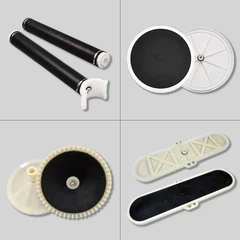


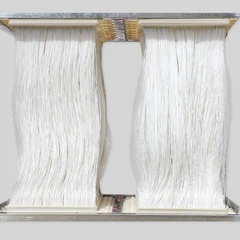


Introduction
Pore size affects how efficiently an aerator delivers oxygen to the water. This guide will detail common pore size options and help you choose the right one for your needs.
Why Choosing the Right Pore Size is Important
The pore size of an aeration diffuser directly influences how efficiently oxygen is transferred into the water. Smaller pores produce fine bubbles with a larger surface area, which improves oxygen transfer and treatment performance. However, they are more prone to fouling and require more frequent cleaning. Larger pores create bigger bubbles, which are less efficient for oxygen transfer but offer better resistance to clogging and are easier to maintain. Choosing the right pore size helps balance oxygen efficiency, energy consumption, and operational stability, ultimately improving system performance and reducing long-term costs.
Understanding Aeration Diffuser Pore Sizes
1. Fine-Bubble Diffusers (50-200 microns)
These diffusers produce very small bubbles, typically 1-3 mm in diameter.
Advantages:
High oxygen transfer efficiency due to increased surface area.
Excellent mixing in activated sludge systems.
Lower long-term energy consumption.
Disadvantages:
More susceptible to scaling and clogging.
Requires frequent cleaning and maintenance.
Not suitable for high solids or oily wastewaters.
2. Medium-Bubble Diffusers (200-500 microns)
These diffusers produce medium-sized bubbles, approximately 3-5 mm in diameter.
Advantages:
Balanced oxygen transfer and mixing efficiency.
Less prone to clogging than fine-bubble aerators.
Suitable for a wider range of wastewater conditions.
Disadvantages:
Lower oxygen transfer efficiency than fine-bubble aerators.
May not provide adequate mixing in deep or complex tanks.

3. Coarse Bubble Aerators (500 micron plus)
These aerators produce larger bubbles, typically 5-10 mm or larger in diameter.
Advantages:
• Excellent mixing and prevents settling.
• Resists scaling and clogging.
• Suitable for harsh, high solids environments (e.g. grit chambers, equalization tanks).
Disadvantages:
• Low oxygen transfer efficiency.
• Higher energy consumption compared to fine and medium bubble systems.
How to Choose the Right Aeration Diffuser Pore Size
• Oxygen Transfer Efficiency (OTE)
Fine bubble aerators produce small bubbles during aeration. Since the bubble clusters have a larger surface area and the small bubbles rise more slowly, they provide a higher oxygen transfer efficiency (OTE). If your goal is to improve oxygen transfer efficiency, aerators with smaller pore sizes are more suitable.
• Wastewater Characteristics
For wastewaters with a lot of solids, grease, or suspended particles, coarse or medium pore aerators are more suitable because they are less likely to clog.
• Operating Energy and Air Pressure
Fine pore aerators create back pressure due to their smaller pore size, requiring higher air pressure to push air through the pores, which may increase the energy consumption of the blower. Coarse pore aerators can operate at lower pressures and consume less energy.
• Maintenance Costs
The smaller the pore size, the more prone to scaling and require more frequent cleaning. Coarse and medium bubble diffusers are easier to maintain and, in some plants, more cost-effective in the long run.
• Wastewater Treatment Process
Different wastewater treatment methods have specific aeration needs. For example, MBR systems may require finer bubbles for higher oxygen efficiency, while coarse bubbles may be better for processes needing strong mixing.
• Tank Design
The tank design affects how the bubbles behave in the water. Deep tanks are better suited for fine bubble diffusers because fine bubbles stay longer and dissolve more oxygen. Shallow or irregular tanks are better suited for medium or large bubble diffusers because larger bubbles rise faster and aid mixing. Therefore, the appropriate pore size should be selected according to the size, depth and structure of the tank.
• Mixing Effect Requirements
If the system requires strong agitation or to prevent sedimentation, a medium-coarse bubble diffuser can be selected because its bubbles are large and rise quickly, which helps the water flow. If the main goal is to improve oxygen transfer efficiency, fine bubbles are more suitable.

Conclusion
The choice of aeration diffuser aperture affects the overall performance and service life of the system. Therefore, you can consider a variety of factors such as sewage type, tank structure, and treatment process to make your choice to achieve system stability and efficiency.
Aquasust: Professional Aerator Manufacturer and Supplier
As a leading aerator manufacturer in China, Aquasust provides various types of aeration diffusers. If you need any, please contact us immediately for more product information.