





Introduction
The activated sludge process is a cost-effective wastewater treatment technology that purifies sewage through the metabolic activities of microbial communities. It is often combined with disinfection and advanced oxidation techniques to treat hospital wastewater. So, how should we design this process to achieve better efficiency? Read on to explore this topic with AquaSust.
What Makes Hospital Wastewater Unique?

Unlike ordinary domestic sewage, hospital wastewater contains not only conventional organic matter but may also carry special pollutants such as pathogenic microorganisms, pharmaceutical residues, and chemical reagents. These primarily originate from patient excreta, surgical waste, or laboratory samples. These components give hospital wastewater characteristics like:
• Significant fluctuations in water quality and quantity, influenced by hospital working hours
• Some components are difficult for microorganisms to decompose
• Potential biological toxicity
• High chemical oxygen demand (COD) and biochemical oxygen demand (BOD)
Process Design for Hospital Wastewater Treatment
Generally, an activated sludge treatment in hospital wastewater treatment process involves three main stages: pretreatment, biological treatment, and advanced treatment. During the pretreatment stage, a grille is installed at the inlet to intercept large particulate solids, and a grit chamber to remove inorganic particles from the sewage. Due to the biochemical characteristics of hospital wastewater, this stage also requires additional disinfection measures, including chlorination, ultraviolet (UV) disinfection, and ozone treatment to kill pathogens.
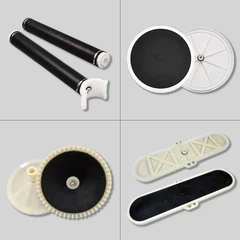
Next, in the biological treatment process, plug-flow aeration tanks with diffusers or sequencing batch reactors (SBR) are employed. The former creates a concentration gradient through corridor design, allowing microorganisms to grow in different environments and form a diverse community. In an SBR system, processes such as aeration and sedimentation are carried out sequentially in a single reactor. This approach can more effectively remove COD, as well as nitrogen and phosphorus components.
During subsequent sludge treatment, it is necessary to control the sludge return ratio, as a higher return ratio can maintain a higher sludge concentration in the aeration tank. Hospital wastewater often contains inhibitory components, so a segmented influent design is required to introduce the wastewater into different parts of the aeration tank. This helps reduce the shock load on microorganisms and maintain stable sludge conditions.

How to Remove Special Pollutants in Hospital Wastewater?
Pharmaceutical Residues
Traditional activated sludge processes struggle to uniformly remove various antibiotics, such as β-lactam antibiotics and sulfonamides. In such cases, extending the sludge age can be attempted to cultivate more degrading bacteria to break down the antibiotics. Alternatively, advanced oxidation techniques can be used to decompose large-molecule drugs into intermediate products that are more readily biodegradable.


Turbid Effluent
This situation is often caused by excessive filamentous bacteria growth. Increasing the intensity of blower ventilation and aeration can prevent local hypoxia in the water and maintain the activity of microorganisms that decompose filamentous bacteria. At the same time, coagulants can be added to help sludge flocs agglomerate more quickly.
Sludge Inactivation
When there are excessive disinfectants or pharmaceutical residues in the wastewater, the sludge can lose its activity. To address this, a regulating tank should be added to divert part of the wastewater, allowing it to be treated after its toxicity has been reduced.

Conclusion
When using the activated sludge process in sewage treatment plant for hospitals, we can enhance the system stability through disinfection, controlling the sludge return ratio, and optimizing aeration, etc. As experts in the wastewater treatment field, AquaSust understands how to safely and efficiently manage your wastewater project. Contact us to obtain professional support.