





Introduction
Sewage treatment systems typically employ a multi-stage comprehensive process that combines physical, biological, and chemical methods to purify water quality. Among these, the secondary treatment is the main stage of sewage treatment. It utilizes the mechanism of biological reactions to remove a greater amount of soluble pollutants from the water. But how exactly does all of this work? In this article, we will explore the details of the secondary treatment process, including which substances in the wastewater it can remove.
Main Stages of Wastewater Treatment

• Pretreatment: Coarse and fine bar screens intercept bulk suspended solids, while grit chambers remove inorganic particles (e.g., sand and gravel).
• Primary Treatment: Sedimentation tanks separate 50%-60% of suspended solids through gravity settling.
• Secondary Treatment: Biological processes degrade 80%-95% of organic matter (core stage).
• Tertiary Treatment: Filtration and disinfection ensure effluent compliance with discharge standards.
Core Function of Secondary Treatment Processes
As the central stage of sewage treatment, the secondary treatment further processes the liquid waste generated from the primary treatment under aerobic, anaerobic, and anoxic conditions. This involves using Moving Bed Biofilm Reactor (MBBR) reactors together with the aeration system to remove residual Biochemical Oxygen Demand (BOD) and suspended solids. The details are as follows:
|
Pollutants |
Removal Technology |
Mechanism |
|
BOD |
MBBR Biofilm |
Aerobic microbial oxidation |
|
Suspended Solids |
Activated Sludge Flocculation |
Biosorption and sedimentation |
|
Pathogenic Microorganisms |
Aeration Oxidation |
Aerobic environment inhibits reproduction |
|
Nitrogen & Phosphorus |
ANA/O/A (Anaerobic-Anoxic-Aerobic) |
Nitrification/Denitrification + Biological phosphorus removal |
|
Organic Toxins |
MBBR Long-lasting Biofilm |
Enzymatic degradation by specialized microbial strains |
Technical Analysis of Secondary Treatment Processes
1. Aerobic Activated Sludge Process
The activated sludge process involves introducing oxygen into an aeration tank containing microorganisms (e.g., bacteria, fungi) to decompose organic matter, ultimately converting microbes into settleable sludge.

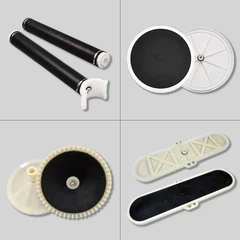
Disc Diffuser
Air flows through micropores on submerged diffusers at the tank bottom, generating fine bubbles that ascend through the liquid. This mechanism enhances oxygen transfer efficiency and promotes aerobic digestion.

MBBR Media
The MBBR carrier in the bioreactor can cultivate highly active biofilm to decompose organic matter in water. Their surface serve for microbial attachment and proliferation, to enhance mass transfer efficiency and microbial growth.
2. Anoxic Treatment
This process reduces nitrate to nitrogen gas by maintaining controlled oxygen-depleted conditions. Municipal wastewater treatment plants widely adopt this method for targeted nitrogen removal.
3. Anaerobic Treatment
In completely oxygen-free digestion tanks, anaerobic bacteria decompose organic waste into methane-rich biogas. This process is specifically deployed for high-strength wastewater pretreatment (COD > 2,000 mg/L).

Conclusion
Now we undertstand details the role of secondary treatment in wastewater purification. It mainly removes BOD, suspended solids, nitrogen, phosphorus, and pathogens through equipment such as MBBR biofilm and aeration diffusers, helping us to solve wastewater treatment problems.
AquaSust Meets All Your Secondary Treatment Needs
As water treatment specialists, AquaSust's expert team possesses in-depth expertise in Disc Diffuser and MBBR Media technologies, enabling customized solutions based on your specific wastewater plant requirements. Contact us today to learn more!