






Microbial communities play a pivotal role in the water treatment process, especially when it comes to Moving Bed Biofilm Reactor (MBBR) media. As a supplier of MBBR media, I've witnessed firsthand how these microscopic organisms can significantly impact the efficiency and effectiveness of water treatment. In this blog post, I'll delve into the details of how the microbial community on MBBR media affects water treatment, and why choosing the right media, such as our MBBR Media AS-MBBR04 For Aquaculture, is crucial for optimal results.
The Basics of MBBR and Microbial Communities
MBBR is a biological treatment process that uses floating plastic carriers, known as MBBR media, to provide a large surface area for the growth of biofilms. These biofilms are composed of diverse microbial communities, including bacteria, fungi, and protozoa, which work together to break down organic matter, remove nutrients, and eliminate harmful contaminants from the water.
The microbial community on MBBR media is highly dynamic and can adapt to different environmental conditions, such as temperature, pH, and the presence of specific pollutants. This adaptability allows MBBR systems to treat a wide range of wastewater types, including domestic sewage, industrial effluents, and aquaculture water.
Impact on Organic Matter Removal
One of the primary functions of the microbial community on MBBR media is to break down organic matter in the water. Bacteria, in particular, are the key players in this process. They use enzymes to break down complex organic compounds into simpler substances, such as carbon dioxide, water, and biomass. This process, known as biodegradation, not only reduces the organic load in the water but also produces energy for the bacteria to grow and reproduce.
The efficiency of organic matter removal depends on several factors, including the type and concentration of organic pollutants, the availability of oxygen, and the composition of the microbial community. For example, some bacteria are better at breaking down certain types of organic compounds than others. Therefore, a diverse microbial community is essential for effective organic matter removal.
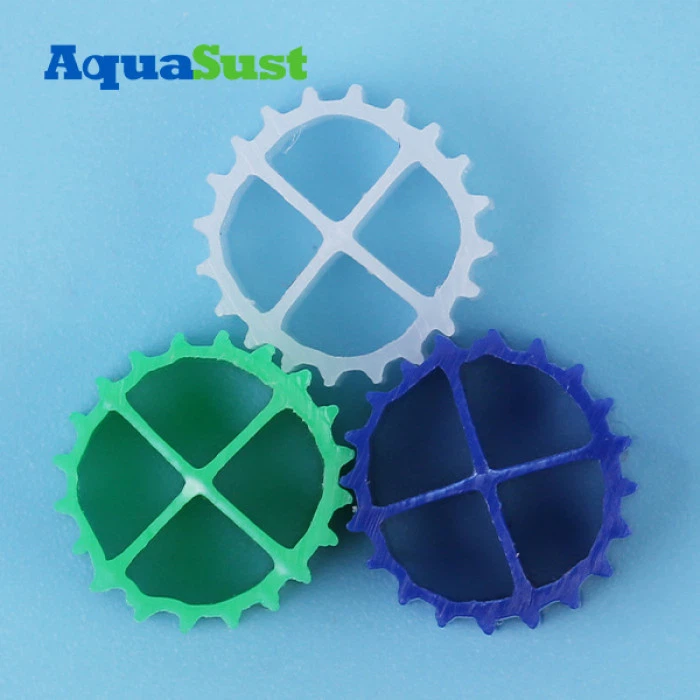
Our MBBR Media AS-MBBR04 For Aquaculture is designed to provide an ideal environment for the growth of a diverse microbial community. Its unique surface structure and large surface area allow for the attachment and growth of a wide range of bacteria, ensuring efficient organic matter removal in aquaculture systems.
Nutrient Removal
In addition to organic matter removal, the microbial community on MBBR media also plays a crucial role in nutrient removal. Nitrogen and phosphorus are two of the most common nutrients found in wastewater, and their excessive presence can lead to eutrophication, a process that causes excessive growth of algae and other aquatic plants, leading to oxygen depletion and water quality degradation.
The microbial community on MBBR media can remove nitrogen through a process called nitrification and denitrification. Nitrifying bacteria convert ammonia, a common form of nitrogen in wastewater, into nitrite and then nitrate. Denitrifying bacteria, on the other hand, convert nitrate into nitrogen gas, which is released into the atmosphere. This process effectively removes nitrogen from the water, reducing the risk of eutrophication.
Phosphorus removal can also be achieved through biological processes. Some bacteria can accumulate phosphorus within their cells, which can then be removed from the water through sedimentation or filtration. Additionally, certain types of bacteria can produce enzymes that break down organic phosphorus compounds, making them more easily removable.
Our MBBR media provides a suitable habitat for the growth of nitrogen- and phosphorus-removing bacteria. By promoting the growth of these bacteria, our media can help to achieve high levels of nutrient removal in water treatment systems.
Contaminant Removal
The microbial community on MBBR media can also play a role in the removal of other contaminants, such as heavy metals, pesticides, and pharmaceuticals. Some bacteria have the ability to break down or transform these contaminants into less harmful substances. For example, certain bacteria can reduce the toxicity of heavy metals by converting them into insoluble forms, which can then be removed from the water through precipitation.
In addition to biodegradation, the biofilm on MBBR media can also act as a physical barrier, preventing the passage of contaminants through the water treatment system. The biofilm can adsorb and retain contaminants, effectively removing them from the water.
Our MBBR media is designed to enhance the contaminant removal capabilities of the microbial community. Its large surface area and porous structure provide more opportunities for the attachment and interaction of contaminants with the biofilm, improving the overall efficiency of contaminant removal.
Factors Affecting the Microbial Community on MBBR Media
Several factors can affect the composition and activity of the microbial community on MBBR media. These factors include:
- Media Characteristics: The surface area, porosity, and surface charge of the MBBR media can all influence the attachment and growth of the microbial community. Our MBBR media is carefully designed to have optimal surface characteristics to promote the growth of a diverse and active microbial community.
- Environmental Conditions: Temperature, pH, and dissolved oxygen levels can all affect the growth and activity of the microbial community. Different bacteria have different optimal environmental conditions, so it's important to maintain stable environmental conditions in the water treatment system to ensure the health and activity of the microbial community.
- Wastewater Composition: The type and concentration of organic matter, nutrients, and contaminants in the wastewater can also affect the composition of the microbial community. For example, the presence of certain contaminants may select for bacteria that are capable of degrading or tolerating these contaminants.
The Importance of Choosing the Right MBBR Media
Choosing the right MBBR media is crucial for the success of a water treatment system. The media should provide a large surface area for the growth of the microbial community, be durable and resistant to wear and tear, and be compatible with the wastewater being treated.
Our MBBR Media AS-MBBR04 For Aquaculture is specifically designed for aquaculture applications. It has a high specific surface area, which allows for the growth of a large and diverse microbial community. Its unique shape and structure ensure good mixing and movement in the reactor, promoting efficient mass transfer and contact between the biofilm and the wastewater.
Conclusion
The microbial community on MBBR media plays a vital role in water treatment, affecting organic matter removal, nutrient removal, and contaminant removal. By providing a suitable habitat for the growth of a diverse and active microbial community, our MBBR media can help to achieve high levels of water treatment efficiency and effectiveness.
If you're interested in learning more about our MBBR media or discussing your water treatment needs, we invite you to contact us for a consultation. Our team of experts is ready to help you find the best solution for your specific application.

References
- Rittmann, B. E., & McCarty, P. L. (2001). Environmental Biotechnology: Principles and Applications. McGraw-Hill.
- Metcalf & Eddy. (2014). Wastewater Engineering: Treatment and Reuse. McGraw-Hill.
- Henze, M., Harremøes, P., Jansen, J., & Arvin, E. (2008). Wastewater Treatment: Biological and Chemical Processes. IWA Publishing.