





Hey there! I'm in the business of supplying MBBR media, and today, I wanna chat about how MBBR media impacts the overall operation cost of a water treatment plant.
First off, let's get into what MBBR media actually is. Moving Bed Biofilm Reactor (MBBR) media are small, plastic carriers that provide a large surface area for the growth of biofilms. These biofilms are made up of microorganisms that play a crucial role in breaking down pollutants in the water.
Now, let's talk about the cost side of things. One of the most significant ways MBBR media can affect the operation cost of a water treatment plant is through energy consumption. Traditional water treatment methods often rely on large - scale aeration systems to keep the water well - oxygenated for the microorganisms to do their job. These aeration systems can be energy hogs, and they're a major part of the plant's electricity bill.
However, with MBBR media, the situation is different. The biofilms on the media can perform the treatment process more efficiently. Since the microorganisms are attached to the media, they can work in a more concentrated and effective way. This means that the aeration requirements can be reduced. You don't need to pump as much air into the water, which directly translates into lower energy costs. For example, a water treatment plant that switched from a conventional activated sludge process to an MBBR system reported a significant drop in their monthly electricity expenses. They were able to cut down on the power used for aeration by almost 30%, which is a huge saving in the long run.
Another cost - related aspect is the space requirements. Water treatment plants need a lot of space for different treatment processes. Conventional systems often need large settling tanks and basins to separate the treated water from the sludge. These large structures not only take up a lot of land but also require a significant investment in construction and maintenance.

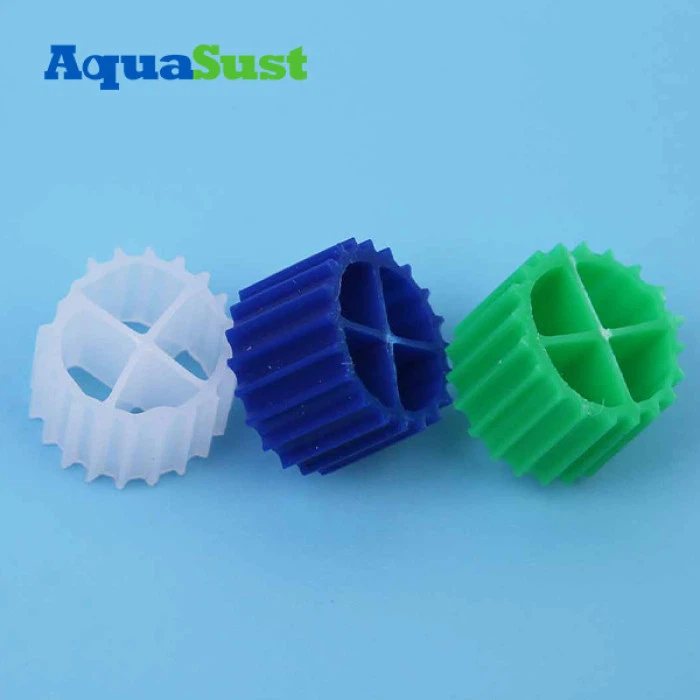
MBBR media, on the other hand, allow for a more compact design. The biofilm carriers can be housed in smaller reactors because the treatment process is more efficient. This means that a water treatment plant can either build a smaller facility in the first place, saving on construction costs, or it can retrofit an existing plant more easily without having to expand the footprint. For instance, a small - scale water treatment plant in a densely populated area was able to upgrade to an MBBR system within its existing space. They didn't have to purchase additional land, which would have been extremely expensive in that area, and they were still able to increase their treatment capacity.
Now, let's talk about the maintenance costs. In a traditional water treatment system, there are many moving parts. There are pumps, mixers, and clarifiers that need regular maintenance and replacement of parts. These maintenance activities can be time - consuming and costly.
With MBBR media, the maintenance is relatively straightforward. The media themselves are durable and don't require frequent replacement. The main thing you need to do is to make sure that the media are properly mixed in the reactor, which usually just involves a simple mixing mechanism. And because the biofilm on the media does most of the work, there's less wear and tear on other equipment. For example, a plant that had been struggling with high maintenance costs for its activated sludge system found that after switching to an MBBR system, the number of breakdowns and the cost of replacing parts dropped significantly.
But what about the initial cost of the MBBR media? It's true that purchasing the media and setting up the MBBR system can have an upfront cost. However, when you consider the long - term savings in energy, space, and maintenance, it's often a very cost - effective investment. And there are different types of MBBR media available to suit different budgets and treatment needs. For example, our MBBR Media AS - MBBR04 For Aquaculture is a great option for aquaculture - related water treatment. It's designed to be efficient and cost - effective, providing a good balance between performance and price.
In addition to the direct cost savings, MBBR media can also have an impact on the overall productivity of the water treatment plant. Since the treatment process is more efficient, the plant can treat more water in less time. This means that it can meet the growing demand for clean water without having to invest in a completely new facility. For example, a water treatment plant that serves a growing community was able to increase its daily treatment capacity by 20% after implementing an MBBR system. This increased productivity can lead to more revenue for the plant if it's selling the treated water, or it can improve the quality of life for the community it serves.
Another aspect to consider is the sludge management cost. In a conventional water treatment system, a large amount of sludge is produced, and managing this sludge can be a major headache. There are costs associated with sludge removal, transportation, and disposal.
MBBR systems generally produce less sludge. The biofilm on the media is more efficient at breaking down the pollutants, and as a result, there's less waste material left over. This means that the water treatment plant can save on the costs related to sludge management. For example, a plant that switched to an MBBR system was able to reduce its sludge production by almost 50%. This not only saved on the direct costs of sludge handling but also reduced the environmental impact associated with sludge disposal.
To sum it up, MBBR media can have a profound impact on the overall operation cost of a water treatment plant. From reducing energy consumption and space requirements to lowering maintenance and sludge management costs, the benefits are clear. While there's an upfront investment, the long - term savings and increased productivity make it a smart choice for water treatment plants.
If you're running a water treatment plant or are involved in the water treatment industry, I highly recommend considering MBBR media. They can help you save money, improve efficiency, and contribute to a more sustainable water treatment process. If you're interested in learning more about our MBBR media or discussing a potential purchase, don't hesitate to reach out. We're always happy to have a chat and help you find the best solution for your needs.
References
- Smith, J. (2020). "Cost - Benefit Analysis of MBBR Systems in Water Treatment". Journal of Water Treatment Technology.
- Johnson, A. (2019). "Energy Efficiency in Water Treatment: The Role of MBBR Media". Water Science and Technology.