





As a supplier of roots blowers, I've often been asked about the air tightness of these essential machines. In this blog post, I'll delve into what air tightness means for roots blowers, why it's crucial, and how it impacts their performance and application.
Understanding the Basics of Roots Blowers
Before we discuss air tightness, let's briefly understand what roots blowers are. Roots blowers, also known as lobe pumps or rotary lobe blowers, are positive displacement machines. They operate on the principle of two or more lobes rotating within a housing. As the lobes rotate, they trap air in the spaces between them and the housing, then transfer it from the inlet to the outlet. This action creates a continuous flow of air or gas, making roots blowers ideal for various industrial applications such as wastewater treatment, pneumatic conveying, and aquaculture.
What is Air Tightness in Roots Blowers?
Air tightness refers to the ability of a roots blower to prevent the leakage of air or gas from its internal chambers to the outside environment or between different parts of the blower. In a well - sealed roots blower, the air or gas that enters the inlet is efficiently transferred to the outlet without significant losses due to leakage.
The air tightness of a roots blower is determined by several factors:
- Clearance between Lobes and Housing: The clearance between the rotating lobes and the housing is a critical factor. If the clearance is too large, air can leak back from the high - pressure side to the low - pressure side, reducing the blower's efficiency. On the other hand, if the clearance is too small, the lobes may rub against the housing, causing wear and tear and potentially leading to mechanical failure.
- Sealing Mechanisms: Roots blowers are equipped with various sealing mechanisms to prevent leakage. These can include shaft seals, O - rings, and gaskets. High - quality sealing materials and proper installation are essential to maintain good air tightness. For example, a well - designed shaft seal can prevent air from escaping along the rotating shaft.
- Housing Integrity: The integrity of the blower housing is also important. Any cracks, holes, or deformations in the housing can compromise the air tightness. During the manufacturing process, strict quality control measures are taken to ensure the housing is free from defects.
Importance of Air Tightness in Roots Blowers
- Efficiency: Air tightness directly affects the efficiency of roots blowers. A blower with good air tightness can transfer a larger volume of air or gas with less power consumption. When there is less leakage, more of the input energy is used to move the air or gas, resulting in higher efficiency. For industrial applications where large volumes of air are required, such as in wastewater treatment plants, high - efficiency roots blowers can lead to significant energy savings over time.
- Pressure Generation: Roots blowers are often used to generate a certain pressure in the system. Good air tightness is crucial for maintaining the desired pressure. If there is excessive leakage, the pressure in the system may not reach the required level, or it may fluctuate, affecting the performance of the entire process. For instance, in pneumatic conveying systems, a stable pressure is necessary to ensure the smooth movement of materials.
- System Reliability: Leakage in roots blowers can lead to various problems in the system. It can cause contamination of the surrounding environment if the gas being handled is hazardous. In addition, air leakage can introduce impurities into the blower, which may damage the internal components and reduce the blower's lifespan. By maintaining good air tightness, the reliability of the roots blower and the entire system can be improved.
Measuring Air Tightness
There are several methods to measure the air tightness of roots blowers:
- Pressure Drop Testing: This method involves measuring the pressure drop across the blower under specific operating conditions. A blower with good air tightness will have a relatively stable pressure drop. If the pressure drop is higher than expected, it may indicate excessive leakage.
- Flow Rate Measurement: By comparing the theoretical flow rate of the blower with the actual flow rate, the degree of leakage can be estimated. A significant difference between the two values may suggest poor air tightness.
- Helium Mass Spectrometer Leak Detection: This is a highly sensitive method used to detect even small leaks. Helium is introduced into the blower, and a mass spectrometer is used to detect the presence of helium outside the blower. This method is often used in applications where very high air tightness is required.
Improving Air Tightness in Roots Blowers
As a roots blower supplier, we take several measures to improve the air tightness of our products:
- Precision Manufacturing: We use advanced manufacturing techniques to ensure accurate machining of the lobes and the housing. This helps to maintain the optimal clearance between the components, reducing the risk of leakage.
- High - Quality Sealing Materials: We select high - quality sealing materials that are resistant to wear, temperature, and chemicals. These materials are carefully installed to ensure a tight seal.
- Quality Control: Strict quality control measures are implemented throughout the manufacturing process. Each blower undergoes thorough testing to ensure its air tightness meets the required standards.
Applications and Air Tightness Requirements
Different applications have different air tightness requirements for roots blowers.

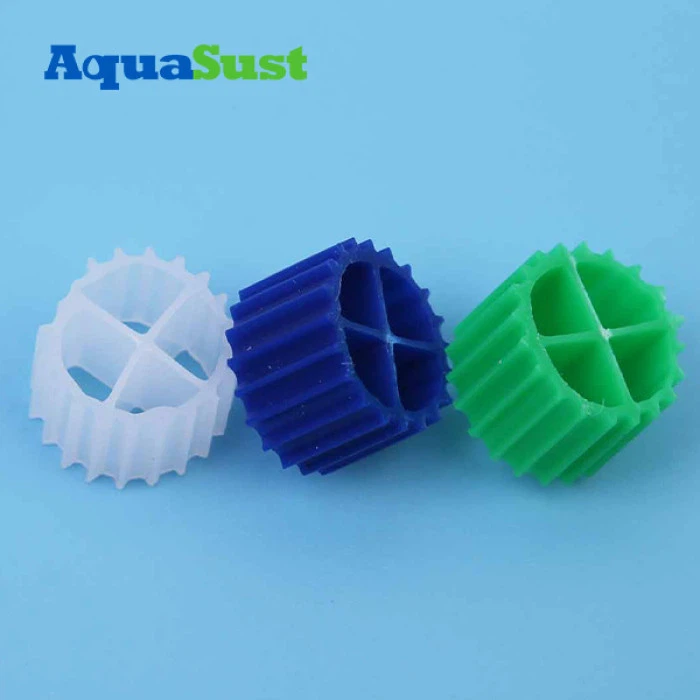
- Aquaculture: In aquaculture, roots blowers are used to supply oxygen to the water. Good air tightness is essential to ensure a continuous and stable supply of oxygen. If there is leakage, the oxygen level in the water may not be sufficient, which can affect the health and growth of the aquatic organisms. For example, the MBBR Media AS - MBBR04 For Aquaculture system often requires a reliable roots blower with high air tightness to maintain the proper oxygen levels in the water.
- Wastewater Treatment: In wastewater treatment plants, roots blowers are used for aeration. Air tightness is crucial to ensure efficient oxygen transfer to the wastewater, which is necessary for the biological treatment process. A blower with poor air tightness may not be able to provide enough oxygen, leading to ineffective treatment.
- Pneumatic Conveying: Pneumatic conveying systems use roots blowers to move materials such as powders and granules. High air tightness is required to maintain the pressure and flow rate necessary for smooth material transfer. Any leakage can cause blockages or inconsistent material flow.
Conclusion
Air tightness is a critical characteristic of roots blowers. It affects the efficiency, pressure generation, and reliability of the blowers, as well as the performance of the entire system in which they are used. As a roots blower supplier, we are committed to providing high - quality products with excellent air tightness. By using precision manufacturing techniques, high - quality sealing materials, and strict quality control, we ensure that our roots blowers meet the diverse needs of different applications.
If you are in need of roots blowers for your industrial or commercial applications, we invite you to contact us for further discussion. Our team of experts can provide you with detailed information about our products and help you select the most suitable roots blower for your specific requirements. We look forward to the opportunity to work with you and contribute to the success of your projects.
References
- "Roots Blower Technology and Applications" by Industrial Blower Handbook
- "Principles of Positive Displacement Blowers" by Blower Manufacturers Association