





Hey there! As a supplier of MBBR media, I've been getting a lot of questions lately about how our media can impact the treatment of wastewater with high COD (Chemical Oxygen Demand) content. So, I thought I'd take a deep dive into this topic and share some insights with you.
First off, let's quickly go over what COD is. COD is basically a measure of the amount of oxygen needed to chemically oxidize the organic matter in wastewater. High COD levels mean there's a lot of organic pollutants in the water, which can be a real headache for wastewater treatment plants. These pollutants can come from all sorts of sources, like industrial processes, food processing, and even domestic sewage.
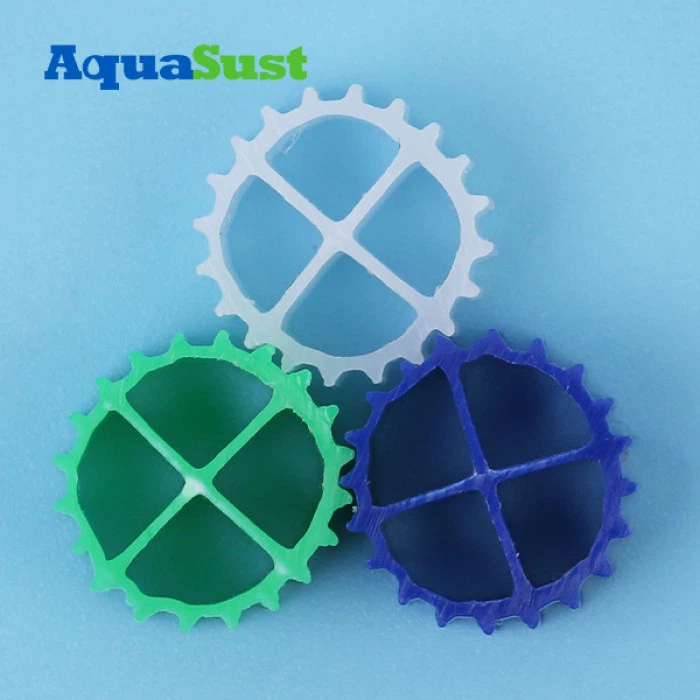
Now, here's where MBBR (Moving Bed Biofilm Reactor) media comes in. MBBR media are small, plastic carriers that provide a large surface area for microorganisms to attach and grow. These microorganisms form a biofilm on the surface of the media, and they're the real heroes when it comes to wastewater treatment. They break down the organic matter in the wastewater, reducing the COD levels and making the water cleaner.
One of the key advantages of using MBBR media for high COD wastewater treatment is their high specific surface area. Our MBBR Media AS - MBBR04 For Aquaculture has a really large surface area per unit volume, which means there's more room for the microorganisms to grow. This results in a higher biomass concentration in the reactor, which in turn leads to more efficient organic matter degradation.
Another great thing about MBBR media is their mobility. The media are designed to move freely in the reactor, which helps to ensure good mixing and contact between the wastewater, the microorganisms, and the oxygen. This is crucial for the aerobic degradation of organic matter. When the media move around, they constantly expose fresh biofilm to the wastewater, allowing the microorganisms to access the organic pollutants more easily.
In addition, MBBR media are very durable and can withstand harsh operating conditions. They're resistant to abrasion, chemical corrosion, and biological degradation. This means they have a long service life, which can save you a lot of money in the long run. You won't have to keep replacing the media every few months, which is a common problem with some other types of wastewater treatment materials.
Let's talk about some real - world examples. In a food processing plant, the wastewater often has a very high COD content due to the presence of fats, oils, and proteins. By using our MBBR media in the treatment system, the plant was able to significantly reduce the COD levels in the effluent. The biofilm on the media was able to break down the complex organic compounds, and within a few weeks of operation, the COD removal efficiency reached over 80%.
In an industrial wastewater treatment facility, the high COD wastewater was coming from a chemical manufacturing process. The traditional treatment methods were struggling to deal with the high load of organic pollutants. But after installing a MBBR system with our media, the situation improved dramatically. The media provided a stable environment for the growth of specialized microorganisms that were able to degrade the specific organic chemicals in the wastewater. As a result, the COD levels in the treated water dropped to acceptable levels, and the facility was able to meet the environmental discharge standards.
However, it's important to note that the performance of MBBR media in high COD wastewater treatment also depends on several other factors. The temperature of the wastewater can have a big impact on the activity of the microorganisms. Generally, most microorganisms work best in the temperature range of 20 - 30°C. If the temperature is too low, the metabolic rate of the microorganisms slows down, and the COD removal efficiency will decrease.
The pH level of the wastewater is another important factor. Most microorganisms prefer a slightly alkaline to neutral pH environment. If the pH is too acidic or too alkaline, it can inhibit the growth and activity of the microorganisms. So, it's necessary to monitor and adjust the pH of the wastewater to ensure optimal performance of the MBBR system.
The hydraulic retention time (HRT) also plays a role. HRT is the amount of time the wastewater stays in the reactor. A longer HRT allows more time for the microorganisms to break down the organic matter. But if the HRT is too long, it can lead to over - growth of the biofilm, which may cause clogging problems in the reactor.
When it comes to choosing the right MBBR media for high COD wastewater treatment, you need to consider the specific characteristics of the wastewater. Different types of wastewater may require different types of media with different surface properties and pore sizes. Our team of experts can help you select the most suitable media based on your specific needs.
We've also been doing a lot of research and development to improve the performance of our MBBR media. We're constantly looking for ways to increase the surface area, enhance the biofilm attachment, and improve the mass transfer efficiency. For example, we've developed a new type of surface treatment for our media that makes it easier for the microorganisms to attach and grow. This has led to even better COD removal performance in our tests.
If you're dealing with high COD wastewater and are considering using MBBR media, I highly recommend getting in touch with us. We can provide you with detailed information about our products, offer technical support, and even help you design a customized wastewater treatment solution. Whether you're a small - scale food processing plant or a large industrial facility, we have the right MBBR media to meet your needs.

In conclusion, MBBR media can have a huge positive influence on the treatment of high COD wastewater. They provide a cost - effective, efficient, and sustainable way to reduce the COD levels and make the wastewater cleaner. With our high - quality MBBR media and professional support, you can be confident in achieving excellent wastewater treatment results. So, don't hesitate to reach out to us if you're interested in learning more or making a purchase.
References
- "Wastewater Engineering: Treatment and Resource Recovery" by Metcalf & Eddy
- "Biofilm Reactors for Wastewater Treatment" by various authors