





Introduction
Aeration is a core step in wastewater treatment, providing the oxygen necessary for biological processes to break down contaminants. Among various aeration solutions, the EPDM(Ethylene Propylene Diene Monomer) membrane disc diffuser has become one of the most widely used technologies. Facilities worldwide rely on these diffusers to maintain stable treatment performance while reducing operational costs. This guide explores their structure, key benefits, comparisons with other membrane diffusers, and typical applications to help you select the most suitable solution.
What is an EPDM Membrane Disc Diffuser?
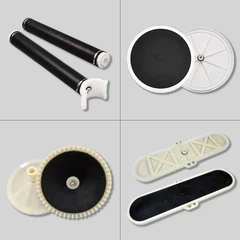
An EPDM membrane disc diffuser is a fine bubble aeration device designed for municipal, industrial, and aquaculture applications. It consists of:
(1) Elastic EPDM Membrane: Releases 1–2 mm fine bubbles, with high resistance to ozone, chemical corrosion, and microbial degradation.
(2) Disc Base/Housing: Provides durable support and evenly distributes airflow.
(3) Universal Connector Design: Compatible with most aeration systems for easy integration.
Even under challenging water conditions, this combination ensures high oxygen transfer rates, stable performance, and reliable operation.

Advantages of EPDM Membrane Disc Diffuser
✅ High Oxygen Transfer Efficiency: EPDM's flexibility ensures uniform bubble release (1–2 mm) even at low airflow, maintaining OTE ≥25% for over five years. Silicone diffusers, while more durable, may produce slightly larger bubbles (2–3 mm) in cold water, reducing OTE by 5–8%.
✅ Durability and Chemical Resistance: EPDM membranes resist UV exposure, ozone, and microbial attack, with a typical lifespan of 5–8 years.
✅ Cost-Effectiveness: Compared to PTFE alternatives, EPDM diffusers require a lower upfront cost and less frequent cleaning or replacement. They offer a better ROI over the system's lifecycle.
✅ Wide Application Range: EPDM functions reliably in pH ranges from 3 to 11 and temperatures up to 120°C, making it suitable for a wide variety of wastewater treatment conditions.
✅ Customizable Options: For your specific treatment requirements, EPDM diffusers can be tailored for optimal aeration efficiency. This includes the adjustments to pore size, membrane thickness, and reinforced EPDM material.

Material Comparison: EPDM vs Other Membranes
|
Membrane Types |
Temp Range |
Chemical Resistance (pH) |
OTE (Standard Oxygen Transfer Efficiency) |
Lifespan |
Cost |
Typical Applications |
|
EPDM |
-40°C ~ 120°C |
3–11 |
≥25% over 5 years, fine bubble 1–2 mm |
5–8 years |
Medium |
Municipal, industrial effluent |
|
Silicone |
-60°C ~ 200°C |
2–13 |
Slightly lower OTE in cold water due to 2–3 mm bubbles, 5–8% less than EPDM |
8–10 years |
High |
High-temp industrial systems |
|
PTFE |
-200°C ~ 260°C |
0–14 |
High OTE, typically ≥30%, but higher cost |
10+ years |
Very High |
Chemical processing, pharma |
|
TPU |
-20°C ~ 80°C |
4–9 |
Moderate OTE, suitable for low-demand applications |
3–5 years |
Low–Medium |
Aquaculture, light industrial |
Key Applications of EPDM Membrane Diffusers
• Municipal Wastewater Treatment: Ideal for aeration tanks, secondary treatment processes, and membrane bioreactor (MBR) systems, to speed up the biological treatment efficiency.
• Industrial Wastewater Aeration: Well-suited for industries such as food and beverage processing, textiles, and light chemicals. The stable oxygen levels they offered are required for effective effluent treatment.
• Aquaculture Systems: Provide uniform oxygenation in fish and shrimp farms, supporting healthy aquatic growth and optimal water quality.
• Lagoons or Equalization Basins: Delivers reliable, continuous aeration for large-scale treatment ponds. They maintain consistent dissolved oxygen levels and prevent sedimentation or anaerobic zones.

Practical Maintenance Tips for EPDM Disc Diffuser
(1) Prevent clogging and maintain optimal OTE through regular chemical or physical cleaning.
(2) Inspect membranes for cracks, hardening, or uneven bubbles every 6–12 months. Replace them if so.
(3) Avoid sudden system pressure changes and monitor dissolved oxygen levels.
(4) Keep detailed logs of cleaning, inspections, and replacements.
(5) Monitor pH, temperature, and suspended solids levels to control the fouling on the membrane.
(6) In regions with significant temperature variations, adjust airflow or cleaning frequency to prevent damage.

Conclusion
For projects requiring long-term, low-maintenance, and high-efficiency aeration, the EPDM membrane diffusers are often the first choice. From municipal treatment plants to industrial effluent systems, these diffusers enhance aeration efficiency and reduce energy consumption.
Why Choose AquaSust as Your EPDM Membrane Diffuser Partner?
Housing introduction
Create a comprehensive solution for efficient human theft manag

Flexible OEM/ODM Solution
AquaSust offers both standard wastewater treatment equipment and OEM/ODM solutions to global clients. This includes an In-house membrane formula innovation to custom diffuser size, membranes, shapes, and logo printing.

Stable Production Capacity
With an over 21,000 m² factory, 15 fully automated diffuser production lines, and a team of engineers with over 20 years of experience, we efficiently handle your bulk or urgent orders.

Strict Quality Inspection
Our diffusers are certified by ISO 9001, CE, RoHS, SGS, and FDA. They all comply with the material analysis, SOTE for use in WWTPs and recirculating aquaculture systems (RAS).

Global Delivery & Service
AquaSust has served clients in over 80 countries, including the USA, Germany, and South Korea. We're committed to global delivery, from clearance documentation to product warranty service.
FAQs
Q: What is the lifespan of an EPDM membrane disc diffuser?
A: EPDM membrane disc diffusers typically last 5–8 years in municipal wastewater applications with proper maintenance.
Q: How often should I clean an EPDM diffuser?
A: Cleaning every 6–12 months keeps performance consistent and prevents clogging.
Q: Can the membrane be customized?
A: Yes, the pore size, membrane thickness, and material composition can all be tailored to meet specific project requirements.
Q: Is EPDM suitable for cold climates?
A: Absolutely. EPDM maintains its consistent oxygen transfer efficiency in low-temperature conditions, like -40 ℃.
Q: Do you offer OEM packaging?
A: Yes, we provide customized branding and labeling options to meet your OEM requirements.
Upgrade Your Sewage System with AquaSust's EPDM Diffusers
At AquaSust, we offer standard aeration diffusers and custom wastewater treatment solutions for your project. Discover AquaSust's efficient and durable aeration EPDM diffusers today, or contact our team for a free quote and explore custom configurations.