





Products Description
In wastewater treatment, achieving efficient oxygen transfer is key to breaking down organic matter. A plate diffuser is a specialized device designed for this exact purpose. Next, this article will introduce the plate diffuser and its working principle in detail.
What Is a Plate Diffuser
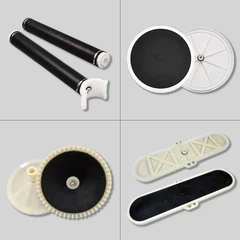
A plate diffuser is a flat, often rectangular device installed at the bottom of aeration tanks. Its main function is to release air in the form of fine bubbles, enhancing oxygen transfer to the water. Among the most common types is the membrane plate diffuser. It features a flexible membrane on its surface, which is perforated with numerous tiny holes. Air passes through these holes and is released evenly into the water, forming uniform microbubbles. This ensures consistent oxygen distribution throughout the water and improves aeration efficiency.

How It Works in Aeration Tanks
The process of plate diffuser aeration can be broken down into three main steps:
Air Introduction
The air is compressed by the compressor and then passes through the central piping system into the plate aerator at the bottom of the aeration tank, preparing it for release into the water.
Bubble Formation
The air passes through the tiny perforations in the membrane, forming microbubbles in the water.
Oxygen Transfer
The slow-rising microbubbles gradually release oxygen into the water. This oxygen dissolves evenly throughout the tank, supporting microbial activity and improving overall wastewater treatment performance.
Benefits of Using Plate Diffusers
Using a plate diffuser offers several clear advantages in aeration systems. The key benefits are as follows:
High Oxygen Transfer Efficiency
Microbubbles produced by a plate diffuser have a larger total surface area than larger bubbles, allowing more oxygen to dissolve into the water efficiently.
01
Uniform Oxygen Distribution
The tiny bubbles rise slowly and are of uniform size, allowing oxygen to diffuse evenly in the water and avoiding low-oxygen areas in the water.
02
Easy Maintenance
Plate diffusers have a simple structure, and the membranes can be easily cleaned or replaced, reducing downtime and maintenance complexity.
03
Durability
Made from corrosion-resistant and wear-resistant materials, plate diffusers can withstand harsh conditions in wastewater tanks, ensuring long-term operation.
04
Typical Applications in Wastewater Treatment
Plate diffusers are widely used in various wastewater treatment scenarios, including:
• Municipal Wastewater Treatment Plants
Plate diffusers supply oxygen to activated sludge tanks, enhancing microbial activity that breaks down organic matter and improves overall wastewater purification efficiency.
• Industrial Wastewater Treatment
In industrial facilities(such as chemical, food, and beverage plants), plate diffusers help maintain precise oxygen levels tailored to different types of wastewater. This ensures effective pollutant removal and consistent treatment performance.
• Aerobic Bioreactors
Continuous microbubble aeration from plate diffusers supports the active metabolism of microorganisms, enabling efficient pollutant degradation while stabilizing bioreactor operations.
• Retrofit Projects
When upgrading existing aeration tanks, plate diffusers offer a simple solution to improve oxygen transfer without the need for extensive structural modifications, allowing facilities to enhance performance quickly and cost-effectively.
Conclusion
Plate diffusers efficiently transfer oxygen in aeration tanks through microbubble formation. With uniform oxygen distribution, easy maintenance, and durable design, they provide an effective solution for modern wastewater treatment systems.
AquaSust's Efficient Plate Diffuser Solutions
AquaSust provides high-quality wastewater treatment plate diffusers to support efficient plate diffuser aeration. Contact us today to find the best solution for your aeration tanks.